


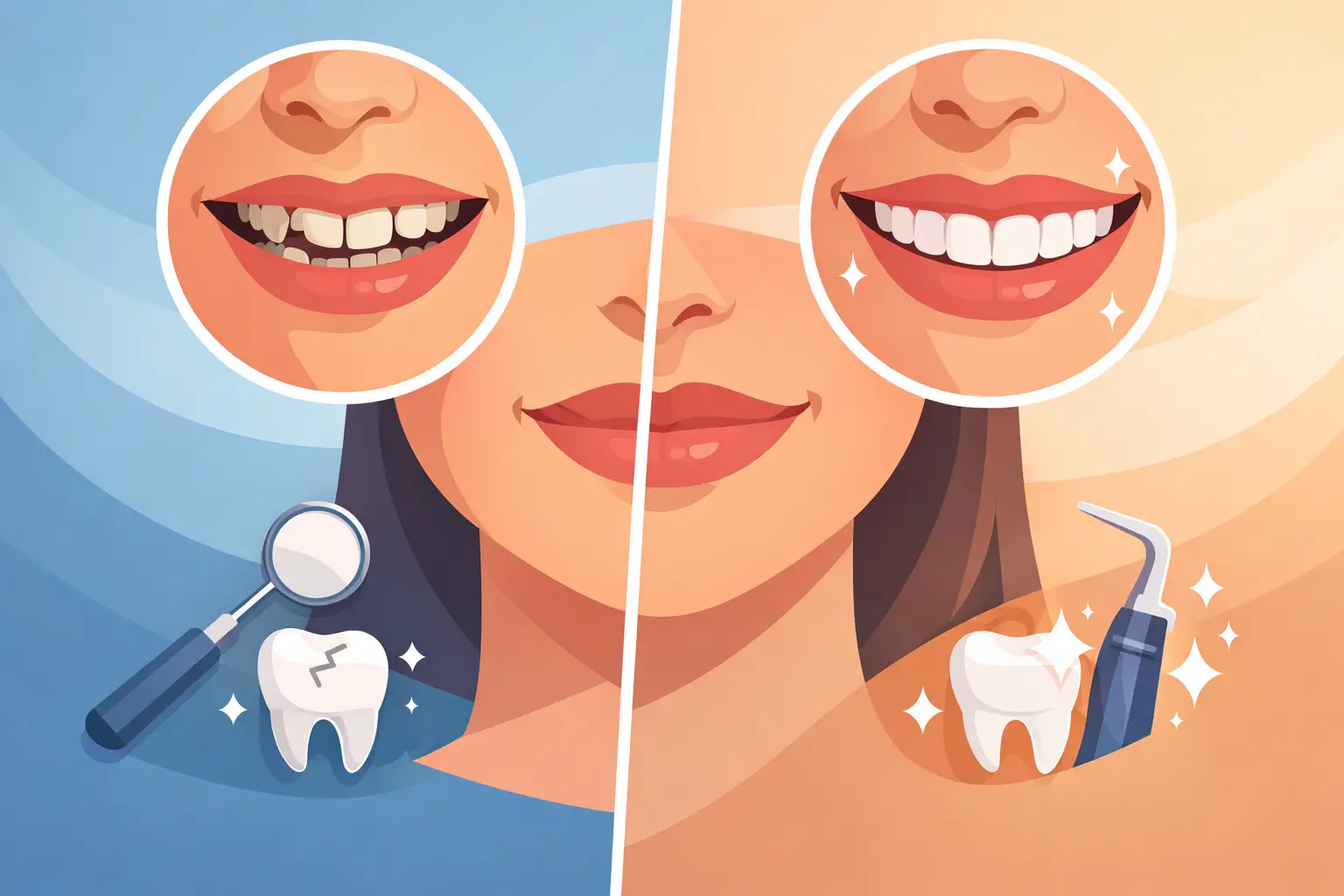
Smile Makeover Before After Example Explained
A smile makeover before after example can look dramatic in a photo, but the most successful transformations are not about making every tooth look identical or unnaturally bright. They are about creating a smile that fits the patient’s face, supports healthy function, and makes it easier to speak, eat, laugh, and feel comfortable in everyday moments.
For many people in Rancho Cucamonga and the Inland Empire, the “before” begins with concerns that have built up over time: teeth that have darkened, chips from wear, a missing tooth, old fillings that show when they smile, or a bite that no longer feels right. The “after” is usually the result of a personalized plan, not one cosmetic procedure applied to everyone.
What a Smile Makeover Before After Example Can Show
Before-and-after images are useful because they help patients see what modern dentistry can address. A well-planned case may improve tooth color, shape, spacing, symmetry, and the appearance of the gums. In many cases, it can also restore teeth that are weakened, replace missing teeth, or correct a bite that is contributing to wear.
Still, a photo does not tell the entire story. A beautiful result should begin with healthy gums, stable teeth, and an evaluation of how the upper and lower teeth meet. Cosmetic treatment placed on top of untreated decay, gum disease, or grinding can lead to avoidable problems later.
That is why a full-mouth evaluation matters. It allows the dentist to look beyond the front teeth and recommend care that supports both appearance and long-term oral health.
A Realistic Example of a Smile Transformation
Consider a patient who feels that their smile looks worn and uneven. Their front teeth are slightly chipped, one side appears darker because of an older crown, and a missing back tooth makes chewing less comfortable. They may also have minor crowding and years of coffee staining.
The first step is not automatically veneers. The dentist would examine the gums, take diagnostic images as needed, check the bite, and discuss the patient’s priorities. If the gums are inflamed, professional cleaning and periodontal treatment may come first. If the bite is placing too much pressure on the front teeth, orthodontic treatment or a protective night guard may be part of the plan.
Once the foundation is healthy, the visible changes may include whitening natural teeth, replacing the discolored crown with one matched to the new shade, using bonding or veneers to refine chipped front teeth, and replacing the missing tooth with a dental implant and crown. The after result can look brighter and more balanced while still retaining the character of a natural smile.
The exact treatment depends on the condition of the teeth, the patient’s timeline, budget, bite, and goals. Some patients need only whitening and bonding. Others benefit from a more comprehensive approach involving restorative dentistry, orthodontics, implants, or gum contouring.
Common Treatments Behind Before-and-After Results
Teeth Whitening for a Brighter Starting Point
Whitening can be an excellent option when teeth are healthy but have become yellow or stained. It is often one of the most conservative ways to refresh a smile. Whitening does not change the color of crowns, veneers, fillings, or bonding, so it is commonly completed before new cosmetic restorations are selected.
It is also worth setting realistic expectations. Some deep internal discoloration, especially on a tooth that has had prior trauma or root canal treatment, may not respond evenly to whitening alone. In those situations, a crown, veneer, or bonding may provide better color control.
Dental Bonding for Small Changes
Bonding uses tooth-colored composite material to repair small chips, close minor gaps, or improve uneven edges. It can be a practical choice for patients who want an affordable cosmetic improvement with minimal alteration of natural tooth structure.
Bonding is not always the best option for larger changes or patients who grind their teeth heavily. It can stain or chip over time and may require maintenance. For the right patient, however, it can create a noticeable improvement in a single visit.
Veneers and Crowns for Shape, Color, and Strength
Porcelain veneers are thin custom shells placed on the front surfaces of teeth to improve their color, shape, proportion, or alignment. They can be a strong choice when several front teeth have persistent discoloration, wear, or irregular shape.
Crowns cover the entire tooth and are often recommended when a tooth is significantly weakened, heavily filled, cracked, or previously treated with a root canal. While both can enhance appearance, the purpose is different: veneers are primarily conservative cosmetic restorations, while crowns can provide more complete protection when the tooth needs structural support.
Neither option should be selected from photos alone. Tooth enamel, bite forces, gum health, and the amount of correction needed all influence whether veneers, crowns, bonding, or a combination will produce the healthiest result.
Implants for Missing Teeth
A missing tooth can change more than a smile. It can affect chewing, speech, confidence, and the way neighboring teeth shift over time. A dental implant replaces the root of a missing tooth and supports a custom crown designed to blend with surrounding teeth.
Implants are frequently included in larger smile makeovers when a gap is visible or when missing back teeth are limiting function. Treatment takes planning and healing time, so it may be completed in stages. A temporary option can sometimes be used while the implant site heals.
Orthodontics for Alignment and Bite Support
Crooked or crowded teeth do not always need to be covered with veneers. Orthodontic treatment can move teeth into a healthier, more balanced position and may reduce the amount of restorative work needed later. It can be especially valuable when alignment problems are affecting the bite.
For some adults, a short course of orthodontics followed by whitening or bonding provides a more conservative path to their desired result. For others, restorative treatment is the more efficient choice. The best path is the one that protects the natural teeth while meeting the patient’s goals.
How to Evaluate a Before-and-After Smile
When reviewing smile makeover photos, look beyond brightness. Does the after smile suit the person’s face? Are the teeth proportionate rather than oversized? Does the gumline look healthy? Are the teeth naturally varied in texture and shape, rather than flat and uniform?
It also helps to ask what treatment was involved and whether the patient had restorative needs before cosmetic changes began. A trustworthy consultation should include a conversation about alternatives, expected longevity, care requirements, and costs. High-quality dentistry is not one-size-fits-all, and the most affordable plan is not always the lowest initial price if it does not address underlying concerns.
Planning Your Own Smile Makeover
A smile makeover consultation should feel like a conversation, not a sales pitch. Bring up the things that bother you most, whether that is a single chipped tooth, a denture that moves, visible gaps, or a smile you avoid showing in photos. Your dentist can explain what is possible now, what may need to happen first, and whether treatment can be phased over time.
At Star Dental Group, comprehensive planning makes it possible to consider cosmetic, restorative, implant, general, and orthodontic needs in one place. That can be especially helpful for patients who have delayed care because they were unsure where to begin or worried they would need several referrals.
A meaningful after photo is not just about straighter, whiter teeth. It is the moment a patient can smile without covering their mouth, enjoy a meal with greater comfort, and feel that their dental care finally reflects the way they want to show up in the world.

