


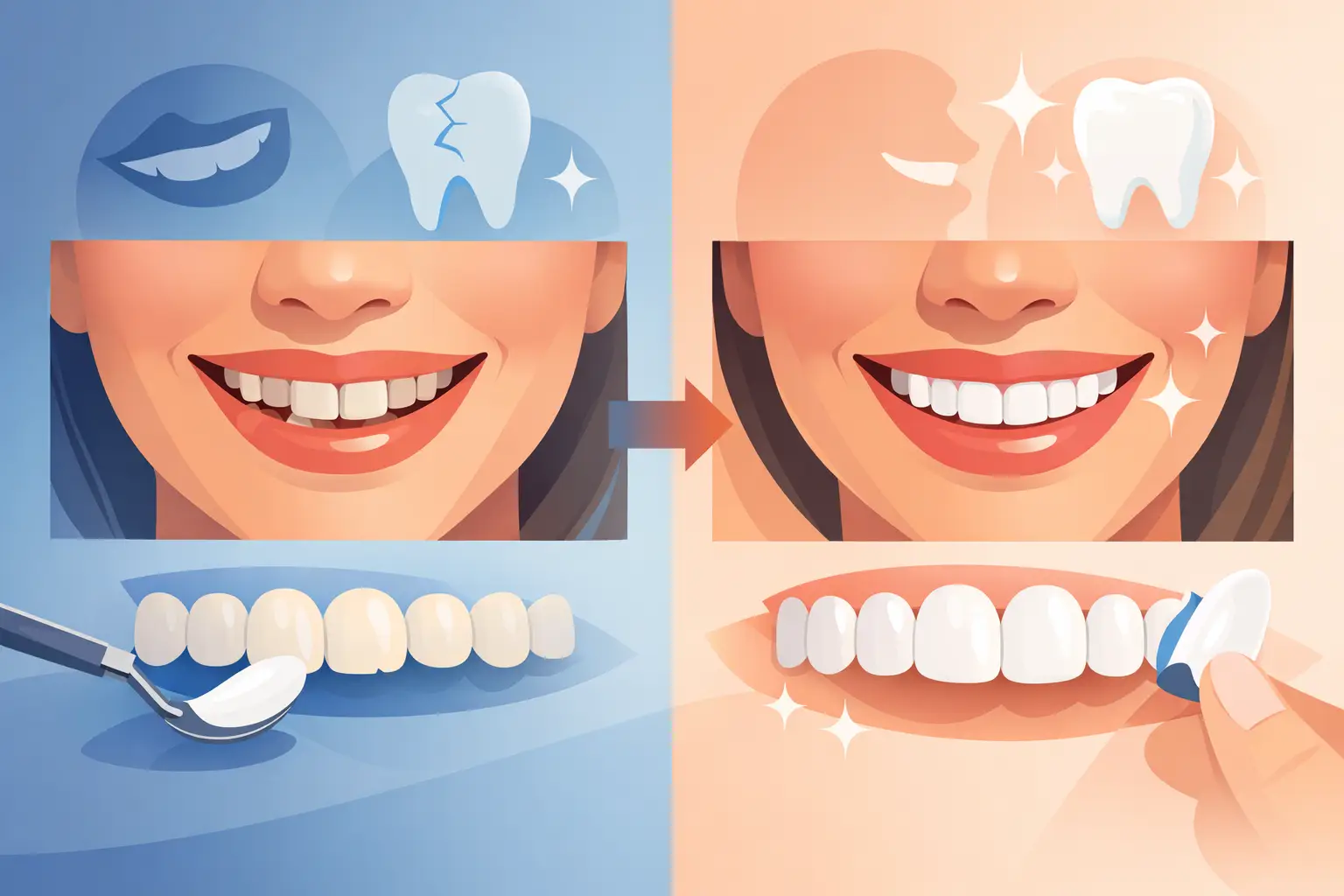
Porcelain Veneers Before After Results Explained
A porcelain veneers before after comparison can be striking: chipped edges look even, stubborn discoloration disappears, and a smile may appear more balanced in a matter of appointments. But the most successful results are not about creating the brightest or most uniform smile possible. They are about creating a smile that fits your face, supports comfortable function, and still looks like you.
For patients in Rancho Cucamonga and the Inland Empire, veneers can be a meaningful cosmetic option when concerns such as worn teeth, small gaps, uneven shapes, or discoloration affect confidence. The key is understanding what veneers can change, what they cannot, and how thoughtful planning shapes the result.
What Porcelain Veneers Can Change
Porcelain veneers are thin, custom-made shells that are bonded to the front surfaces of teeth. They are generally used on the teeth visible when you smile, most often the upper front teeth and sometimes the lower front teeth. Each veneer is designed around the individual tooth, surrounding teeth, bite, gumline, and facial features.
A well-planned veneer treatment may improve the appearance of teeth that are discolored, chipped, slightly crooked, unevenly sized, or separated by small spaces. Porcelain reflects light in a way that can resemble natural enamel, which is one reason it is a popular option for cosmetic smile enhancement.
Before treatment, a patient may feel that one dark tooth distracts from an otherwise healthy smile, that front teeth look short from years of wear, or that old bonding no longer matches. After treatment, the goal is usually a more consistent smile with natural variation and proportion – not a set of identical, overly white teeth.
Porcelain Veneers Before After: What Creates a Natural Result
Photos can be helpful, but they do not tell the full story. A beautiful before and after result begins with a detailed evaluation, not with choosing a shade from a photo. Your dentist needs to look at your teeth, gums, bite, existing restorations, and the way your lips frame your smile.
Shade selection matters, but whiter is not automatically better. A shade that is too bright for your complexion, the whites of your eyes, or adjacent teeth can make veneers look artificial. The most natural-looking choices often have subtle translucency and shading that mimic enamel rather than a flat, opaque color.
Shape is equally important. Slightly rounded edges, length, width, and the contour near the gumline can change how refined or youthful a smile appears. A conservative design may preserve a familiar look while correcting specific concerns. A more extensive smile makeover may be appropriate for someone with significant wear, multiple old restorations, or broad cosmetic goals. It depends on your teeth and what you want to see in the mirror.
What Happens Before Veneers Are Placed
The process typically starts with a cosmetic consultation and a conversation about your goals. Bring up the details that bother you, whether that is a gap, a gray tooth, worn edges, or a smile that looks uneven in photos. Clear communication helps your dental team plan for the changes that matter most to you.
Your dentist will then evaluate whether veneers are a suitable choice. Healthy gums and a stable bite are essential. Cavities, gum disease, untreated grinding, or significant bite problems may need attention before cosmetic treatment begins. This is not a delay for its own sake. Addressing underlying conditions helps protect the investment you make in your smile.
For traditional porcelain veneers, a small amount of enamel is often reshaped to make room for the porcelain and avoid a bulky appearance. Impressions or digital scans are used to create custom veneers. Depending on the treatment plan, temporary veneers may be placed while the final restorations are made.
At the final visit, the dentist checks the fit, appearance, and bite before bonding the veneers in place. Small adjustments can make a major difference in comfort and appearance, especially when several front teeth are involved.
Veneers Are Not the Right Answer for Every Smile
Veneers can offer dramatic cosmetic improvement, but they are not a substitute for comprehensive dental care. A tooth with major structural damage may need a crown rather than a veneer. A missing tooth may require an implant or bridge. Teeth that are significantly crowded or misaligned may respond better to orthodontic treatment before cosmetic work is considered.
If the main concern is tooth color, professional whitening may be the more conservative first step. Whitening does not change tooth shape or close gaps, but it can be an excellent choice for healthy teeth with surface or age-related staining. Composite bonding can also address minor chips or small gaps with less tooth preparation, though it may stain or wear sooner than porcelain.
Patients who clench or grind their teeth can still be candidates in some cases, but they may need a nightguard to reduce the risk of chipping or fracture. Similarly, people with active gum inflammation should focus on restoring gum health first. Cosmetic dentistry looks best when it is built on a healthy foundation.
Understanding the Trade-Offs Before You Commit
Porcelain veneers are durable, but they are not indestructible. Hard biting habits, ice chewing, using teeth to open packages, and untreated grinding can damage veneers just as they can damage natural teeth. A veneer may eventually need repair or replacement.
It is also important to understand that traditional veneer preparation is generally irreversible because enamel has been modified. Some patients may qualify for minimal-prep options, but these are not right for every tooth or every smile. Minimal preparation can be appealing, yet placing porcelain without enough space may create a result that feels or looks too thick.
Veneers do not whiten over time. If you whiten surrounding natural teeth later, their color may no longer match the veneers. Planning your preferred tooth shade before final veneers are made helps avoid this issue.
Cost also varies based on the number of teeth treated, the complexity of the case, needed preparatory care, and the materials used. A consultation should provide a clear treatment plan and explain the options available, so you can make a decision that feels comfortable clinically and financially.
How to Care for Your New Smile
Caring for porcelain veneers is much like caring for natural teeth. Brush twice daily with a nonabrasive toothpaste, clean between teeth every day, and keep regular dental visits. Healthy gums are essential because veneers sit along the gumline, and gum recession can expose the edge of a veneer over time.
Avoid biting directly into very hard foods with the front teeth when possible, and wear a protective appliance if your dentist recommends one for grinding or sports. If you notice a rough edge, a change in your bite, sensitivity, or a veneer that feels loose, schedule an exam promptly rather than trying to wait it out.
Choosing a Dental Team for Veneer Treatment
A veneer case should be planned as part of your overall oral health, not treated as a one-size-fits-all cosmetic purchase. Ask to discuss the appearance you want, the amount of tooth preparation anticipated, the number of teeth involved, and how your bite and gums will be evaluated. You should also feel comfortable asking about alternatives.
At Star Dental Group, cosmetic treatment can be considered alongside general dentistry, restorative care, orthodontics, and implant services when needed. That broader view is useful for patients who want a smile improvement without overlooking the health and function of their teeth.
The best porcelain veneers before after result is one you can enjoy without thinking about it every time you smile. A personal consultation can turn inspiration from photos into a realistic plan built around your health, your budget, and the features that make your smile your own.

