


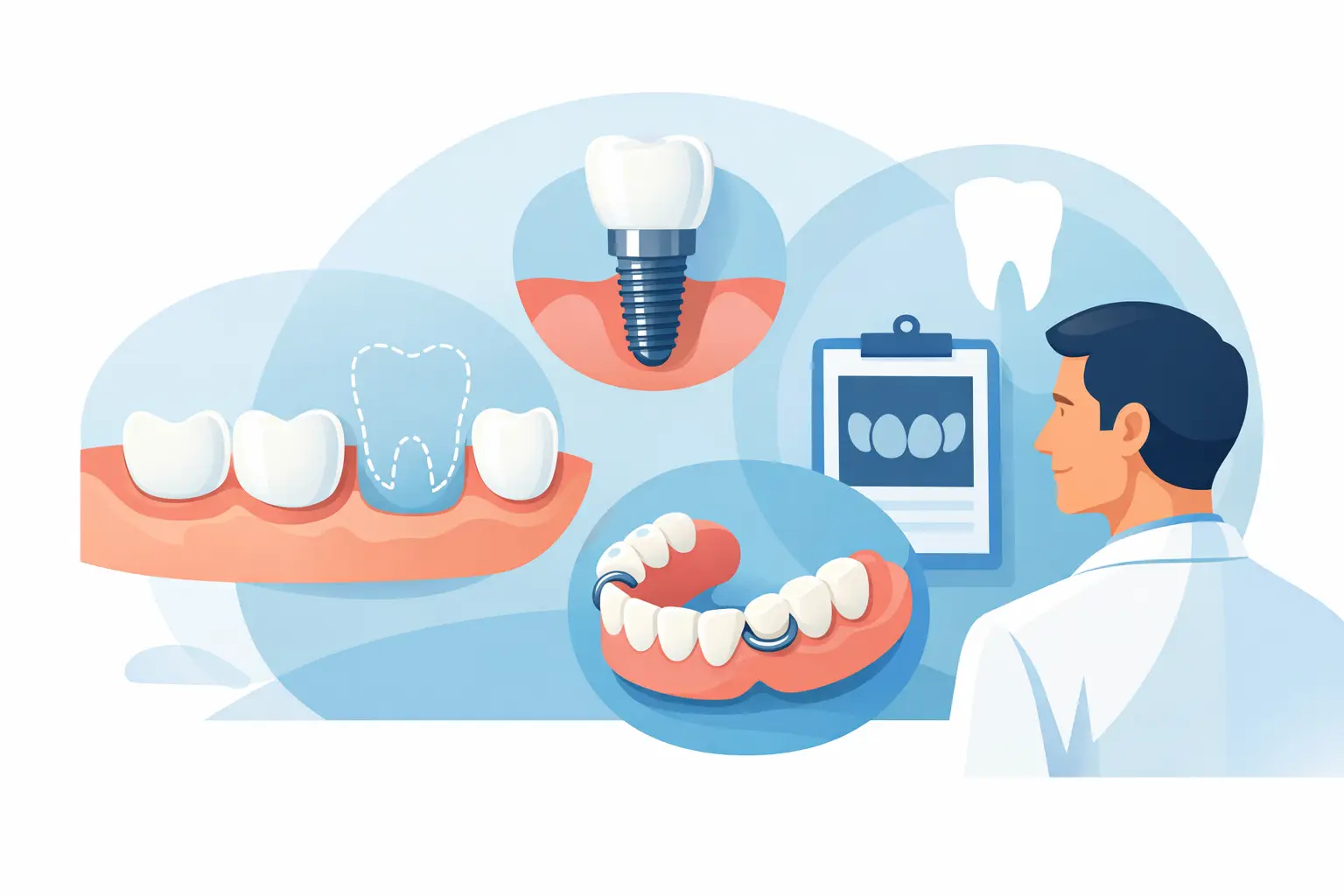
Best Treatment for Missing Teeth Explained
Losing a tooth changes more than your smile. It can affect how you chew, how clearly you speak, and even how confident you feel in everyday conversations. If you are searching for the best treatment for missing teeth, the right answer depends on where the tooth is missing, how healthy your gums and jawbone are, and what matters most to you – cost, comfort, appearance, or long-term durability.
What is the best treatment for missing teeth?
For many adults, dental implants are considered the best treatment for missing teeth because they replace both the visible tooth and the root underneath it. That matters because when a tooth is lost, the jawbone in that area can begin to shrink over time. An implant helps support the bone while also giving you a stable, natural-looking replacement.
That said, implants are not automatically the best choice for every patient. Some people need a faster option. Some want the most budget-friendly solution. Others may have health or bone concerns that make a bridge or denture the more practical route. The best treatment is the one that restores function, fits your budget, and works well with your overall oral health.
Why replacing a missing tooth matters sooner than most people think
Many patients put treatment off if the gap is not visible when they smile. That is understandable, especially if the missing tooth is in the back. But even one missing tooth can start a chain reaction.
Nearby teeth may begin to shift into the open space. Your bite can change. Food can get trapped more easily, which raises the risk of decay and gum problems. If several teeth are missing, chewing becomes less efficient and can put extra stress on the teeth that remain. Over time, this can affect comfort, appearance, and the cost of future treatment.
The earlier you address the problem, the more options you usually have.
Comparing the main options
Dental implants
A dental implant is a small titanium post placed in the jawbone, topped with a crown that looks and functions like a natural tooth. If you want the closest thing to getting your original tooth back, this is often it.
Implants are popular because they feel secure and do not rely on neighboring teeth for support. They also help preserve jawbone in a way bridges and dentures cannot. For patients who want a strong, long-term solution with a very natural appearance, implants are hard to beat.
The trade-off is that implant treatment takes more time and usually costs more upfront. Some patients also need bone grafting before placement if bone loss has already occurred. Still, for the right candidate, implants often provide the best long-term value because they are durable and can support both function and appearance for many years.
Dental bridges
A bridge fills the gap by anchoring an artificial tooth to the natural teeth on either side. This can be a very effective option when the neighboring teeth already need crowns or have large fillings.
Bridges usually take less time than implants and do not require surgery, which makes them appealing for patients who want a fixed solution but are not ready for implant treatment. They can look very natural and restore chewing well.
The main downside is that a traditional bridge requires reshaping healthy adjacent teeth to support the restoration. A bridge also does not replace the root, so it does not prevent bone loss under the missing tooth in the same way an implant does.
Partial dentures and full dentures
Dentures remain a practical and affordable solution, especially when several teeth are missing or when a full arch needs to be replaced. Modern dentures can look better and fit better than many people expect, and they can make a major difference in daily comfort and confidence.
Partial dentures replace several missing teeth while fitting around the natural teeth that remain. Full dentures replace all teeth in the upper arch, lower arch, or both. For some patients, dentures are the most realistic path to restoring their smile without the higher cost of multiple implants.
The trade-offs are stability and maintenance. Traditional dentures can shift, especially on the lower arch, and they do not stimulate the jawbone. Some patients also need time to adjust to speaking and eating comfortably.
Implant-supported dentures
This option combines some of the affordability benefits of dentures with the improved stability of implants. Instead of resting only on the gums, the denture is secured by implants placed in the jaw.
For patients missing many or all teeth, implant-supported dentures can be a major upgrade. They often improve chewing power, reduce slipping, and feel more secure than conventional dentures. They can also help preserve bone better than traditional removable dentures.
This option is especially appealing for patients who want something more stable than standard dentures but do not need or want an individual implant for every missing tooth.
How to choose the best treatment for missing teeth
The right treatment starts with a full evaluation, not a guess based on a photo online. A dentist will look at the condition of your gums, the amount of bone available, the health of surrounding teeth, and your bite. Your medical history matters too.
If you are missing one tooth and want the most natural long-term replacement, an implant may be the leading choice. If the teeth next to the gap already need crowns, a bridge might make more sense. If you are missing multiple teeth and want a lower-cost solution, a partial denture could be the most practical place to start. If you need to replace most or all teeth, implant-supported options may offer the best blend of stability and value.
There is also a cosmetic side to this decision. Front teeth usually call for especially careful planning because even small differences in shape, gum line, and color are noticeable. Back teeth need to stand up to biting forces. The best plan balances both looks and function.
Cost matters, but so does long-term value
Patients often ask which option is cheapest, but a better question is which option gives you the best result for your budget over time. A lower upfront cost can be appealing, especially if treatment has already been delayed due to finances. That is real, and it should be part of the conversation.
At the same time, long-term maintenance, replacement needs, and future dental changes also matter. An implant may cost more initially, but it can last many years with proper care. A bridge may be less expensive at the start, but it places demand on neighboring teeth. Dentures can be very affordable, but they may need relining, adjustment, or replacement as the mouth changes.
This is why personalized treatment planning matters so much. At a multi-specialty office like Star Dental Group, patients can review different solutions in one place and choose a plan that fits both their oral health and their budget.
What if you have bone loss or have been missing teeth for years?
Do not assume you have waited too long. Bone loss can make treatment more complex, but it does not automatically rule out implants or other advanced options. In some cases, bone grafting can rebuild support. In others, a different type of implant approach or a bridge or denture may be the smarter choice.
Patients who have been living with missing teeth for a long time are often surprised by how many options still exist. The key is getting an exam and a clear explanation of what is possible now, not what might have been ideal years ago.
A good treatment plan should fit your life
The best dentistry is not just about replacing teeth. It is about making daily life easier. You should be able to eat comfortably, smile without hesitation, and understand what to expect from treatment.
That means your care plan should reflect your schedule, comfort level, and priorities. Some patients want the most advanced option available. Others want the most efficient solution that solves the problem and keeps costs manageable. Both are valid.
If you are unsure where to begin, start with a consultation and ask direct questions. What will feel the most natural? What will last the longest? What fits your budget today, and what may save money later? A trustworthy dental team will walk you through the trade-offs without pressure.
Missing teeth can make life more complicated than it needs to be. The right treatment can restore more than your smile – it can restore comfort, confidence, and peace of mind.

