


Porcelain Veneers vs Bonding: Which Fits You?
A small chip on a front tooth can make every photo feel like a close-up. A gap, stubborn discoloration, or uneven tooth shape can have the same effect. When patients ask about porcelain veneers vs bonding, they are usually looking for more than a cosmetic fix. They want a smile that looks natural, fits their budget, and feels worth the investment.
Both treatments can improve the appearance of front teeth, often with beautiful results. The better choice depends on the condition of your teeth, the changes you want to make, your bite, and how long you want the result to last. A cosmetic consultation is the right place to compare these options based on your own smile rather than a one-size-fits-all recommendation.
Porcelain Veneers vs Bonding at a Glance
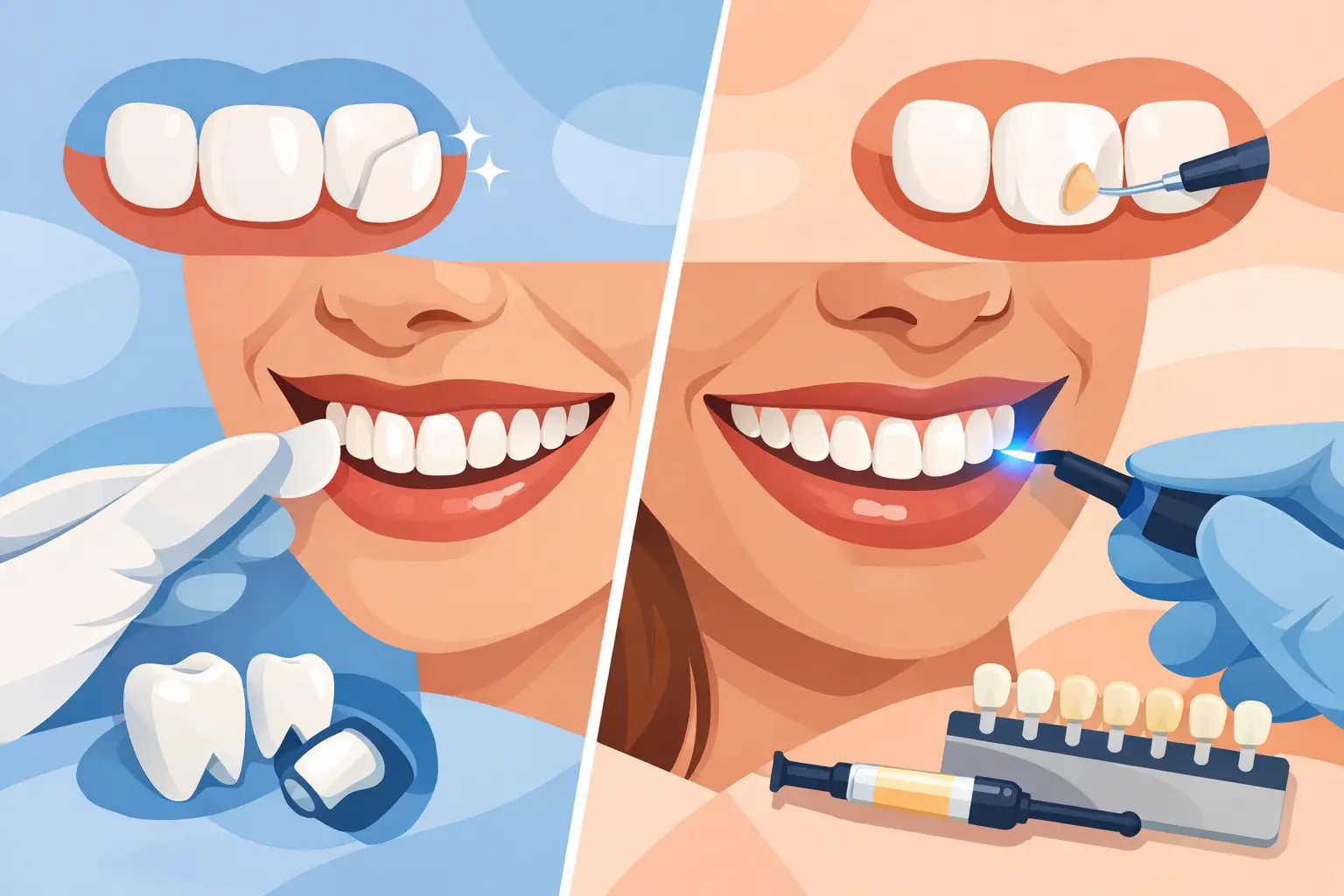
Dental bonding uses a tooth-colored composite resin. Your dentist applies and shapes the material directly on the tooth, then hardens it with a special curing light. It can be used to repair chips, close small gaps, soften sharp edges, improve minor discoloration, or make a tooth look more even.
Porcelain veneers are custom-made, thin ceramic shells that cover the front surface of a tooth. They are created to match your desired shape, color, and proportions, then securely bonded in place. Veneers are often chosen for more comprehensive cosmetic changes involving several visible teeth.
Neither option is automatically better. Bonding is usually more conservative and less expensive upfront. Veneers typically offer greater stain resistance, durability, and consistency for larger smile transformations.
When Dental Bonding May Be the Right Choice
Bonding can be an excellent choice when the concern is small and localized. If one front tooth has a minor chip or a slightly uneven edge, composite resin can often restore a more balanced appearance in a single visit. It is also useful for closing modest spaces between teeth or covering small areas of discoloration.
One of bonding’s biggest advantages is that it generally requires little to no removal of natural enamel. This makes it an appealing option for patients who prefer the most conservative treatment possible. In many cases, bonding can also be repaired if it chips or wears down.
Bonding is usually completed in one appointment, which can be helpful for busy professionals, parents, or anyone preparing for a special occasion. Because the material is applied directly to the tooth, your dentist has the ability to make detailed adjustments during the visit.
The trade-off is that composite resin is not as hard or stain-resistant as porcelain. Coffee, tea, red wine, tobacco, and strongly colored foods can gradually affect its color. Bonding may also chip or wear sooner than veneers, especially for people who bite their nails, chew ice, or have a heavy bite. Regular polishing, repairs, or replacement may be needed over time.
When Porcelain Veneers May Be the Better Investment
Porcelain veneers are often recommended when patients want to change several features of their smile at once. They can address noticeable staining, worn edges, uneven shapes, small gaps, minor crowding, and teeth that appear too short or narrow. When carefully planned, veneers can create a brighter, more uniform smile while still looking natural.
Porcelain has a translucent quality that reflects light in a way that resembles natural enamel. It is also highly resistant to stains, so the shade is more stable than composite bonding. For patients who want a long-lasting cosmetic result and enjoy coffee or other staining beverages, this can be a meaningful advantage.
Veneers are custom crafted, which gives your dentist more control over the final color, shape, and symmetry of your smile. That precision is particularly valuable when improving multiple front teeth. Instead of correcting one issue at a time, veneers can provide a coordinated result across the smile line.
However, veneers involve a larger financial commitment than bonding. Most veneer cases also require some preparation of the natural tooth surface to create room for the porcelain. Because enamel does not grow back, veneers should be viewed as a long-term treatment decision. While a veneer can be replaced if necessary, it is not a treatment you simply remove and leave untreated.
Cost Matters, but So Does Long-Term Value
It is natural to compare costs first. Bonding typically costs less per tooth than porcelain veneers, making it a practical option for limited improvements or a temporary cosmetic solution. Veneers cost more because they involve detailed planning, custom laboratory fabrication, and durable ceramic materials.
The initial price is only part of the decision. If bonding needs frequent repairs, polishing, or replacement, its long-term cost can become closer to a more durable solution. On the other hand, paying for veneers may not make sense if you only need one tiny chip repaired or are still deciding whether you want a larger smile makeover.
During a consultation, ask for a clear treatment plan that explains what is included, how many teeth are involved, and what maintenance you should expect. For uninsured patients and seniors, discussing available savings options can also make high-quality cosmetic care more manageable.
Durability, Maintenance, and Daily Habits
Porcelain veneers often last many years with proper care. Bonding can also last well, but it is more prone to surface wear, staining, and chipping. Your individual results depend heavily on your bite and habits.
Both options need the same healthy foundation: consistent brushing, flossing, and professional dental cleanings. Veneers do not prevent cavities from forming around the edges of the tooth, and bonding can collect stain or plaque if oral hygiene is neglected. Cosmetic treatment enhances healthy teeth. It does not replace preventive care.
If you grind or clench your teeth, tell your dentist before choosing either treatment. A nightguard may be recommended to protect your investment. Avoid using your teeth to open packaging, bite hard objects, or chew ice. These habits can damage natural teeth, bonding, and porcelain alike.
Your Bite and Oral Health Come First
A bright, even smile starts with healthy teeth and gums. Cavities, gum inflammation, untreated grinding, and significant bite problems should be addressed before cosmetic treatment. Covering a problem without treating its cause can lead to discomfort, additional expense, and results that do not last.
This is also why orthodontic treatment may sometimes be a better first step than veneers or bonding. If teeth are significantly crowded, rotated, or positioned incorrectly, moving them into a healthier alignment can reduce the amount of cosmetic alteration needed. In other situations, a combination of orthodontics and conservative bonding provides a more natural result than placing veneers on every tooth.
A multi-specialty practice can evaluate the whole picture, including your gums, bite, tooth structure, and cosmetic goals. At Star Dental Group, that full-mouth perspective helps patients make decisions that support both appearance and long-term oral health.
How to Decide Between Veneers and Bonding
Think about the scope of change you want. Bonding often works best for one or two teeth and modest corrections. Veneers may make more sense when several visible teeth need color, shape, or alignment improvements at the same time.
Then consider permanence. If preserving as much natural enamel as possible is your priority, bonding may be the better starting point. If you are ready for a longer-term cosmetic solution with superior stain resistance and a more uniform result, veneers may be worth the investment.
Finally, be honest about your expectations. No treatment should look overly white, bulky, or artificial. The goal is a smile that fits your face, your age, and your natural features. Photos of smiles you like can help communicate your preferences, but your dentist should guide the final plan based on what will look healthy and believable for you.
The right cosmetic choice is the one that lets you smile without overthinking the tooth you used to hide.

