


Invisalign vs Braces Adults: What to Choose
If you have been putting off orthodontic treatment because you do not want a mouth full of metal at work, at dinner, or in photos, you are not alone. The Invisalign vs braces adults debate usually comes down to real-life concerns – comfort, appearance, cost, treatment time, and whether the option you choose will actually fit your schedule.
For many adults, this is not just about straight teeth. It is about feeling more confident when you speak, making oral hygiene easier, improving bite function, and finally taking care of something you have wanted to fix for years. The right choice depends on your smile goals, your lifestyle, and the complexity of your case.
Invisalign vs braces for adults: the real difference
Both Invisalign and traditional braces are designed to move teeth into better alignment. Both can improve crowding, spacing, overbites, underbites, and crossbites. The biggest difference is how they move teeth and what your day-to-day experience looks like during treatment.
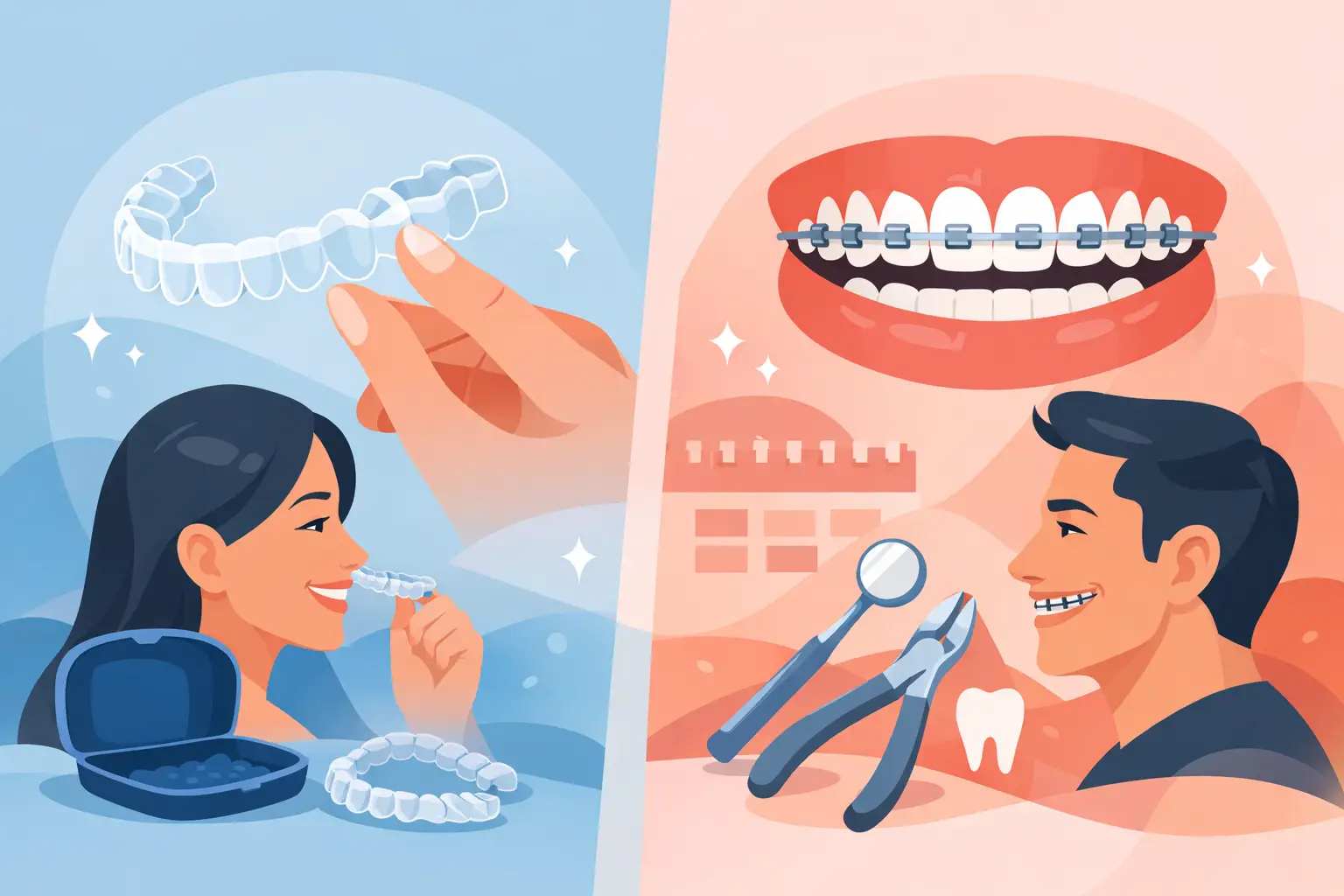
Invisalign uses a series of clear, removable aligners that are custom-made for your teeth. You wear them most of the day and switch to a new set as your teeth gradually shift. Braces use brackets and wires that stay attached to your teeth throughout treatment and are adjusted at regular visits.
That sounds simple enough, but the better option for an adult often comes down to compliance and complexity. Invisalign offers flexibility and a more discreet appearance. Braces offer constant force and can be better for certain more involved tooth movements. Neither is automatically better for everyone.
Appearance and confidence in daily life
For many adults, appearance is the first deciding factor. Invisalign is popular because the aligners are clear and far less noticeable than brackets and wires. If you speak in meetings, work with clients, or simply want a more subtle treatment option, that matters.
Braces are more visible, even when ceramic options are available. Some adults do not mind that at all. Others feel self-conscious about how braces may look in professional or social settings. That does not mean braces are the wrong choice, but it is a practical issue worth being honest about.
Invisalign usually wins on appearance. If looking discreet is high on your list, clear aligners tend to fit adult life more comfortably.
Comfort and adjustment
Neither option is pain-free, but the type of discomfort is different.
With Invisalign, you will usually feel pressure for a day or two when you start a new set of aligners. That pressure is a sign your teeth are moving. The trays can also feel snug at first, but many adults like that there are no brackets rubbing against the inside of the lips and cheeks.
Braces can create soreness after adjustments, and the brackets and wires may irritate soft tissue, especially early on. Orthodontic wax helps, but there is still a learning curve.
That said, removable aligners are not automatically more comfortable for every patient. Some adults find taking trays in and out annoying. Others dislike the feeling of wearing plastic aligners for most of the day. Comfort is personal, but many adults do find Invisalign easier to tolerate.
Convenience and routine
This is where adult lifestyle really matters.
Invisalign gives you the ability to remove your aligners for meals, coffee breaks, and brushing. That means no food restrictions. You can eat popcorn, nuts, crunchy vegetables, or chewy foods without worrying about breaking a bracket. Oral hygiene is also simpler because you can brush and floss normally.
The trade-off is responsibility. Invisalign only works well if you wear the aligners as directed, usually 20 to 22 hours per day. If you leave them out too often, treatment can slow down or become less effective.
Braces are less flexible but more foolproof. Because they stay on your teeth, you do not have to remember to wear them. For adults with demanding schedules or a history of losing retainers and mouthguards, that can actually be a benefit. The downside is more care around food and more effort to clean around brackets and wires.
If you want freedom, Invisalign often feels easier. If you want a treatment that stays in place and does not rely on self-discipline every day, braces may be the better fit.
Which works faster?
Adults often ask which option gets results faster, but there is no universal answer.
For mild to moderate alignment issues, Invisalign can be very efficient, especially when patients wear aligners exactly as instructed. In some straightforward cases, treatment may be completed in about the same time as braces.
For more complex cases, braces may offer better control. Certain movements, such as significant tooth rotation, major bite correction, or more involved alignment needs, can sometimes be handled more predictably with braces. In those situations, braces may be faster or simply more effective.
The best way to estimate timeline is to look at your actual bite, spacing, crowding, and tooth positioning. Adults should be careful about assuming the most discreet option is always the shortest path.
Cost matters, especially for adults
Cost is a real factor for many patients, especially adults paying for their own treatment or balancing care for the whole family.
The price of Invisalign and braces can overlap more than people expect. Invisalign is sometimes slightly more expensive, but not always. The final cost depends on how complex your case is, how long treatment lasts, and whether additional appliances or refinements are needed.
Traditional metal braces are often seen as the more budget-friendly option, while clear aligners may carry a premium in some cases. Ceramic braces can also increase cost compared to metal braces.
If affordability is a concern, ask about the total treatment plan, payment options, and whether your dental or orthodontic benefits apply. A good consultation should give you clear numbers instead of vague estimates. At a practice like Star Dental Group, adults often appreciate being able to discuss treatment goals, cost, and broader dental needs in one place rather than trying to piece together care from multiple offices.
Invisalign vs braces adults should consider for complex dental needs
Adults do not always come in with perfectly healthy teeth plus one alignment issue. Sometimes there are fillings, crowns, gum concerns, missing teeth, or cosmetic goals tied into the decision.
That matters because orthodontic treatment should fit into your full oral health picture. If you are planning veneers later, replacing a missing tooth, improving your bite, or dealing with wear from grinding, straightening your teeth may be one part of a larger plan.
Braces may be recommended when tooth movement needs tighter control. Invisalign may be a great option when aesthetics and hygiene are top priorities and the case is a good match. The key is working with a provider who looks at function and long-term health, not just whether your front teeth line up better in photos.
Social habits, work, and adult reality
Adults usually make this decision differently than teens. You may have client lunches, public-facing work, travel, weddings, or family responsibilities that affect what treatment feels manageable.
If you snack throughout the day, Invisalign can be inconvenient because each snack means removing trays, cleaning up, and putting them back in. If you drink coffee all morning, you may need to adjust habits. On the other hand, if you want the freedom to remove aligners for important events, that can be a major plus.
Braces eliminate the need to think about wear time, but they do require more awareness during meals and more maintenance if something breaks. Neither option is perfect. The better one is the one you are most likely to follow through with.
So, which is better for adults?
If your case is mild to moderate, you want a discreet look, and you know you can be consistent with wear time, Invisalign is often an excellent choice. It works especially well for adults who value flexibility and want treatment that fits smoothly into professional and social life.
If your case is more complex, you do not want to worry about remembering aligners, or you want an option that may be more cost-effective, braces may be the stronger choice. They are reliable, effective, and still the better tool in some situations.
The truth is that this is not really a popularity contest between two treatments. It is a decision about what will give you the healthiest, most predictable result with the least stress for your life.
A good orthodontic consultation should not push you toward one option just because it is trendy. It should explain what your teeth need, what your bite needs, how long treatment may take, and what daily life will look like with each choice. Once you have that clarity, the decision usually becomes much easier.
If you have been waiting for the right time to straighten your teeth, this may be it. Adults have more treatment options than ever, and the best one is the one that helps you move forward with confidence.

