


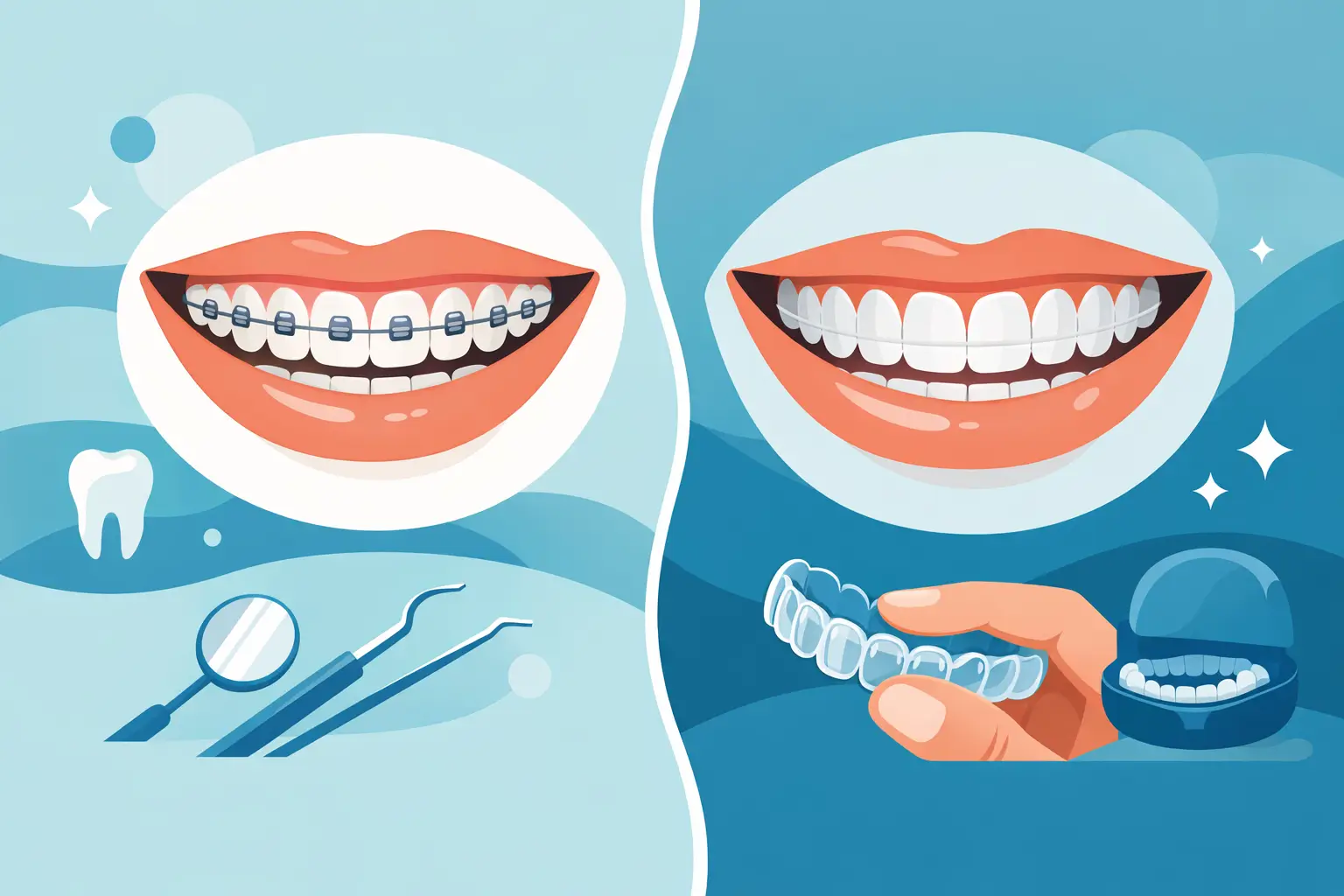
Braces or Clear Aligners for Your Best Smile
A straighter smile can change more than photos. When teeth are easier to clean and your bite feels balanced, everyday things like eating, speaking, and smiling can feel more comfortable. But choosing between braces or clear aligners is not simply a matter of picking the option that looks better. The right treatment depends on your bite, the movement your teeth need, your daily habits, and what will help you stay consistent from the first appointment to the final result.
For patients in Rancho Cucamonga and the Inland Empire, the best place to start is an orthodontic evaluation. A dentist can look beyond crowded or crooked front teeth to assess your jaw relationship, gum health, existing restorations, and the long-term health of your smile.
Braces or Clear Aligners: Start With Your Orthodontic Needs
Both braces and clear aligners apply gentle, controlled pressure to move teeth over time. Each option can treat many common concerns, including crowding, gaps, rotated teeth, and certain bite problems. The difference is in how treatment is delivered and how much it relies on daily patient participation.
Traditional braces use brackets attached to the teeth and a wire that is adjusted at scheduled visits. Because braces remain in place around the clock, they provide continuous force without requiring you to remember to put them in. Clear aligners are removable trays made specifically for your teeth. You wear each set in sequence as your smile gradually moves into its planned position.
Neither option is automatically better. A mild spacing concern may be an excellent fit for clear aligners, while a more complex bite may respond more predictably to braces. In many cases, either treatment could work, but one may be more practical for your lifestyle.
When Braces May Be the Better Choice
Braces are a reliable option for children, teens, and adults. They have evolved considerably, and modern orthodontic treatment is more comfortable and streamlined than many patients expect.
Braces can be especially helpful when teeth need significant movement, when rotations are difficult to correct, or when the bite needs more involved adjustment. Since they are fixed in place, they also work well for patients who may struggle to wear removable aligners for the recommended 20 to 22 hours each day. For a busy teen, a patient who travels frequently, or someone who knows they tend to misplace small items, that built-in consistency can be a real advantage.
Braces may be recommended for concerns such as severe crowding, teeth that have not erupted properly, pronounced overbites or underbites, and complex crossbites. They also give the orthodontic team precise control over individual tooth movement.
The trade-off is visibility and hygiene. Brackets and wires are noticeable, although many patients choose less noticeable ceramic braces when appropriate. Brushing and flossing take more attention, and some foods, such as popcorn, sticky candy, and hard nuts, can damage brackets or wires. Regular adjustment appointments are part of the process as well.
When Clear Aligners May Be the Better Choice
Clear aligners appeal to patients who want a more discreet way to straighten their teeth. The trays are transparent, smooth, and removable, making them a popular option for adults, working professionals, and older teens who want orthodontic treatment to fit naturally into their routine.
Because aligners come out for meals, you can continue enjoying most foods without the restrictions that come with braces. You can also brush and floss normally, which can make daily oral hygiene easier. For patients with a special event, an important presentation, or family photos, the ability to remove aligners briefly can feel especially convenient.
That convenience comes with responsibility. Aligners only work when they are worn as directed. Leaving them out for long periods, frequently forgetting them at home, or failing to switch trays on schedule can delay progress and affect the final result. They must also be removed before eating anything other than water, then stored safely and cleaned before going back in.
Clear aligners can treat a wide range of orthodontic concerns, not just minor cosmetic crowding. Still, they are not ideal for every case. Some complex tooth movements and bite corrections may be more predictable with braces, or may require attachments, small tooth-colored shapes placed on the teeth to help aligners create the right force.
A Practical Question to Ask Yourself
If you are deciding between braces or clear aligners, ask which treatment you are most likely to follow consistently. The answer is more valuable than choosing based on appearance alone.
A patient who wears aligners faithfully can achieve an excellent result. A patient who does not wear them enough may have a longer and more frustrating treatment experience. On the other hand, a patient who is committed to braces can manage the extra brushing, flossing, and food changes successfully. The best choice is often the one that makes healthy habits easier for you.
Treatment Time, Comfort, and Appointments
Orthodontic treatment time varies widely. Some patients complete treatment in less than a year, while others need 18 to 24 months or longer. The starting position of your teeth, your bite, how consistently you follow instructions, and whether additional dental treatment is needed can all affect the timeline.
Both braces and aligners can create temporary pressure when teeth begin moving or when an adjustment is made. This is usually a sign that the treatment is working, and it often improves within a few days. Braces can occasionally irritate the inside of the cheeks or lips, particularly at first, while aligners may cause a slight lisp for a short adjustment period. Most patients adapt quickly.
Appointments also look different. Braces require periodic visits to adjust wires, replace ties, and check progress. Clear aligner patients may receive several sets of trays at once and return at intervals so the dental team can monitor movement. If an aligner is lost or a bracket breaks, contact the office promptly rather than waiting for your next visit.
Cost and Value Should Be Part of the Conversation
Cost matters, and it is reasonable to ask direct questions before beginning orthodontic care. The total cost of braces or clear aligners depends on the complexity of treatment, expected treatment length, materials used, and whether any additional procedures are needed before or during treatment.
The lower advertised price is not always the better value. An orthodontic plan should include a clear diagnosis, careful monitoring, and a retention plan after active treatment ends. Retainers are essential because teeth can shift after braces come off or aligner treatment is complete. Protecting your result is part of the investment.
If you have delayed treatment because of cost or uncertainty, ask about a free consultation, payment options, and available discounts. At Star Dental Group, patients can discuss orthodontic goals alongside other dental needs in one convenient setting, which can be especially helpful when a smile plan involves restorative, cosmetic, or general dental care as well.
Your Smile Should Be Healthy, Not Just Straight
Before moving teeth, your dentist should evaluate the foundation of your smile. Cavities, gum inflammation, worn teeth, missing teeth, and older crowns or fillings can influence the timing and design of orthodontic treatment. Straightening teeth without addressing active dental problems first can create avoidable complications.
This is also why a comprehensive approach matters for adults. If you are considering veneers, bonding, implants, whitening, or replacing an old restoration, orthodontic treatment may be recommended first to create better spacing and alignment. In other situations, cosmetic treatment may be planned after teeth are straightened so final restorations look more natural and function properly.
What to Expect at a Consultation
A good consultation should feel informative, not pressured. Your dental team may take digital images or X-rays, examine your bite, discuss your concerns, and explain whether braces, clear aligners, or another approach is appropriate. You should leave with a realistic understanding of the expected timeline, responsibilities, and costs.
Bring up the details that affect your daily life: whether you play sports, have a wedding coming up, travel often, grind your teeth, have trouble keeping up with oral hygiene, or feel nervous about dental treatment. Those details can shape a recommendation that works in the real world, not just on paper.
A straight smile is a worthwhile goal, but the most rewarding treatment is one that supports your comfort, confidence, and long-term oral health. Choose the option you can commit to, then give your smile the consistent care it deserves.

