


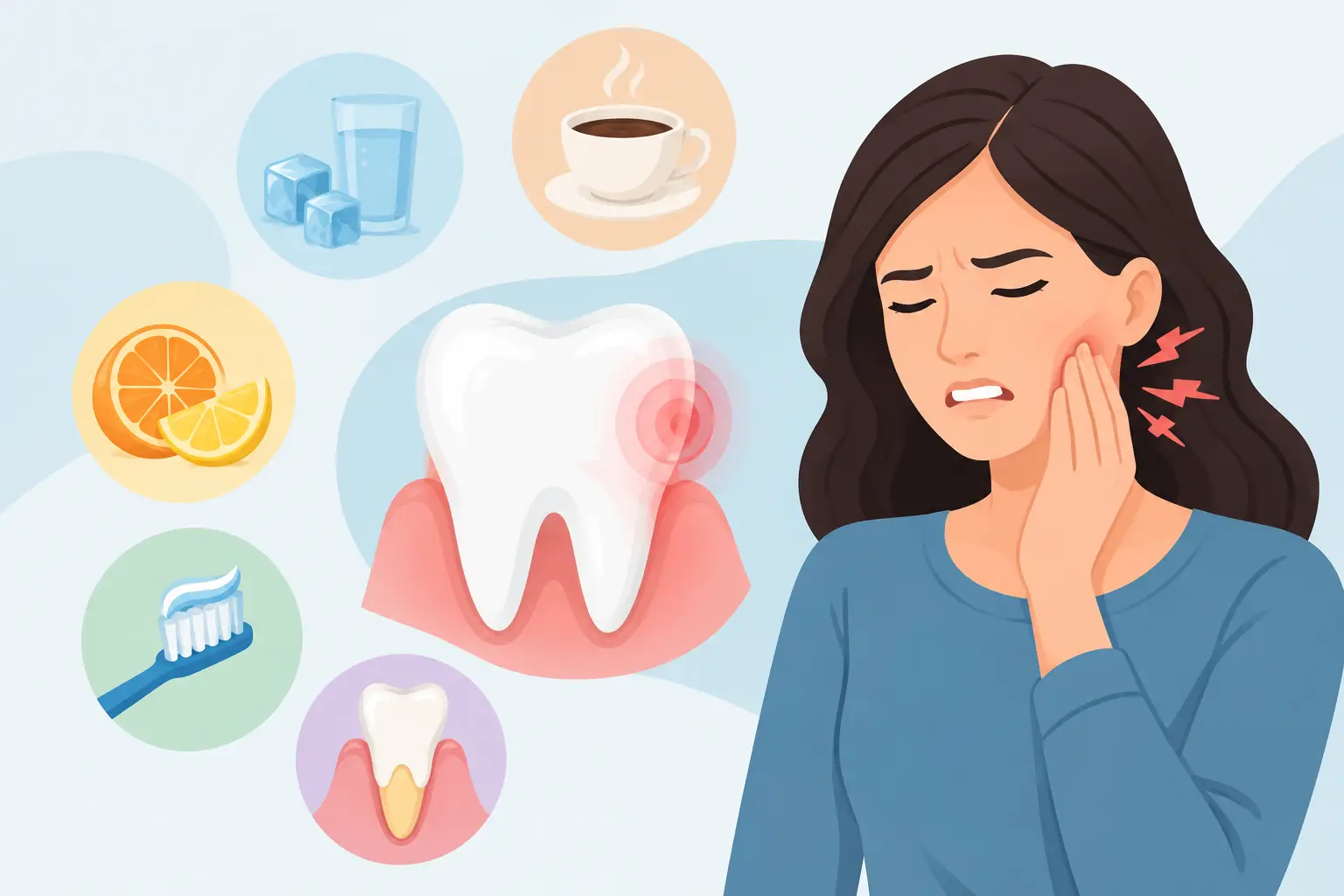
Why Do Teeth Become Sensitive? Common Causes
A sip of iced water should not make you wince. If it does, you may be asking, why do teeth become sensitive? Tooth sensitivity is common, but it is not something you have to simply tolerate. That quick, sharp feeling from cold drinks, hot foods, sweets, brushing, or even breathing cool air can be a sign that part of your tooth needs protection or treatment.
For some people, sensitivity comes and goes. For others, it becomes strong enough to change what they eat, how they brush, or which side of the mouth they use. The good news is that many causes are treatable once a dentist identifies what is exposing or irritating the sensitive parts of your teeth.
Why do teeth become sensitive?
Teeth have a hard outer layer called enamel. Below the gumline, the root is covered by a thinner material called cementum. Under both layers is dentin, which contains tiny channels leading toward the tooth’s nerve.
When enamel wears down, gums recede, or a tooth develops damage, those channels can become exposed. Temperature changes and certain foods can then stimulate the nerve inside the tooth. That is what creates the sudden, uncomfortable sensation associated with sensitivity.
Sensitivity does not always mean there is a serious dental problem, but it can be an early warning sign. A professional exam helps separate a manageable issue, such as mild enamel wear, from a concern that needs prompt treatment, such as decay or a cracked tooth.
Common reasons teeth become sensitive
Enamel erosion
Enamel is strong, but it cannot grow back once it has been lost. Frequent exposure to acids can gradually soften and thin this protective surface. Acidic drinks, citrus foods, sports drinks, wine, and frequent snacking can all contribute. Acid reflux can also expose teeth to stomach acid, often affecting the backs of the upper teeth.
Brushing immediately after an acidic drink or meal can make the problem worse because enamel is temporarily softened. Rinsing with water and waiting about 30 minutes before brushing is often a gentler approach.
Gum recession and gum disease
Healthy gums cover and protect the roots of your teeth. When gums pull back, the root surface becomes exposed and can react strongly to cold, touch, and brushing.
Gum recession can occur because of periodontal disease, aggressive brushing, tobacco use, teeth grinding, or simply the natural changes that can happen over time. Bleeding gums, persistent bad breath, swelling, or teeth that appear longer than before deserve a dental evaluation. Gum disease can progress quietly, so sensitivity may be one of the first changes you notice.
Cavities, worn fillings, and cracked teeth
A cavity can create a pathway for hot, cold, and sweet foods to reach the inner parts of a tooth. A worn filling, loose crown, or small crack can cause similar symptoms. These problems may begin with sensitivity that seems mild or occasional, then worsen as the damage grows.
Sensitivity limited to one tooth is especially worth checking. General sensitivity across several teeth may relate to enamel wear or gum recession, while pain centered in one area can point to decay, a crack, or a failing restoration. Only an exam and, when needed, X-rays can confirm the cause.
Brushing too hard
A firm hand does not equal a cleaner smile. Scrubbing with a hard-bristled toothbrush or using too much pressure can wear enamel near the gumline and irritate gum tissue. This often creates small notches at the base of the teeth, where sensitivity can become noticeable.
Use a soft-bristled brush and gentle, circular motions. An electric toothbrush with a pressure sensor can be useful for people who tend to brush aggressively, but a manual toothbrush works well with the right technique.
Teeth grinding and clenching
Many people clench their jaw during the day or grind their teeth at night without realizing it. Over time, this pressure can wear down enamel, chip teeth, loosen restorations, and create tiny cracks. You may also wake up with jaw soreness, headaches, or teeth that feel tender when biting.
A custom night guard may help protect teeth for patients who grind while sleeping. However, a guard is not a one-size-fits-all solution. Your dentist should assess your bite, tooth wear, and jaw symptoms before recommending treatment.
Whitening products and recent dental treatment
Professional whitening and over-the-counter whitening products can cause temporary sensitivity because they pass through enamel and affect the inner tooth structure. The sensation usually improves after treatment ends, but it should not be ignored if it is severe or persistent.
Sensitivity can also be temporary after a filling, crown, deep cleaning, or other dental procedure. A tooth may need time to settle, particularly after a larger restoration. If discomfort increases, lasts longer than expected, or affects your bite, contact your dental office rather than waiting it out.
What can help with sensitive teeth?
The right treatment depends on the cause. If sensitivity is related to early enamel wear, a desensitizing toothpaste with ingredients such as potassium nitrate or stannous fluoride may reduce discomfort over several weeks. Fluoride treatments from a dental office can strengthen vulnerable areas and help protect against decay.
For exposed roots, your dentist may recommend fluoride varnish, bonding material to cover worn areas, or treatment for gum disease. A cavity may need a filling, while a cracked or deeply damaged tooth may require a crown or root canal treatment. Treating the underlying issue is more effective than repeatedly avoiding cold food and hoping the pain disappears.
At home, make a few practical adjustments. Choose a soft toothbrush, use fluoride toothpaste, and brush twice daily without scrubbing. Floss gently each day to keep gums healthy. Limit frequent acidic snacks and drinks, and drink water after consuming them. If you enjoy sparkling water, citrus drinks, or soda, having them with a meal rather than sipping for hours can reduce acid exposure.
Avoid placing aspirin or other pain medicine directly on a tooth or gum. This can burn soft tissue and does not treat the source of pain. If you need temporary relief, follow medication directions on the label and arrange a dental visit.
When sensitivity needs prompt care
Make an appointment if sensitivity lasts more than a few days, returns often, or keeps you from eating and drinking comfortably. It is also wise to schedule a visit if you notice a chipped tooth, visible dark spot, loose filling, swollen gums, bleeding, or pain when biting.
Seek urgent dental care for facial swelling, fever, a pimple-like bump on the gums, severe throbbing pain, or trouble swallowing or breathing. These symptoms can signal an infection that needs timely attention.
For families in Rancho Cucamonga and the surrounding Inland Empire, Star Dental Group can evaluate sensitivity as part of a complete oral health exam. Looking at your gums, bite, restorations, and overall tooth condition helps identify the cause instead of simply masking the symptom.
Sensitive teeth can make ordinary routines feel stressful, especially when you have delayed care because of cost, fear, or a busy schedule. A gentle evaluation can provide clarity and options. The sooner the source is identified, the more likely treatment can stay simple, comfortable, and focused on protecting your natural smile.

