


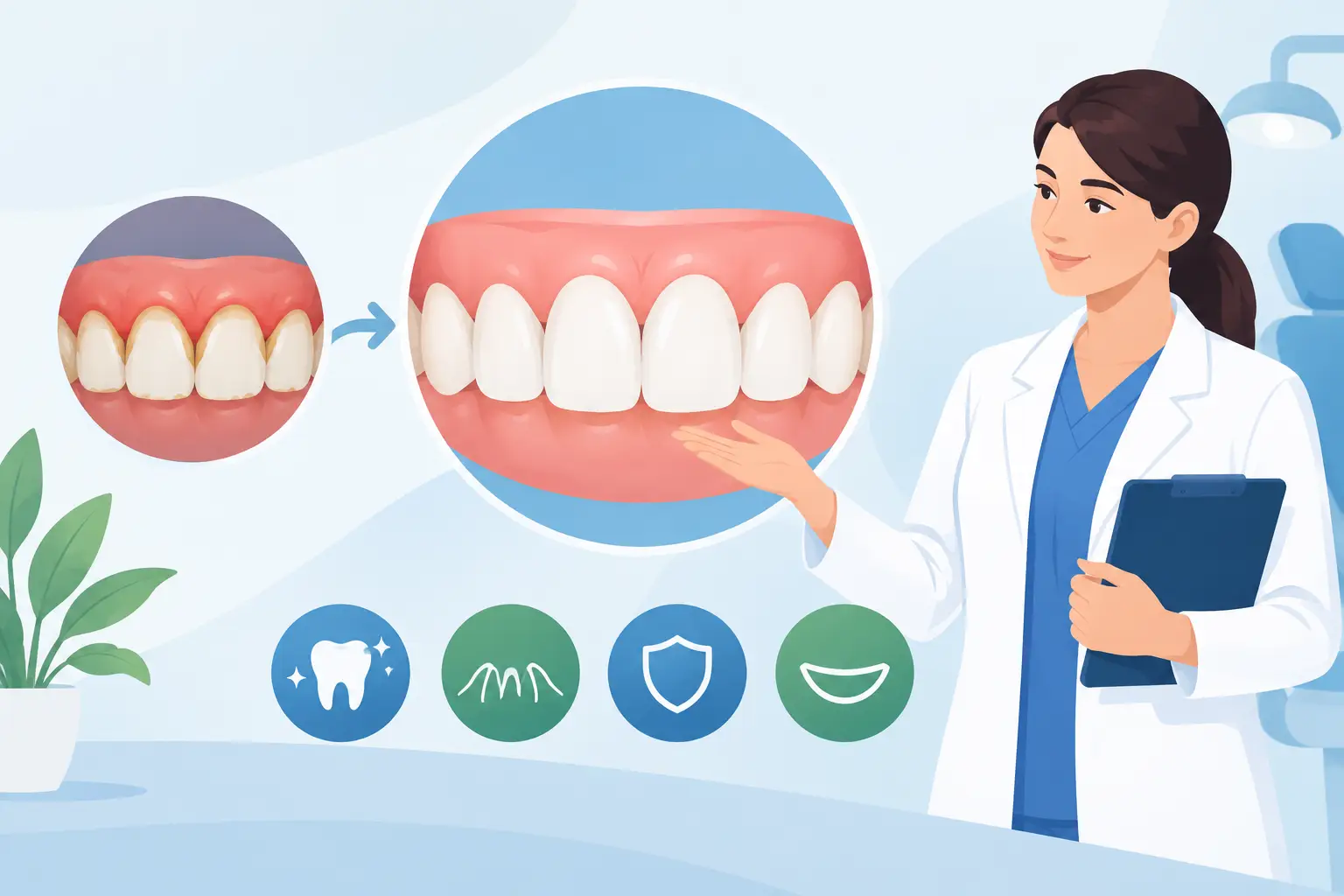
Periodontal Treatment Results: What to Expect
Bleeding gums, persistent bad breath, or teeth that feel different when you bite are not problems to wait out. Periodontal treatment results can be encouraging, especially when gum disease is addressed before it causes extensive bone loss or tooth mobility. The goal is not simply to make gums look less red. It is to control infection, protect the bone that supports your teeth, and give you a healthier foundation for eating, speaking, smiling, and future dental work.
For patients in Rancho Cucamonga and the Inland Empire, understanding the timeline can make treatment feel much less intimidating. Gum health improves in stages, and the best result is usually built through professional care followed by consistent home habits and maintenance visits.
What Successful Periodontal Treatment Results Look Like
Periodontal disease is an infection and inflammation of the tissues around the teeth. It often starts as gingivitis, when gums bleed or swell, then can progress beneath the gumline. As the condition advances, pockets can form between the teeth and gums, allowing bacteria to affect the supporting bone.
Successful treatment reduces the bacterial burden and inflammation in those pockets. At follow-up visits, your dental team may see less bleeding during probing, shallower pocket measurements, firmer gum tissue, and improved plaque control. These are meaningful clinical signs because they show that the infection is becoming manageable.
Patients often notice practical changes first. Gums may bleed less while brushing, feel less tender, and look less puffy. Breath may improve, and chewing can become more comfortable when inflammation has been contributing to sensitivity or soreness.
The outcome depends on where treatment begins. Early gingivitis can often be reversed with professional cleaning and improved daily care. More advanced periodontitis can usually be controlled, but bone that has already been lost does not always return on its own. In those cases, treatment focuses on stopping or slowing further damage and preserving the teeth whenever possible.
Your Healing Timeline After Gum Treatment
Healing is not identical for every patient. Your treatment may involve a deep cleaning, also called scaling and root planing, periodontal maintenance, medication placed around the gums, or a referral for surgical periodontal care when needed. The severity of disease, your overall health, smoking or vaping habits, and your home care all affect the timeline.
The First Few Days
After a deep cleaning, it is common to have mild tenderness, temporary sensitivity to cold foods or drinks, and slight gum soreness. These symptoms typically improve within several days. If your gums were heavily inflamed before treatment, they may look as if they have receded a little as swelling goes down. This can expose more of the tooth surface, but it can also mean the tissue is healing and becoming firmer.
Use a soft toothbrush, follow the cleaning instructions provided by your dental team, and avoid skipping the areas that feel tender. Gentle, thorough brushing is usually more helpful than avoiding the gums altogether.
The First Four to Eight Weeks
This is often when the most visible periodontal treatment results begin to emerge. Bleeding and swelling may decrease, breath may feel fresher, and gums can fit more closely around the teeth. Your provider may schedule a re-evaluation to measure periodontal pockets and assess whether inflammation is resolving as expected.
This appointment matters. It is the point where your treatment plan can be confirmed, adjusted, or expanded. Some areas may respond very well to nonsurgical therapy, while deeper pockets may need additional periodontal treatment to achieve stable health.
The Long-Term Picture
Periodontal disease is often a chronic condition, much like high blood pressure or diabetes. It can be managed very successfully, but it requires ongoing attention. Once active disease is under control, many patients benefit from periodontal maintenance cleanings more often than the standard six-month schedule. The right interval may be every three or four months, depending on your risk factors and periodontal measurements.
Maintenance visits remove buildup from areas that are difficult to clean at home and give your dental team a chance to spot changes early. That ongoing partnership is one of the strongest ways to protect your results.
What Affects the Outcome?
A deep cleaning can remove harmful deposits below the gumline, but no single appointment can do all the work forever. The condition of your gums after treatment is influenced by several connected factors: how advanced the disease was, whether there is bone loss, your brushing and interdental cleaning routine, tobacco use, stress, certain medications, and health conditions such as diabetes.
Daily plaque removal is especially important. A toothbrush cleans the outer, inner, and chewing surfaces of teeth, but it does not fully clean between them. Floss, interdental brushes, or a water flosser may be recommended based on the shape of your teeth, the size of the spaces between them, and the condition of your gums. The best tool is the one you can use correctly and consistently.
Smoking and vaping can make periodontal disease harder to manage because they can interfere with healing and sometimes mask bleeding that would otherwise signal inflammation. Quitting is not always easy, but even reducing tobacco use can support your oral and overall health. If diabetes is a concern, keeping blood sugar well managed can also help gums respond more predictably to treatment.
Can Periodontal Treatment Save Teeth?
Often, yes. Treating gum disease can help preserve teeth that might otherwise become loose or require extraction. But every case deserves an honest assessment. A tooth with severe bone loss, a deep fracture, repeated infection, or extensive decay may have a guarded prognosis even with excellent periodontal care.
When a tooth cannot be predictably saved, a comprehensive office can help you plan the next step without making you coordinate care between multiple locations. Options may include a dental implant, bridge, or other restorative solution after the gums are stable enough to support treatment. Healthy gums and adequate bone are especially important for long-term implant success, so periodontal care is often part of a larger full-mouth plan.
At Star Dental Group, that whole-mouth perspective helps patients understand how gum health, restorative needs, and cosmetic goals fit together before making treatment decisions.
How to Protect Your Results at Home
The most effective routine is usually simple, not complicated: brush twice a day with a soft toothbrush, clean between teeth once daily, and keep every recommended maintenance visit. If your provider prescribes a medicated rinse or suggests a specific cleaning aid, use it as directed rather than assuming a stronger product is always better.
Pay attention to changes between appointments. Bleeding that returns, a bad taste that does not go away, increasing sensitivity, swollen gums, pus around a tooth, or a tooth that feels loose should prompt a call to your dental office. Early intervention is generally more comfortable, more conservative, and more affordable than waiting for symptoms to worsen.
Do not judge your progress only by how your smile looks in the mirror. Gum disease can be quiet, particularly after symptoms improve. Professional periodontal measurements and X-rays, when appropriate, show what is happening below the gumline and around the bone.
When Results Need More Time or More Treatment
Not every area responds at the same pace. Deep periodontal pockets, complex root shapes, heavy calculus buildup, and advanced bone loss can make certain teeth more difficult to stabilize. This does not mean treatment failed. It may mean the next appropriate step is localized therapy, more frequent maintenance, periodontal surgery, or a discussion about a tooth’s long-term prognosis.
A caring dental team should explain these options clearly, including what each choice may mean for comfort, cost, appearance, and durability. There is value in treating the disease thoroughly, but there is also value in choosing a plan that fits your health needs and your life.
Healthy gums are not a one-time achievement. With timely care, thoughtful maintenance, and a team that monitors your progress, many patients can keep periodontal disease under control and protect the smile they rely on every day.

