


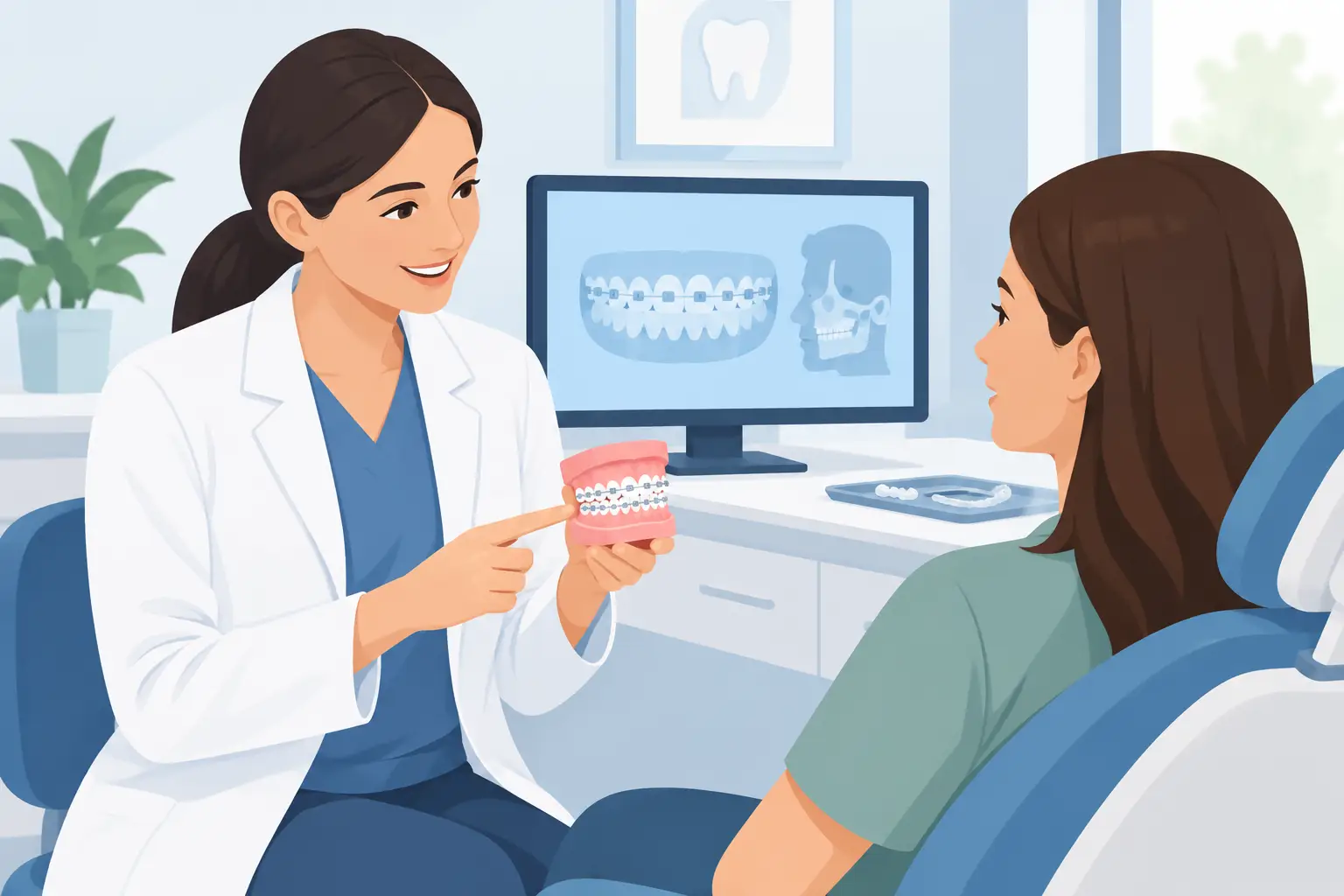
What Happens at an Orthodontic Consultation?
A crooked tooth may seem like a cosmetic concern until it makes cleaning harder, affects your bite, or leaves you hesitant to smile in photos. An orthodontic consultation gives you a clear, pressure-free starting point: an opportunity to understand what is happening in your mouth, which treatment options may fit your needs, and what it could take to move forward.
For families and adults in Rancho Cucamonga, the goal is not simply to recommend braces. It is to create a treatment plan that supports a healthier bite, a more comfortable smile, and realistic expectations for your schedule and budget.
What Is an Orthodontic Consultation?
An orthodontic consultation is an initial appointment focused on the position of your teeth and jaws. Your dental team evaluates alignment, spacing, bite function, and the health of the teeth and gums before discussing whether orthodontic treatment is appropriate.
It is also your time to ask practical questions. You may want to know whether clear aligners could work for you, how long treatment may take, whether a child should begin now or wait, or how orthodontics could fit around existing dental needs such as fillings, crowns, implants, or cosmetic treatment.
At a multi-specialty practice, that broader perspective matters. Orthodontic care affects more than straight teeth. It can influence how your teeth meet, how easy they are to clean, and how future restorative or cosmetic work is planned.
What to Expect at Your Orthodontic Consultation
The appointment usually begins with a conversation about your concerns and goals. Some patients come in because of crowding or gaps. Others are concerned about an overbite, underbite, shifting teeth after past braces, jaw discomfort, or a child’s developing smile. There is no need to know the clinical terms before you arrive. Describing what you see and feel is enough.
A review of your dental and health history
Your provider will ask about your overall health, medications, previous dental work, prior orthodontic treatment, and any history of clenching, grinding, or jaw pain. These details can affect treatment planning.
For example, a patient with active gum disease may need periodontal care before moving teeth. Someone with untreated decay may need general dentistry first. If a patient is considering implants, the timing and placement of orthodontic treatment deserve special attention because implants do not move like natural teeth.
A careful exam of your teeth and bite
The clinical exam looks beyond whether teeth appear straight. Your provider evaluates crowding, spacing, tooth position, the way upper and lower teeth meet, facial balance, gum health, and signs of wear. They may also look for teeth that are erupting in an unusual position or have not come in as expected.
A bite that looks minor can sometimes create uneven pressure on certain teeth. On the other hand, not every small gap or slight rotation requires treatment. The right recommendation depends on function, oral health, appearance goals, and what matters most to you.
Digital images and records when needed
Photos, digital scans, and X-rays may be recommended to create an accurate picture of your smile. These records can show tooth roots, bone levels, developing teeth in children, impacted teeth, and conditions that are not visible during a routine visual exam.
Digital impressions are often more comfortable than traditional impression materials. They can also help your dental team show you a three-dimensional view of your teeth and explain why a particular treatment approach may be recommended.
Choosing Between Braces and Clear Aligners
One of the most common questions during an orthodontic consultation is whether braces or clear aligners are the better choice. Both can be effective, but the answer depends on the complexity of your case and your ability to follow treatment instructions.
Traditional braces are fixed to the teeth and work continuously. They are often a dependable option for more complex crowding, significant bite correction, and patients who would rather not worry about removing and replacing aligners throughout the day. Modern braces can be more comfortable and less noticeable than many people remember.
Clear aligners are removable and can be an appealing choice for adults and teens who want a more discreet approach. They must be worn as directed, commonly most of the day, and removed only for meals, brushing, and flossing. They offer flexibility, but they rely on consistency. If aligners stay in a case instead of on your teeth, treatment can take longer or may not progress as planned.
Your provider should explain the benefits and limits of each option for your specific bite rather than presenting one treatment as universally better.
When Should Children Have an Orthodontic Evaluation?
Parents often assume orthodontic care starts only after all permanent teeth are in. In many cases, comprehensive braces or aligner treatment does begin during the teen years. Still, an early evaluation can be valuable because jaw growth and tooth eruption are already underway.
An orthodontic assessment can identify crossbites, severe crowding, protruding front teeth, early loss of baby teeth, habits that affect development, or jaw-growth differences. Early treatment is not necessary for every child, and a good consultation may simply confirm that monitoring is the best approach for now.
That reassurance is useful. It lets parents make decisions based on their child’s actual development instead of guessing or waiting until a concern becomes more complicated.
Adults Are Not Too Old for Orthodontic Care
Adults choose orthodontic treatment for many reasons. Teeth can shift gradually after adolescence, particularly in the lower front teeth. Others never had treatment when they were younger, or they are preparing for cosmetic dentistry and want a more balanced foundation for a new smile.
Adult treatment requires thoughtful planning because gums, bone support, existing crowns, bridges, and missing teeth may affect the process. This does not rule out orthodontics. It means the care team should assess the whole mouth before recommending a path forward.
For some adults, the primary goal is cosmetic. For others, improving tooth position can make hygiene easier and support future dental work. Your consultation should account for both your smile goals and your long-term oral health.
Discussing Treatment Time, Cost, and Comfort Honestly
No two treatment plans have the same timeline. Mild spacing may take less time than a complex bite correction, while missed appointments, broken braces, or inconsistent aligner wear can add time. Your provider can give you an estimated timeline after reviewing your records, but an estimate should never be mistaken for a guarantee.
Cost also depends on the treatment type, complexity, records, follow-up visits, and any additional dental care needed before orthodontics begins. Ask for a clear explanation of what is included, what payment options are available, and whether insurance benefits may apply. Patients without insurance and seniors should also ask about available discounts or financing options.
Comfort is another worthwhile topic. Some pressure after an adjustment or when switching to a new aligner is normal, but treatment should not feel like something you have to endure without support. Ask whom to contact if you have a poking wire, a loose bracket, an aligner issue, or unexpected discomfort.
Questions Worth Bringing to Your Appointment
Come prepared to talk about what you want to change and what could make treatment difficult. If you travel frequently, play a contact sport, have an important event coming up, or are concerned about the visibility of braces, say so. Those details can help shape a plan that works in real life.
It is also reasonable to ask whether treatment is necessary now, what could happen if you wait, how often appointments will be needed, and how retention works after active treatment ends. Retainers are not an optional afterthought. Teeth can shift throughout life, so wearing retainers as instructed is essential to protecting your result.
A Clear Next Step for Your Smile
A good consultation should leave you informed, respected, and able to make a decision at your own pace. At Star Dental Group, a comprehensive approach can help connect orthodontic treatment with your general, restorative, and cosmetic dental needs under one roof.
Whether you are exploring braces for your child, considering clear aligners for yourself, or simply want answers about a changing bite, the most helpful next step is a personalized evaluation. A confident smile starts with knowing your options.

