


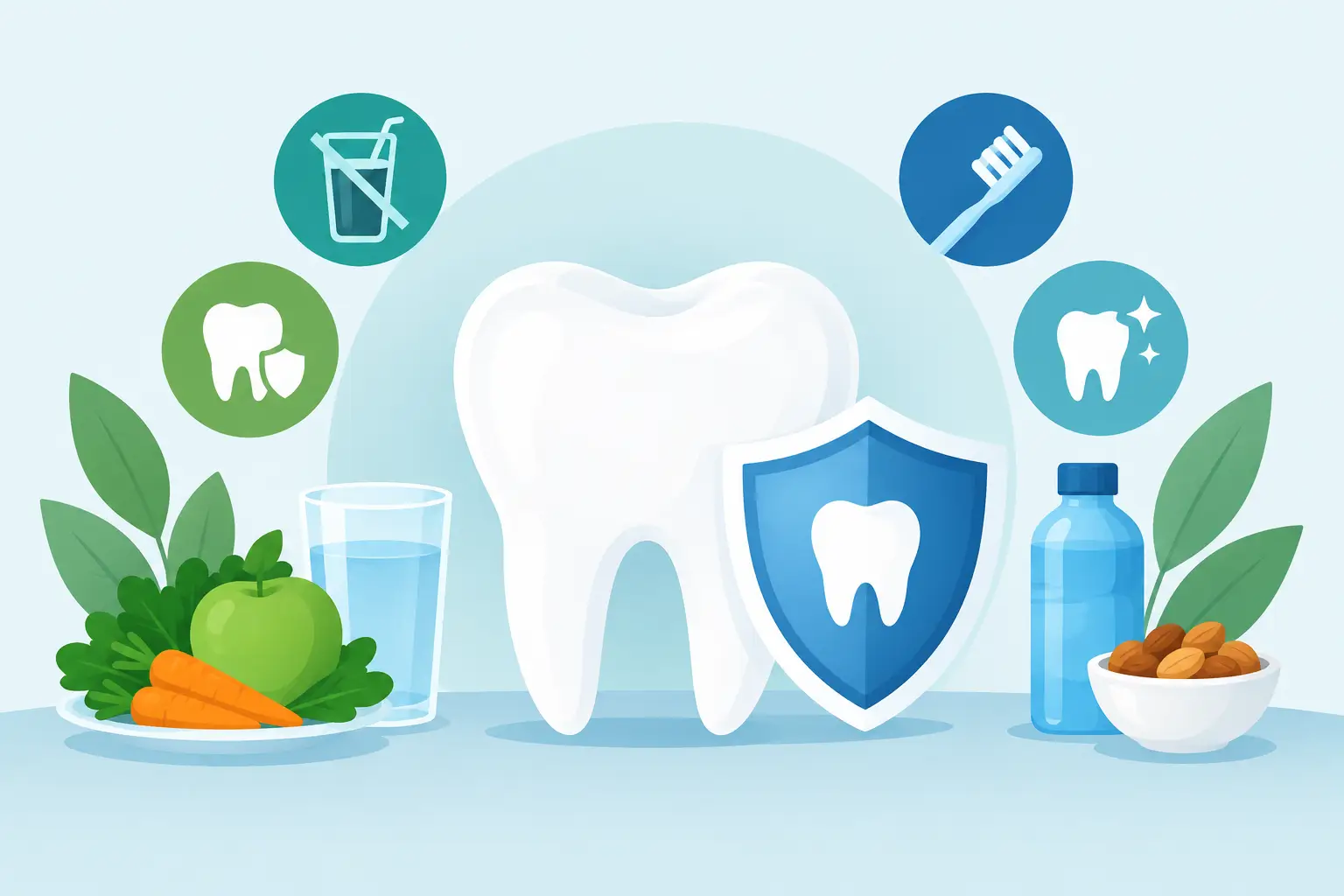
How to Prevent Enamel Erosion and Protect Teeth
A cold drink that suddenly causes a sharp twinge, teeth that look more translucent at the edges, or fillings that seem to chip more easily can all point to enamel wear. Knowing how to prevent enamel erosion can help you protect your natural teeth before sensitivity, discoloration, or more extensive dental treatment becomes necessary.
Enamel is the hard outer layer of each tooth. It is remarkably strong, but it is not indestructible. Repeated acid exposure can soften and gradually wear it away. Unlike a small surface weakness that may benefit from remineralizing minerals, enamel that has been lost does not grow back. That makes early prevention especially valuable.
What Causes Enamel Erosion?
Acid is the primary cause of enamel erosion. Some acid comes from foods and drinks, while other sources are related to medical conditions or everyday habits. Frequent exposure matters as much as the amount you consume. Sipping an acidic beverage over several hours keeps the teeth in an acidic environment far longer than having it with a meal.
Common dietary sources include soda, sports drinks, energy drinks, citrus juices, wine, vinegar-based foods, and sour candies. Sparkling water is usually less acidic than soda, but frequent sipping can still be a concern for people already prone to enamel wear.
Acid can also come from the stomach. Acid reflux, chronic heartburn, pregnancy-related nausea, frequent vomiting, and certain eating disorders can expose the back surfaces of teeth to stomach acid. Dry mouth is another important factor because saliva helps rinse away acids and restore a healthier mouth pH. Some medications, medical treatments, and mouth breathing can contribute to dry mouth.
Tooth grinding does not cause chemical erosion, but it can make weakened enamel more likely to crack, flatten, or chip. For this reason, a complete dental exam is often the best way to determine whether wear is caused by acid, grinding, aggressive brushing, or a combination of factors.
How to Prevent Enamel Erosion at Home
The most effective approach is not eliminating every acidic food forever. It is reducing the frequency and duration of acid contact, then supporting your teeth with consistent daily care.
Change the way you drink acidic beverages
If you enjoy soda, juice, sparkling drinks, or sports beverages, have them with a meal instead of sipping them all day. Drinking through a straw can limit contact with front teeth, although it does not make an acidic drink harmless. Follow acidic beverages with plain water to help rinse your mouth.
Water is the best everyday choice, especially between meals. For patients who want flavor without frequent acid exposure, still water with non-citrus flavor options may be a better fit than regularly adding lemon or lime. It is the repeated acid exposure, not one occasional treat, that usually creates the bigger problem.
Wait before brushing after acid exposure
Brushing right after vomiting, reflux, citrus, soda, or another acidic drink may scrub against temporarily softened enamel. Rinse with water first, then wait about 30 minutes before brushing. This gives saliva time to begin neutralizing acid and helps reduce unnecessary surface wear.
This does not mean skipping brushing. Brush twice a day with a soft-bristled toothbrush and fluoride toothpaste, using gentle pressure. Hard brushing does not clean better, and a firm brush or abrasive toothpaste can wear teeth and irritate gums over time.
Use fluoride and support saliva
Fluoride helps strengthen enamel and makes teeth more resistant to future acid attacks. A standard fluoride toothpaste is a strong foundation for most adults and children who are old enough to use toothpaste safely. Patients with a higher risk of cavities or erosion may benefit from a professional fluoride treatment or prescription-strength fluoride product recommended by their dentist.
Saliva is your mouth’s natural defense system. Drink water regularly, particularly if your mouth feels dry. Sugar-free gum containing xylitol may stimulate saliva after meals for some people. If dry mouth is ongoing, do not assume it is a minor inconvenience. A dentist can review potential causes and recommend steps to protect your teeth.
Choose snacks with enamel in mind
Constant snacking can create repeated acid cycles, especially when snacks are sugary, sour, or sticky. When possible, keep meals and snacks more defined rather than grazing throughout the day. Cheese, nuts, crunchy vegetables, and other low-sugar choices are generally kinder to teeth than sour candy, dried fruit, or sweetened drinks.
You do not need a perfect diet to have a healthy smile. The practical goal is to make your daily pattern less acidic. Reserving soda or citrus drinks for occasional meals can have a greater impact than trying to make a short-lived, overly restrictive change.
Signs You Should Schedule a Dental Visit
Enamel erosion can develop slowly, and many people do not notice it until sensitivity begins. A dental examination can identify early changes that are difficult to see at home. Your dentist may look for smooth, shiny worn areas; rounded tooth edges; thinning or translucency near the edges of front teeth; small chips; and changes around existing fillings.
Schedule a visit if hot, cold, sweet, or acidic foods cause sensitivity, or if you notice your teeth becoming shorter, yellower, more transparent, or more prone to chipping. Yellowing can happen because the naturally yellow dentin beneath enamel becomes more visible as enamel thins. Whitening may not address the underlying issue and can increase sensitivity for some patients, so an exam should come first.
Patients with frequent heartburn, reflux, vomiting, or dry mouth should also mention those symptoms during their appointment. Protecting the teeth may require coordination with a physician when a medical condition is contributing to acid exposure.
Professional Options for Worn Enamel
Treatment depends on how much tooth structure has been lost, where the erosion is located, whether sensitivity is present, and whether grinding or bite issues are involved. Early erosion may be managed with fluoride, desensitizing products, habit changes, and regular monitoring.
When erosion has led to visible wear, chips, or weakened edges, cosmetic bonding may restore shape and improve appearance. Crowns, veneers, or other restorative options may be appropriate when damage is more extensive. If grinding is part of the picture, a custom night guard can help protect teeth from additional pressure while other causes are addressed.
There is a trade-off with every treatment. Restorations can protect worn teeth and improve confidence, but they do not remove the need to control acid exposure. The most lasting results come from pairing treatment with prevention and routine checkups.
At Star Dental Group, patients in Rancho Cucamonga can receive a comprehensive evaluation that considers both dental health and smile goals. Whether the concern is mild sensitivity or noticeable tooth wear, understanding the cause is the first step toward a treatment plan that fits your needs and budget.
A Healthier Routine Starts With One Change
You do not have to overhaul your life to protect your enamel. Start with one realistic habit, such as replacing an all-day soda with water, waiting to brush after citrus or reflux, or choosing fluoride toothpaste. Small changes repeated every day can preserve more of the healthy tooth structure you already have and help keep your smile comfortable for years to come.

