


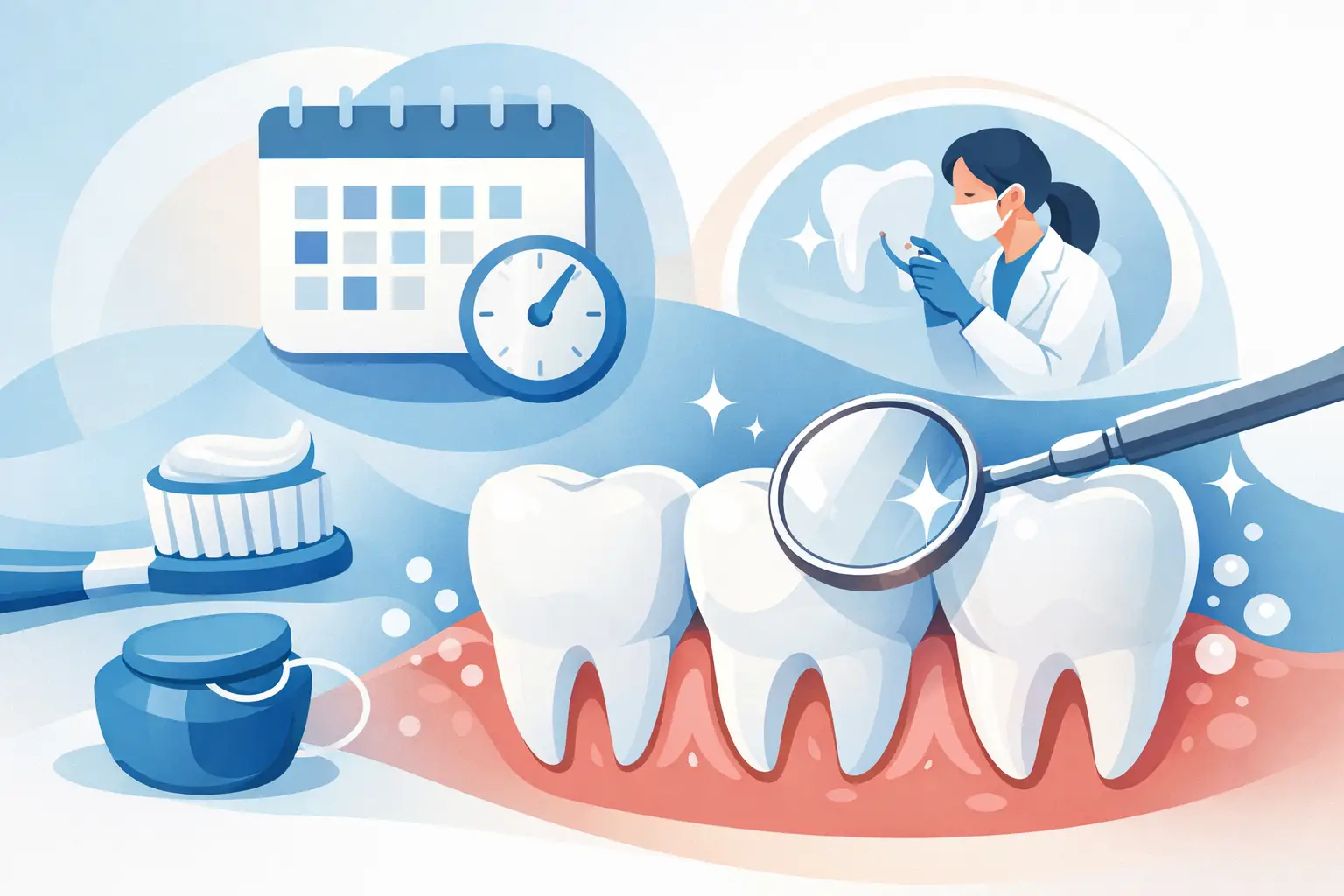
How Often Should Teeth Be Cleaned?
Most people have heard the rule: get your teeth cleaned every six months. It is a good baseline, but it is not the whole story. If you are wondering how often should teeth be cleaned, the honest answer is that it depends on your oral health, your habits, and your risk for problems like gum disease, cavities, and tartar buildup.
For many adults and children, a professional cleaning twice a year is enough to keep plaque and tartar under control. For others, six months is too long. If you have a history of gum disease, frequent buildup, smoking, dry mouth, braces, diabetes, or ongoing dental issues, your dentist may recommend cleanings every three to four months instead.
How often should teeth be cleaned for most people?
The standard schedule is every six months, and there is a practical reason for that. Even with solid brushing and flossing at home, plaque can harden into tartar in areas your toothbrush cannot fully reach. Once tartar forms, it cannot be removed with home care alone.
Routine cleanings help remove that buildup before it turns into something more serious. They also give your dental team a chance to catch early signs of decay, gum inflammation, worn fillings, grinding, or other problems before they become more expensive and uncomfortable to treat.
That six-month timeline works well for many healthy patients because it balances prevention with convenience. You stay ahead of buildup, and your dentist can monitor changes in your oral health on a consistent schedule.
When you may need teeth cleanings more often
Not every mouth builds plaque at the same rate. Some patients do everything right at home and still collect tartar quickly. Others may have gum tissue that reacts strongly to even small amounts of bacteria. In those cases, more frequent visits are not excessive. They are preventive care tailored to your needs.
You may need cleanings every three to four months if you have gum disease or a history of periodontal treatment. Patients with gingivitis or periodontitis benefit from shorter intervals because harmful bacteria can return quickly, and regular maintenance helps control inflammation before it progresses.
More frequent cleanings are also common for smokers, patients with diabetes, people who take medications that cause dry mouth, and those with braces or other appliances that make home cleaning harder. Seniors may also need closer monitoring, especially if they have restorations, gum recession, or dexterity issues that make brushing and flossing more difficult.
If you tend to postpone appointments until something hurts, that is another sign you may benefit from a more structured cleaning schedule. Preventive visits are usually simpler, faster, and more affordable than waiting until a small issue becomes a larger one.
Signs your current schedule may not be enough
A six-month cleaning plan may need to be adjusted if your gums bleed often, your breath stays bad even after brushing, or your teeth feel rough or coated soon after a cleaning. Swollen gums, recurring cavities, and visible tartar behind the lower front teeth are also signs that plaque is building up faster than your current schedule can manage.
This does not mean you are doing something wrong. Biology, medications, diet, and health conditions all play a role. The goal is not to force every patient into the same routine. It is to find the interval that keeps your mouth stable and healthy.
What happens if teeth are cleaned too rarely?
Skipping professional cleanings can seem harmless at first, especially if your teeth do not hurt. The problem is that many dental issues start quietly. Plaque buildup can lead to gingivitis, which may cause redness, bleeding, and tenderness. Left alone, that can develop into periodontal disease, where the infection affects the bone and tissues supporting your teeth.
Cavities can also begin in places that are easy to miss at home, especially between the teeth or around older dental work. By the time you notice pain, the treatment may be more involved than a simple filling.
There is also a financial trade-off. Many patients delay cleanings to save time or money, but untreated buildup and gum disease often lead to deeper cleanings, restorative treatment, or tooth loss over time. Preventive care is usually the lower-stress, lower-cost path.
Can teeth be cleaned too often?
For most patients, professional cleanings at intervals recommended by a dentist are safe and beneficial. A routine cleaning is designed to remove plaque, tartar, and surface stains without harming healthy teeth. If you are being advised to come in more often, it is typically because your oral health calls for closer maintenance, not because more appointments are being added for no reason.
That said, treatment should match the condition. A patient with healthy gums and low buildup may not need periodontal maintenance every three months. A patient with active gum disease probably does. This is one reason personalized care matters more than a one-size-fits-all rule.
Regular cleaning vs. deep cleaning
A lot of patients use these terms interchangeably, but they are not the same. A regular cleaning is preventive. It removes plaque and tartar above the gumline and slightly below it in patients with generally healthy gums.
A deep cleaning, often called scaling and root planing, is a different service used when gum disease is present. It targets bacteria and buildup deeper below the gumline and helps the gums heal around the teeth.
If your dentist recommends a deep cleaning, it does not mean routine visits failed. It usually means gum disease has developed and needs focused treatment. After that, many patients are placed on a periodontal maintenance schedule every three or four months to keep the condition under control.
How often should children have their teeth cleaned?
Children usually benefit from cleanings every six months, just like adults. Regular visits are especially helpful as baby teeth erupt, permanent teeth come in, and brushing habits are still developing. Professional cleanings help reduce plaque buildup, monitor growth, and catch early cavities before they become painful.
Some children may need more frequent visits if they are cavity-prone, wear orthodontic appliances, or struggle with home care. For parents, consistency matters more than perfection. Keeping children on a routine schedule builds familiarity and often reduces dental anxiety over time.
Home care still matters between visits
Professional cleanings are important, but they do not replace daily care. If you go to the dentist twice a year but rush through brushing or skip flossing, plaque still has months to build up between appointments.
Brush twice a day with fluoride toothpaste, floss once a day, and keep sugary snacks and drinks in check. If you have dry mouth, crowding, implants, bridges, or braces, ask your dental team about tools that make home care easier. Sometimes a small change in technique or the right product can make a big difference.
The best results usually come from combining strong home habits with the right in-office schedule. One without the other is rarely enough for long-term oral health.
The best cleaning schedule is the one made for you
So, how often should teeth be cleaned? For many patients, every six months is the right answer. For others, every three to four months is a better fit. The right schedule depends on your gum health, cavity risk, medical history, and how quickly plaque and tartar build up in your mouth.
A good dental office will not guess. It will look at your full picture and recommend care that makes sense for your health, comfort, and budget. At Star Dental Group, that kind of personalized approach matters because preventive care works best when it is built around the patient, not just the calendar.
If it has been longer than six months since your last cleaning, there is no need to feel embarrassed about starting again. The most helpful next step is simply to get back on track and let a dental team help you find the schedule that keeps your smile healthy.

