


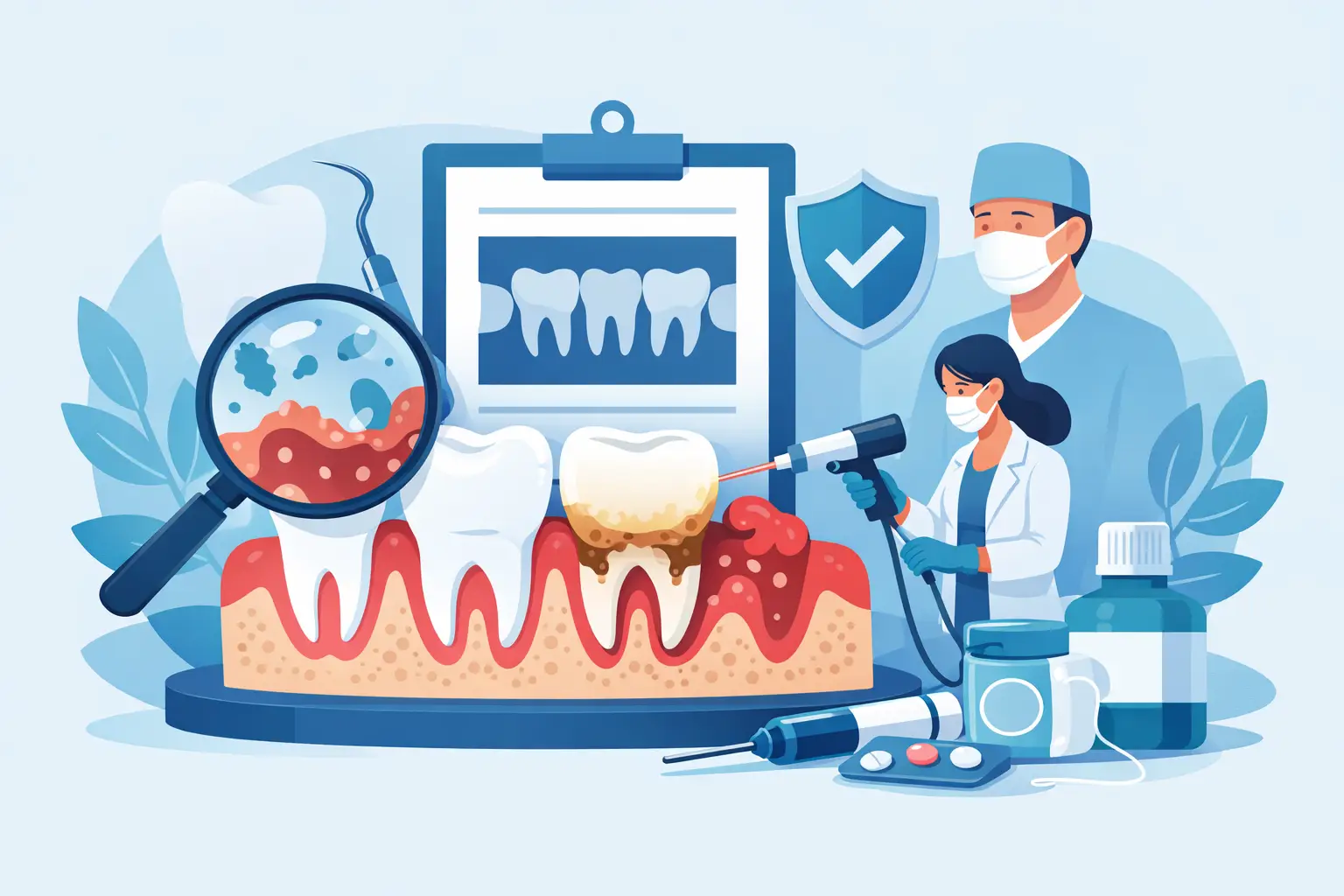
Guide to Periodontal Disease Treatment Options
Bleeding when you brush is easy to dismiss, especially if it stops quickly. But healthy gums generally do not bleed, swell, or pull away from the teeth. This guide to periodontal disease treatment explains what happens when gum disease progresses, how dental teams treat it, and why acting early can protect both your smile and your budget.
Periodontal disease is common, but it is not something you should simply live with. It is an infection and inflammation of the tissues that support your teeth. In its advanced stages, it can damage the bone around the roots, create loose teeth, and make everyday eating uncomfortable. The good news is that modern dental treatment can often stop the disease, control infection, and help you keep your natural teeth.
What Periodontal Disease Looks Like
Gum disease usually begins as gingivitis, a milder form of inflammation caused by plaque buildup along the gumline. Plaque is a sticky film of bacteria that can harden into tartar if it is not removed. Tartar cannot be brushed away at home, which is why routine professional cleanings matter.
Early gingivitis may cause red or puffy gums, bleeding while brushing or flossing, bad breath, or tenderness. At this stage, professional cleaning and consistent home care can often reverse the inflammation.
Periodontitis develops when the infection reaches below the gumline. The gums can begin to separate from the teeth, forming pockets where bacteria collect. As the disease advances, bone and connective tissue may be lost. Warning signs can include persistent bad breath, gum recession, teeth that look longer, changes in how your teeth fit together, sensitivity, pus near the gums, or loose teeth.
Some people have very few noticeable symptoms until the condition is more advanced. That is one reason regular exams are valuable, particularly if you smoke, have diabetes, take medications that cause dry mouth, have a family history of gum disease, or have put off dental visits for a while.
How a Dentist Diagnoses Gum Disease
A periodontal evaluation goes beyond looking at your gums. Your dental team examines inflammation, plaque and tartar buildup, gum recession, tooth mobility, and bite concerns. They also measure the spaces between the gums and teeth with a small instrument called a periodontal probe.
Healthy gum pockets are generally shallow. Deeper pockets may signal that the gum attachment and bone support have been affected. X-rays help show whether bone loss is present and how much support each tooth has.
This examination is not meant to alarm you. It gives your dentist a clear starting point for recommending care that matches your needs. Treatment depends on the severity of infection, pocket depth, bone loss, your overall health, and your ability to maintain the results at home.
A Guide to Periodontal Disease Treatment by Stage
There is no one-size-fits-all treatment plan for gum disease. A patient with early bleeding gums may need a professional cleaning and better home-care habits, while someone with deeper pockets may need more focused treatment to remove bacteria below the gumline.
Professional cleaning for gingivitis
If gum disease is limited to gingivitis, a routine dental cleaning may be the appropriate first step. During the visit, plaque and tartar are removed from the tooth surfaces, including areas that are difficult to reach at home. Your dental team can also demonstrate brushing and flossing techniques that are effective without being harsh on irritated gums.
A powered toothbrush, daily flossing or an interdental cleaner, and regular cleanings can make a meaningful difference. The right tool depends on the spacing of your teeth, any dental work you have, and what you will realistically use consistently.
Scaling and root planing for periodontitis
For periodontitis, dentists often recommend scaling and root planing. This is sometimes called a deep cleaning, though it is a specific periodontal procedure rather than a standard cleaning.
Scaling removes plaque and tartar from above and below the gumline. Root planing smooths the root surfaces, making it harder for bacteria to cling to them and helping the gums heal against the tooth. The procedure may be completed by sections of the mouth and can be performed with local anesthetic to keep you comfortable.
After treatment, mild tenderness or sensitivity is possible for a few days. Your dentist may recommend a medicated rinse, pain-management guidance, or changes to your home-care routine. A follow-up visit is essential because it shows whether the pockets are improving and whether additional treatment is needed.
Periodontal maintenance visits
Once gum disease has been treated, maintenance is the long-term commitment that protects your results. Periodontal maintenance appointments are usually scheduled more frequently than standard cleanings, often every three to four months. The interval depends on your gum health, pocket depths, medical conditions, and how quickly plaque returns.
These visits allow the dental team to clean areas below the gumline as needed, monitor for recurrent inflammation, and address small changes before they become larger problems. Skipping maintenance may allow bacteria to recolonize the pockets, even if your gums felt better after initial treatment.
Advanced care when bone loss is significant
If deep pockets remain after nonsurgical treatment or bone loss is substantial, a referral for periodontal surgery may be appropriate. Surgical options can provide access for deeper cleaning, reshape gum tissue, reduce pockets, or support bone regeneration in selected cases.
Not every patient needs surgery. The decision depends on the location and severity of the disease, the shape of bone loss, the teeth involved, and the expected benefit. Your dentist should explain the goal of any recommended procedure, alternatives, recovery expectations, and how it fits into your overall dental plan.
When a tooth cannot be saved predictably, removal may be the healthier option. Replacing a missing tooth with an implant, bridge, or other restoration is considered only after infection is controlled and the gums are stable. Dental implants can be an excellent solution for many people, but they also require excellent plaque control and ongoing professional monitoring.
What Treatment Can and Cannot Do
Periodontal treatment can reduce bacteria, control inflammation, improve gum comfort, and slow or stop further damage. It may also improve bad breath and make home care easier. In early disease, the gums may return to a healthy condition.
With advanced periodontitis, lost bone does not always grow back on its own. Treatment focuses on preserving the support that remains and preventing additional loss. Gum recession may not fully reverse either, although some patients may be candidates for grafting or other procedures.
That distinction matters. Feeling no pain does not necessarily mean the disease is gone, and a deep cleaning is not a permanent fix without ongoing care. The strongest results come from professional treatment paired with daily habits at home.
Protecting Your Gums Between Visits
Brush twice daily with fluoride toothpaste, using gentle pressure along the gumline. Clean between your teeth every day with floss, interdental brushes, or another dentist-recommended option. If your gums bleed when you start flossing, do not stop automatically. Gentle, consistent cleaning often reduces bleeding as inflammation improves, though persistent bleeding should be evaluated.
Smoking and vaping can make gum disease harder to control and can slow healing after treatment. Managing diabetes, staying hydrated, and discussing dry mouth or medication changes with your dental team can also support better gum health.
Avoid relying on mouthwash alone. It may freshen breath or complement a treatment plan, but it does not remove tartar or clean deep between teeth. Technique and consistency matter more than buying the most expensive product.
When to Schedule an Evaluation
Schedule a dental visit soon if you have bleeding gums that continue for more than a week or two, swollen gums, a bad taste in your mouth, gum recession, loose teeth, or pain when chewing. Do not wait for a dental emergency. Earlier care is typically less complex and gives your natural teeth a better chance.
For patients in Rancho Cucamonga and the Inland Empire, Star Dental Group can evaluate gum health as part of a comprehensive treatment plan that considers your teeth, bite, appearance, and long-term comfort. If cost or dental anxiety has delayed care, ask about your options before assuming treatment is out of reach. A clear exam and a straightforward conversation can turn a concerning symptom into a manageable plan for a healthier smile.

