


Dental Implants vs Dentures: Which Fits?
Losing teeth changes more than your smile. It can affect what you eat, how clearly you speak, and whether you feel comfortable laughing in public. When patients start comparing dental implants vs dentures, they are usually not looking for a technical explanation. They want to know what life will actually feel like after treatment and which option makes the most sense for their health, budget, and goals.
The honest answer is that both options can be excellent. The better choice depends on how many teeth are missing, the condition of your gums and jawbone, your timeline, and how much stability you want from your replacement teeth. For some patients, dentures are the most practical starting point. For others, implants are the longer-term solution that feels closest to natural teeth.
Dental implants vs dentures: the core difference
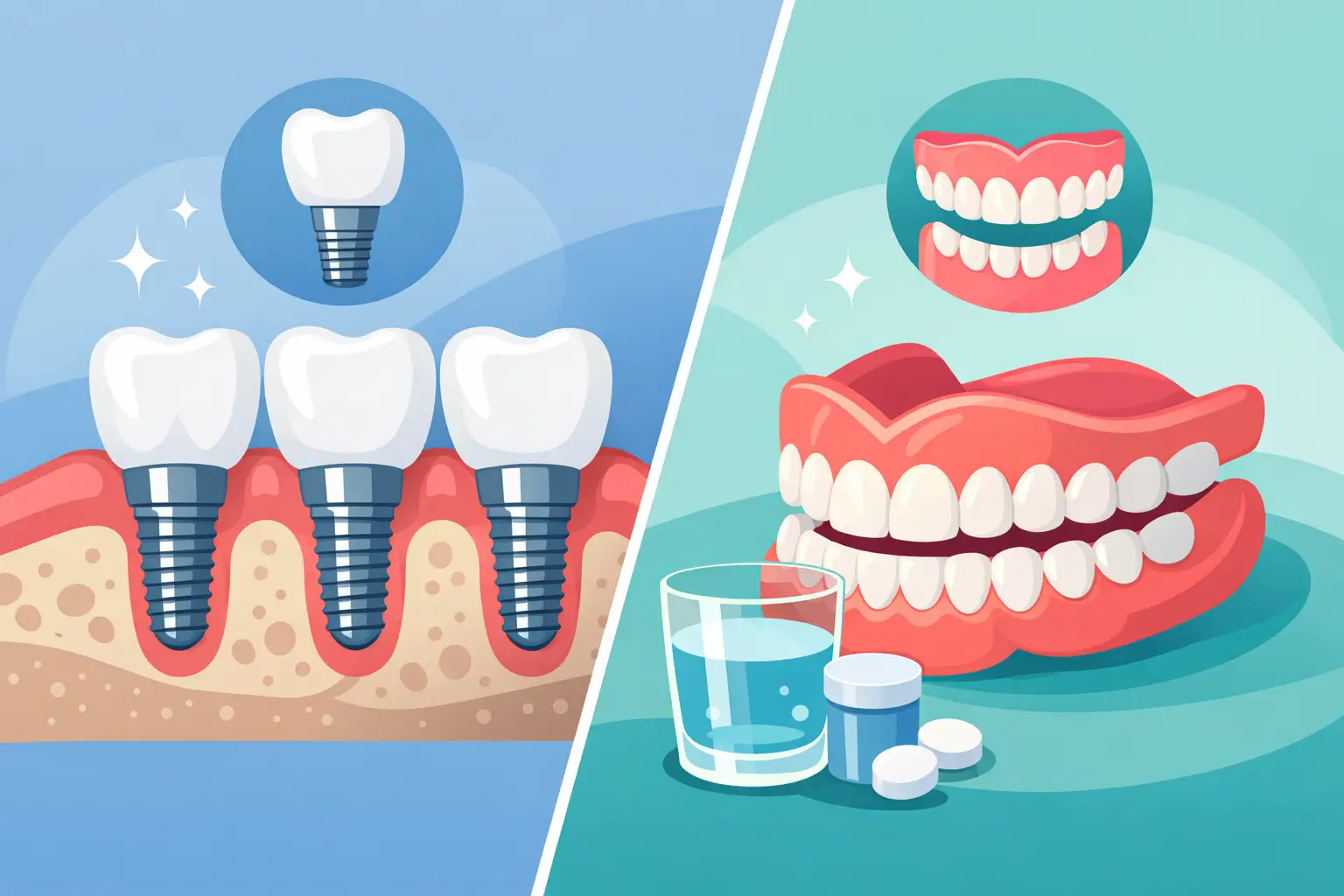
Dentures are removable appliances that replace missing teeth. They can restore a full arch of teeth or replace several missing teeth, and they sit on top of the gums. Traditional full dentures rely on suction, fit, and sometimes adhesive to stay in place.
Dental implants are small titanium posts placed in the jawbone to act like artificial tooth roots. Once they heal and integrate with the bone, they can support crowns, bridges, or implant-supported dentures. Because implants are anchored in the jaw, they tend to feel more secure and function more like natural teeth.
That difference in support changes the day-to-day experience. Dentures can look very natural, but they may shift while eating or speaking, especially over time as the shape of the gums changes. Implants generally provide a firmer bite and more confidence because they do not depend on the gums alone for support.
Comfort and stability in daily life
For many patients, comfort is where the comparison becomes real. A well-made denture can improve appearance and function, but it still remains a removable appliance. Some people adapt quickly. Others struggle with pressure spots, movement, or the learning curve of chewing certain foods.
Implants usually offer a more stable experience. Because they are secured in the jaw, they can help patients bite into foods that are more difficult with traditional dentures. Speech may also feel more natural because there is less risk of slipping.
That said, implants involve a surgical process and healing time. Dentures are typically faster to provide, which matters when someone wants an immediate solution after extractions or has a limited budget. If speed is the priority, dentures often win. If long-term stability is the priority, implants usually have the advantage.
Appearance and confidence
Both implants and dentures can create a beautiful smile when treatment is planned carefully. The biggest cosmetic difference is not always in how the teeth look. It is often in how the face is supported over time.
When teeth are missing, the jawbone can begin to shrink. Traditional dentures do not stop that process. As the bone changes, facial structure can change too, which may lead to a more sunken appearance around the mouth and cheeks. Dentures can also become loose as the gums and bone shift, which means they may need periodic relining or replacement.
Implants help stimulate the jawbone, which can reduce bone loss in the treated area. That support can make a real difference in preserving facial shape. For patients who want a replacement option that supports both appearance and function for the long run, this is one of the strongest arguments for implants.
Dental implants vs dentures for eating and speaking
Eating with dentures is possible, but it often requires adjustments. Many denture wearers learn to chew differently, avoid sticky foods, or stay away from harder items altogether. Speech can also take practice at first, especially with full upper dentures.
Implants tend to provide stronger chewing power and a more natural feel. Patients often report that they can enjoy a wider range of foods with less worry about movement. That can improve quality of life in a way that is hard to measure until you have lived with missing teeth or unstable restorations.
Still, not every patient needs the maximum level of function. Someone who is older, wants to avoid surgery, or simply needs an affordable replacement may be very happy with dentures, especially if they are made well and adjusted properly.
Maintenance and long-term care
Dentures require regular cleaning and daily removal unless they are implant-supported and designed differently. They should be handled carefully, stored properly, and checked routinely because the fit can change. Over the years, many patients need relines, repairs, or replacement.
Implants are not maintenance-free, but they are cared for more like natural teeth. You still need good brushing, flossing or other cleaning aids, and regular dental visits to keep the gums healthy around them. Neglect can lead to complications, so implants are not a set-it-and-forget-it option.
The main difference is that dentures often need ongoing adjustments because they rest on changing tissue, while implants are fixed in bone. That stability can make long-term care feel simpler for the right patient.
Cost now versus value over time
Cost is often the biggest deciding factor, and it is completely reasonable to make treatment decisions based on budget. Traditional dentures usually cost less upfront than dental implants. That lower initial cost can make them the most accessible solution for patients who need to replace many teeth at once.
Implants generally require a higher investment because they involve surgery, planning, restorative work, and healing appointments. However, they may provide more value over time because of their durability, stability, and potential to help preserve bone.
This is where a one-size-fits-all answer does not work. A patient replacing one or two teeth may find implants to be a very practical long-term solution. A patient replacing a full arch may consider implant-supported dentures as a middle ground that offers better security than traditional dentures without the cost of replacing every tooth individually.
For many families and seniors, affordability matters just as much as clinical benefits. That is why a personalized consultation matters. The right plan should fit your health needs and your financial reality.
Who may be a better candidate for dentures
Dentures may be the better fit if you are missing many or all teeth, want a non-surgical option, need a faster treatment timeline, or are focused on the lowest upfront cost. They can also be a good temporary step while planning future treatment.
Some patients are not ideal implant candidates right away because of bone loss, untreated gum disease, or certain medical considerations. That does not always mean implants are off the table forever, but it may mean dentures are the more practical first move.
Who may be a better candidate for implants
Implants may be the better fit if you want the most natural feel, stronger chewing ability, and a solution that helps support the jawbone. They are often ideal for patients who are tired of loose appliances or who want something that feels more permanent.
A healthy mouth and enough bone are important, but advanced treatment planning can sometimes make implants possible even when the situation is more complex. In a multi-specialty practice, patients may have more options because implant planning can be coordinated with other restorative or cosmetic needs under one roof.
A middle-ground option many patients overlook
The choice is not always traditional dentures or full individual implants. Implant-supported dentures can offer a strong middle ground. They use a smaller number of implants to anchor a denture more securely, which can improve comfort and confidence without requiring an implant for every missing tooth.
For many adults in Rancho Cucamonga who want better function but still need to watch costs, this option deserves a serious look. It can reduce slipping, improve chewing, and create a more secure fit than conventional dentures.
How to make the right choice
The best decision starts with a full evaluation, not a guess based on online prices or someone else’s experience. Missing teeth affect each patient differently, and treatment should account for bone levels, gum health, existing teeth, appearance goals, and budget.
At Star Dental Group, that conversation is designed to be practical and patient-friendly. You should leave understanding what each option will cost, how long it will take, what maintenance to expect, and which choice supports your long-term oral health.
If you are weighing dental implants vs dentures, think beyond the appliance itself. Think about how you want to eat, speak, smile, and maintain your teeth years from now. The right choice is the one that restores comfort and confidence in a way that fits your life.

