


Dentures Versus Partial Dentures: Which Fits?
When missing teeth make it harder to enjoy a meal, speak clearly, or smile in photos, the question is rarely just about appearance. Dentures versus partial dentures is a decision about how many teeth you have left, how healthy they are, and what will make daily life feel comfortable again. The right choice should restore function while respecting your budget, timeline, and long-term oral health.
For many Rancho Cucamonga patients, removable tooth replacement is a practical way to regain confidence without putting off care. A thorough dental examination can show whether a full denture, partial denture, implant-supported option, or a combination of treatments makes the most sense.
Dentures Versus Partial Dentures: The Main Difference
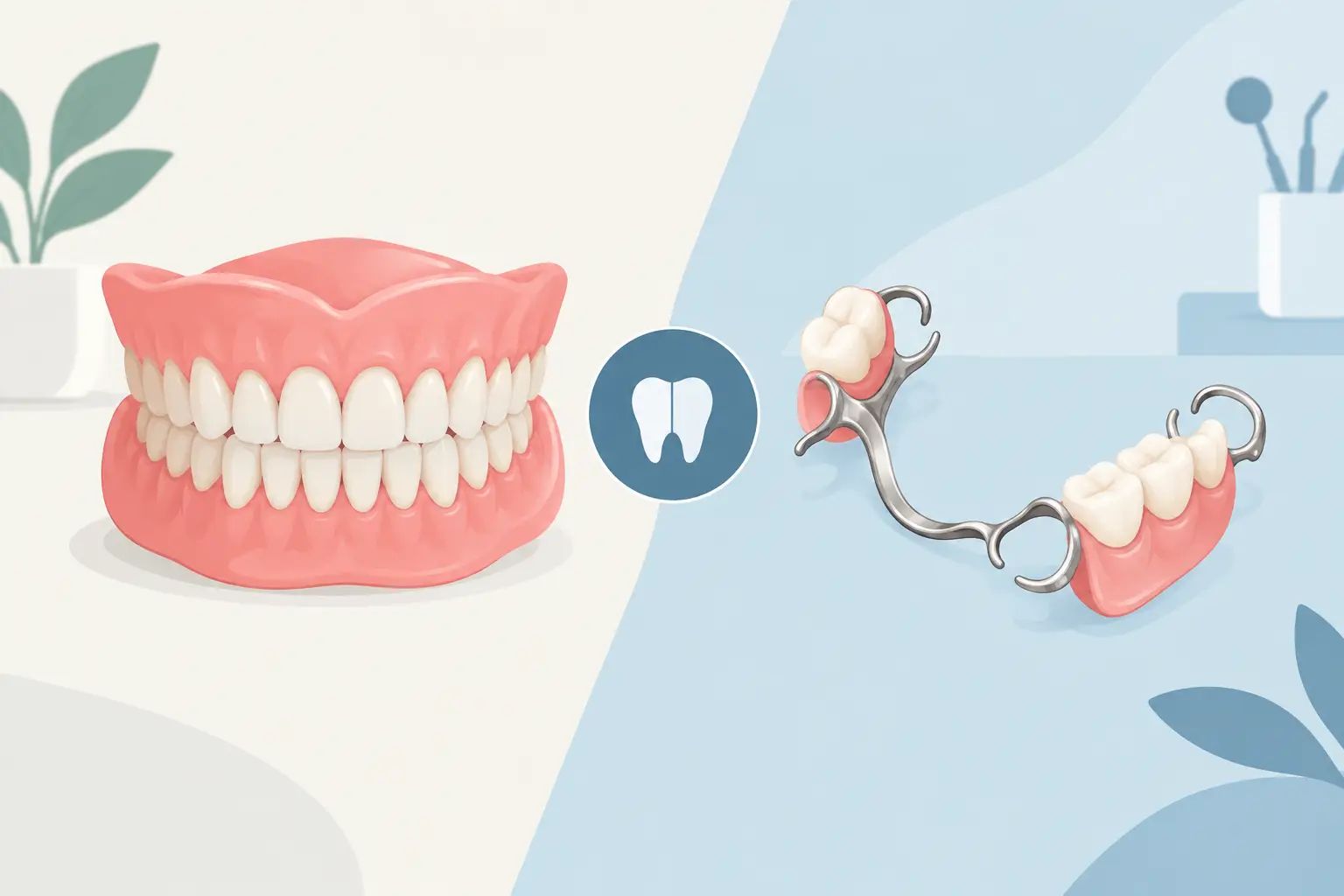
A full denture replaces all teeth in the upper arch, lower arch, or both. It rests on the gums and is custom-made to match the shape of your mouth, facial support needs, and desired smile appearance. Conventional dentures are typically made after the gums have healed following extractions, although immediate dentures may be placed on the same day teeth are removed in appropriate cases.
A partial denture replaces one or several missing teeth when healthy natural teeth remain. It fills the open spaces in your smile and is designed to stay in position by resting on the gums and attaching to nearby teeth. Partials may use a lightweight metal framework, flexible material, or tooth-colored components depending on the design and your needs.
The simplest distinction is this: full dentures are for an arch with no remaining teeth, while partial dentures are for an arch where some natural teeth can still be preserved. That does not mean the choice is always automatic. A few remaining teeth may be strong enough to support a partial, or they may have extensive decay, gum disease, or mobility that makes another treatment plan more predictable.
When Full Dentures May Be the Better Choice
Full dentures may be recommended when most or all teeth in an arch are missing or cannot be saved. This can happen after years of wear, untreated decay, advanced periodontal disease, injury, or repeated dental problems that have made individual repairs less reliable.
One advantage of full dentures is that they can restore the look of a complete smile and provide support for the lips and cheeks. They are also usually less expensive upfront than replacing every missing tooth with individual implants. For patients who have delayed care because of cost or anxiety, dentures can provide a meaningful fresh start.
There are trade-offs. Lower dentures often require more adjustment than upper dentures because the tongue and lower jaw move throughout the day. Dentures can also shift during eating or speaking, especially as the jawbone changes shape over time. Denture adhesive may help some patients feel more secure, but it is not a substitute for a proper fit.
For greater stability, a dentist may discuss implant-supported dentures. A few strategically placed implants can help retain a denture, reduce movement, and improve biting confidence. This option involves a higher investment and may require adequate bone and healing time, but many patients find the added stability worthwhile.
When a Partial Denture Can Make Sense
A partial denture is often a good option when natural teeth are healthy enough to keep and are positioned in a way that can support the appliance. Rather than removing teeth that are still functional, a partial allows you to preserve them while replacing the gaps around them.
This matters because remaining teeth help maintain chewing ability and can make a removable appliance feel more stable. A partial can also help prevent nearby teeth from drifting into an empty space. When teeth shift, bite problems can develop, and future treatment may become more complicated.
Partial dentures are not all alike. A metal-based partial is usually thin, durable, and stable, though some patients prefer a more discreet design for cosmetic reasons. Flexible partials can be comfortable and blend with gum tissue, but they are not ideal for every bite or every pattern of tooth loss. The best material depends on the location of missing teeth, the health of supporting teeth, your bite, and how you plan to use the appliance.
A partial may not be the best answer if the remaining teeth are severely compromised. Attaching an appliance to teeth with advanced gum disease or large untreated cavities can place extra strain on an already fragile situation. In those cases, treating the underlying disease first is essential, even if a full denture or implant solution is eventually recommended.
Comfort, Appearance, and Everyday Function
Both full and partial dentures should be custom-designed. A well-made appliance is more than a row of replacement teeth. It should support speech, allow you to chew comfortably, complement facial features, and feel natural enough to wear with confidence.
There is usually an adjustment period. New dentures or partials can feel bulky at first, and certain words may take practice. Eating may require patience, especially with sticky foods, hard nuts, crusty bread, or foods that need strong biting force. Start with softer foods cut into smaller pieces, chew slowly on both sides of the mouth, and give your muscles time to adapt.
Appearance is another important consideration. Modern materials allow dentists to select tooth shape, shade, and gum color with far more personalization than many people expect. If you are concerned that dentures will look artificial, share that concern during planning. Photos of your natural smile, preferences about tooth brightness, and your facial proportions can all guide the design.
Cost Is Important, but So Is the Treatment Plan
A full denture may have a lower initial cost than a complex partial or implant-supported restoration, but price should not be the only comparison. The long-term value of treatment depends on fit, expected durability, maintenance, the condition of remaining teeth, and whether future procedures are likely.
For example, a partial denture can be an affordable way to replace several missing teeth while preserving healthy ones. However, if the teeth supporting it need repeated major treatment, the plan may need to change over time. Similarly, a conventional full denture may be the most accessible starting point, while implant support can be considered later if stability becomes a concern.
Ask for a clear explanation of what is included in your treatment. This may involve examinations, imaging, extractions, temporary appliances, adjustments, relines, and follow-up visits. Patients without insurance and seniors should also ask about available discount options and payment arrangements before deciding. Affordable care works best when you understand both the immediate expense and the likely next steps.
Caring for Dentures and Partials
Whether you choose a full or partial denture, daily care protects your mouth and helps the appliance last. Remove removable dentures at night unless your dentist gives different instructions. Clean them with a denture brush and a nonabrasive cleanser, then store them safely in water or a denture-soaking solution so they do not dry out or warp.
Your gums, tongue, and any remaining natural teeth still need attention. Brush the gums gently, clean your tongue, and continue brushing and flossing natural teeth as directed. A partial denture does not eliminate the need for preventive dental visits. In fact, regular checkups are especially valuable because the supporting teeth and gums need to stay healthy for the partial to function well.
Never try to adjust a denture yourself with household tools or glue. Pressure spots, cracks, looseness, and changes in your bite are reasons to schedule a dental visit. Small fit issues can become painful sores or lead to damage if ignored.
Choosing the Option That Supports Your Smile
The best replacement is the one that fits your health, lifestyle, and goals, not simply the option that seems fastest or least expensive on paper. At Star Dental Group, a consultation can look at the condition of your remaining teeth, gum health, bone support, bite, and cosmetic preferences before recommending a path forward.
If you are deciding between dentures and partial dentures, bring your everyday concerns to the conversation. Mention whether you want to eat more comfortably, feel less self-conscious at work, replace a visible front tooth, or avoid a treatment that feels difficult to manage. A thoughtful plan can make restoring your smile feel less overwhelming and much more achievable.

