


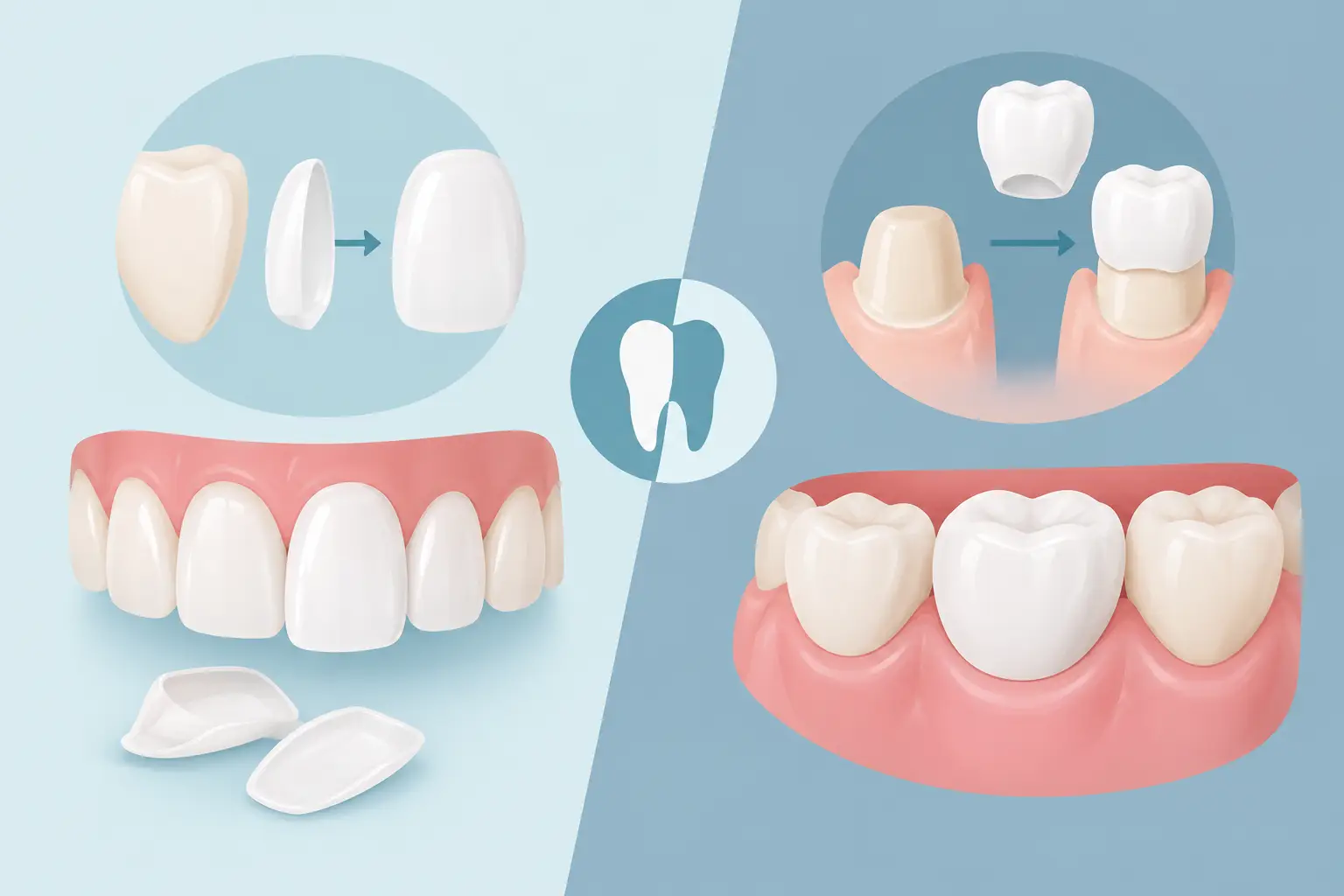
Porcelain Veneers Versus Crowns Compared
A chipped front tooth can make you hesitate before photos, meetings, or even a simple smile. But the right solution depends on more than what the tooth looks like from the outside. When comparing porcelain veneers versus crowns, the central question is whether your tooth is healthy enough for a cosmetic covering or needs the strength and protection of a full restoration.
Both treatments can create a beautiful, natural-looking smile. Both are custom-made to match your surrounding teeth. Yet they solve very different problems, and choosing based on appearance alone can lead to unnecessary treatment or a result that does not last as long as it should.
Porcelain Veneers Versus Crowns: The Main Difference
A porcelain veneer is a thin, custom shell bonded to the front surface of a tooth. It is primarily a cosmetic treatment, designed to improve the visible portion of a tooth while preserving as much natural tooth structure as possible. Veneers can change the color, shape, length, or symmetry of teeth that show when you smile.
A dental crown covers the entire tooth, including the front, back, and chewing surface. It is generally recommended when a tooth has been weakened by decay, a large filling, a fracture, root canal treatment, or substantial wear. A crown restores appearance, but its larger purpose is to protect the remaining tooth from further damage.
Think of a veneer as a carefully tailored cosmetic enhancement and a crown as a protective cap that also improves appearance. Neither option is automatically better. The appropriate choice is based on the condition of the tooth, your bite, your oral health, and your smile goals.
When Porcelain Veneers May Be the Better Choice
Veneers work best on teeth that are structurally sound but cosmetically disappointing. A front tooth with permanent discoloration, minor chips, small gaps, uneven edges, or an irregular shape may be an excellent candidate. They are especially popular for patients who want a coordinated smile makeover across several visible teeth.
Because a veneer covers only the front of the tooth, it usually requires less enamel removal than a crown. Preserving tooth structure is valuable whenever possible. However, veneers still involve a permanent change to the tooth in most cases, so they should be planned thoughtfully rather than viewed as a quick cosmetic shortcut.
A veneer may not be the right answer for a tooth with extensive decay, a deep crack, or a large existing filling. It may also be less suitable when a patient has a heavy bite, frequently clenches or grinds their teeth, or has an edge-to-edge bite that places significant pressure on front teeth. In those situations, even a beautiful veneer can be at greater risk of chipping or coming loose.
When a Crown Is the Better Investment
Crowns are designed for teeth that need more than a surface-level improvement. If a tooth has lost a significant amount of its natural structure, a crown can hold and protect what remains. This is often the preferred restoration after root canal therapy because treated teeth can become more brittle over time.
A crown can also be a strong option for a tooth with a large fracture, severe wear, repeated filling failure, or extensive decay. When a tooth has a sizable old filling, there may not be enough healthy enamel left to reliably support a veneer. Covering the whole tooth helps distribute biting forces and can reduce the risk of a more serious break.
For visible teeth, modern porcelain and ceramic crowns can be made to blend naturally with your smile. The goal is not a bulky or artificial-looking result. With thoughtful shade selection, shape design, and bite adjustment, a crown can restore both confidence and function.
Appearance, Durability, and Tooth Preparation
Veneers and crowns can both look exceptionally natural, particularly when designed for the front teeth. Porcelain reflects light in a way that resembles natural enamel, which is why it remains a popular material for cosmetic dentistry. The final appearance depends on careful planning, the color of the underlying tooth, and the skill used to create and place the restoration.
The biggest practical difference is coverage. A veneer uses less porcelain and covers less tooth surface. A crown requires more reshaping because it needs room to fit around the entire tooth. That additional preparation is justified when a tooth needs structural support, but it would be more treatment than necessary for a healthy tooth with a minor cosmetic concern.
Durability also depends on how you use your teeth. With good care, both veneers and crowns can last for many years. Avoiding ice chewing, opening packages with your teeth, and biting hard objects protects either restoration. If you grind your teeth at night, a custom night guard may be recommended to help protect your investment.
Neither porcelain veneers nor crowns can get cavities, but the natural tooth around the edge of the restoration can. Daily brushing, flossing, routine cleanings, and regular exams remain essential. Gum health matters, too. Receding gums can expose a restoration margin and affect the look of a front tooth over time.
Cost Is Part of the Decision, Not the Entire Decision
Cost often matters, especially when several teeth are involved. Veneers are usually an elective cosmetic treatment and may not be covered by dental insurance. Crowns are sometimes eligible for insurance benefits when they are medically necessary to restore a damaged tooth, although coverage varies by plan and is rarely the full cost.
It is tempting to choose the lower-cost option for one tooth, but the best value is the treatment that addresses the actual need. Placing a veneer on a tooth that should have received a crown may create avoidable repair costs later. On the other hand, placing crowns on otherwise healthy teeth solely to change their appearance may remove more natural structure than needed.
A clear treatment plan should explain what is happening beneath the surface, which option is recommended, and why. For patients without insurance or those planning broader cosmetic work, asking about available payment options and patient discounts can make quality care more manageable.
Your Bite Can Change the Recommendation
The way your teeth meet is easy to overlook, but it can be one of the most important factors in choosing veneers or crowns. A tooth that receives direct heavy pressure when you bite may need a stronger design or a different material. Bite problems can also contribute to recurring chips, cracks, jaw soreness, and worn teeth.
This is why a cosmetic consultation should include more than selecting a whiter shade. Your dentist should assess your gums, existing restorations, enamel, tooth alignment, and bite. In some cases, orthodontic treatment before cosmetic work creates a more conservative and lasting result. In others, treating gum disease, decay, or grinding first is the responsible next step.
For a single damaged tooth, the answer may be straightforward. For a full smile enhancement, planning is more detailed. The shape and color of every restoration should work together with your facial features, lips, and natural teeth so the finished smile still looks like you.
Questions to Ask Before You Decide
Before moving forward, ask whether the tooth is healthy enough for a veneer, how much tooth structure will need to be removed, and whether your bite places the restoration at risk. It is also reasonable to ask what material will be used, how the shade will be selected, and what maintenance will help the restoration last.
If you have dental anxiety or have put off care because you are worried about cost, start with the information you need rather than assuming the treatment will be overwhelming. At Star Dental Group, a comprehensive evaluation can help identify whether a cosmetic solution, a restorative solution, or a combination of care makes the most sense for your health and goals.
The best smile treatment should feel good when you look in the mirror, but it should also let you eat, speak, and live comfortably. A veneer can be an excellent choice for a healthy tooth that needs cosmetic refinement. A crown can be the right choice when strength and protection come first. A personalized exam is where that distinction becomes clear.

