


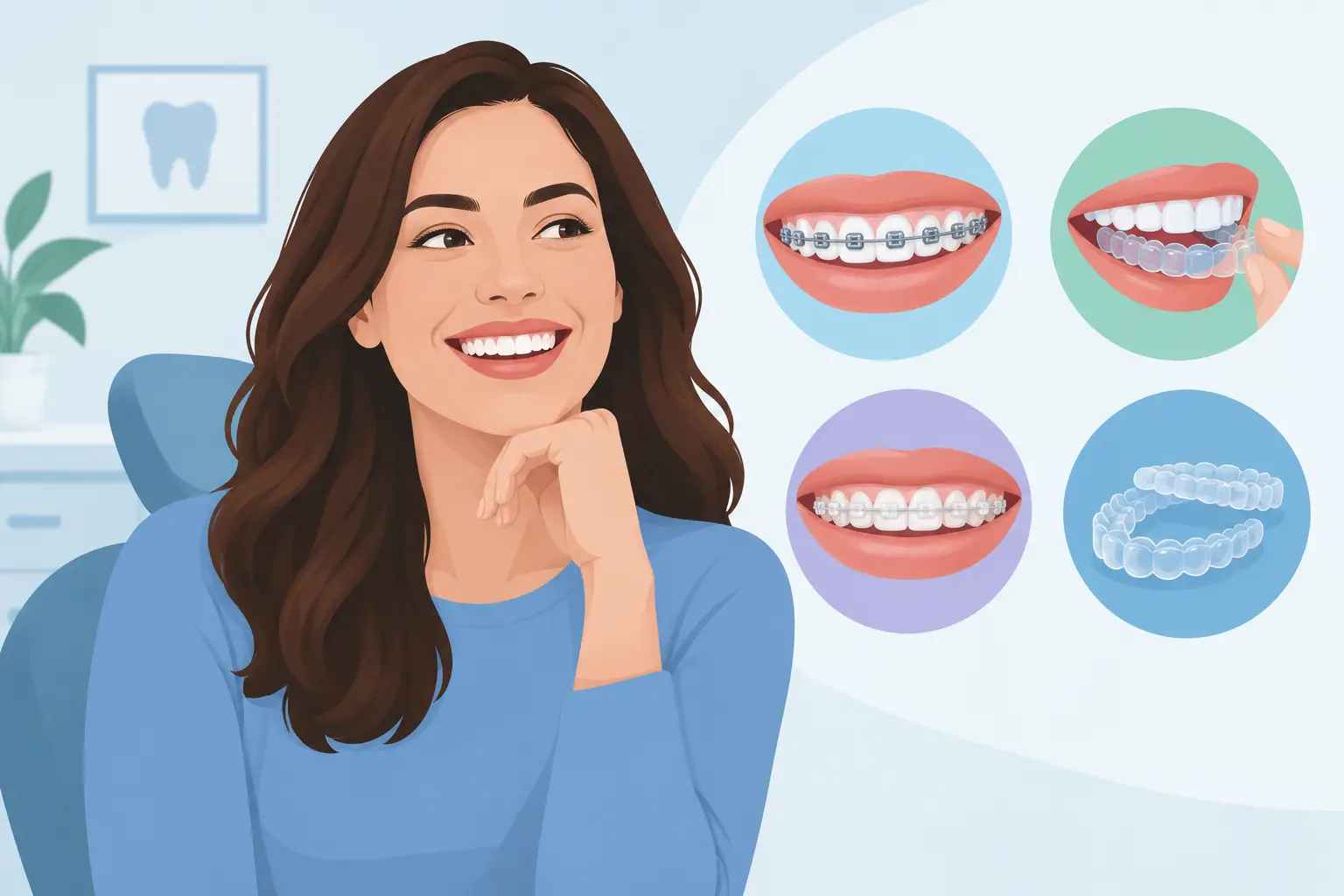
A Guide to Adult Orthodontic Options Today
A crowded lower tooth, a gap that has bothered you for years, or a bite that makes chewing uncomfortable can feel more noticeable in adulthood than it ever did as a teenager. The good news is that orthodontic treatment is not limited by age. This guide to adult orthodontic options can help you understand what may be possible, what affects treatment time, and how to choose an approach that works with your health, appearance goals, and daily routine.
For many adults in Rancho Cucamonga and the Inland Empire, the first concern is not whether treatment will work. It is whether it will be visible, affordable, and realistic alongside work, family, and social commitments. Modern orthodontics offers more choices than traditional braces alone, but the right choice depends on more than how discreet it looks.
Why adults choose orthodontic treatment
Adults often seek orthodontic care for a mix of practical and cosmetic reasons. Straightening teeth can improve the appearance of a smile, but it can also make crowded or overlapping teeth easier to brush and floss. Improving the way upper and lower teeth meet may reduce uneven wear and make chewing more comfortable.
Orthodontic treatment can also be part of a larger dental plan. Some patients need to create the right amount of space before replacing a missing tooth, improving a front-tooth restoration, or completing cosmetic dentistry. Others discover that teeth have shifted after years without wearing a retainer.
A healthy, attractive smile should not require choosing between function and appearance. A thorough consultation looks at both. Your provider should assess your bite, gums, existing fillings or crowns, jaw relationship, and long-term goals before recommending treatment.
Your guide to adult orthodontic options
Traditional metal braces
Metal braces remain one of the most effective options for complex tooth movement and bite correction. Brackets are bonded to the teeth, and an archwire gradually guides them into position. While they are more noticeable than other treatments, modern brackets are smaller and more comfortable than many adults expect.
Metal braces are often recommended when significant rotations, spacing, vertical movement, or bite correction is needed. They do not rely on remembering to wear removable trays, which can be helpful for patients with demanding schedules. The trade-off is visibility and the need for more careful brushing around brackets and wires.
Clear ceramic braces
Ceramic braces work in much the same way as metal braces, but their tooth-colored brackets blend in more naturally with enamel. They can be a strong middle ground for adults who need the precision of fixed braces but prefer a less noticeable look.
Ceramic brackets may require extra attention to avoid staining around the braces, and they are not ideal for every bite or tooth position. Your orthodontic evaluation can determine whether they can deliver the movement you need without compromising treatment efficiency.
Clear aligners
Clear aligners use a series of custom, removable trays to gradually move teeth. They are popular with adults because they are discreet and can be removed for meals, brushing, flossing, and important occasions. For mild to moderate crowding, gaps, and certain bite concerns, aligners can be an excellent fit.
Success with aligners depends heavily on consistency. Most patients need to wear them about 20 to 22 hours a day, changing trays according to their treatment plan. Taking them out too often or failing to wear them overnight can delay progress and affect results.
Clear aligners are not automatically the best choice simply because they are less visible. Some complex movements are more predictable with braces, and aligner treatment may still involve small tooth-colored attachments or minor reshaping between teeth. These details are normal parts of treatment and should be explained clearly before you begin.
Lingual braces
Lingual braces are placed on the back surfaces of the teeth, making them largely hidden from view. They can be appealing to adults who want fixed orthodontic treatment without brackets showing on the front of their smile.
However, lingual braces are not right for every patient. They can take time to get used to, may affect speech at first, and can be more challenging to clean. Their availability and cost can also vary. A consultation is the best place to discuss whether they are appropriate for your case.
What makes adult treatment different
Adult teeth can move successfully, but adult orthodontics requires careful planning. Unlike teenagers, adults may have old fillings, crowns, gum recession, missing teeth, bone loss, or teeth that have shifted after previous dental work. These factors do not necessarily rule out orthodontics. They simply influence the safest and most effective sequence of care.
Healthy gums are especially important. If gum disease, active decay, or an infection is present, those concerns generally need treatment first. Moving teeth through unhealthy supporting tissues can create unnecessary risk and may affect the stability of the result.
Dental implants deserve special consideration. Natural teeth can be moved orthodontically, but an implant is fixed in the jawbone and cannot move like a natural tooth. If you are considering both implants and orthodontics, planning the order of treatment is essential. A multi-specialty practice can coordinate orthodontic, restorative, periodontal, and cosmetic needs in one setting rather than leaving you to manage multiple offices.
How long does adult orthodontic treatment take?
There is no honest one-size-fits-all timeline. Limited treatment for minor crowding or a small gap may take several months. Comprehensive treatment involving bite correction often takes 12 to 24 months, and more complex cases can take longer.
The type of appliance matters, but the condition of your teeth and bite matters more. Wearing aligners as directed, attending adjustment visits, maintaining good oral hygiene, and following instructions about elastics all help keep treatment on track. Your provider should give you a realistic estimate, then update you as your treatment progresses.
Cost, insurance, and planning for care
The cost of adult orthodontics varies based on the type of treatment, the complexity of your case, treatment length, and whether other dental care is needed first. A lower advertised price is not always a better value if it does not include necessary records, adjustments, retainers, or follow-up care.
Before moving forward, ask for a clear explanation of what is included in your treatment plan and what payment options may be available. If you have dental insurance, review whether orthodontic benefits apply to adults, since coverage differs by plan. Patients without insurance should also ask about available discounts or financing options. Quality care should be understandable and accessible, not a mystery.
Retainers protect your result
Orthodontic treatment does not end when braces come off or the final aligner is complete. Teeth naturally have a tendency to shift over time, especially in the lower front teeth. Retainers hold the new positions while surrounding tissues adapt.
Some patients need a removable retainer at night, while others may benefit from a bonded retainer behind the front teeth. Many adults use both. Skipping retainers can allow changes to return gradually, potentially undoing time and money invested in treatment.
Choosing the right orthodontic provider
The best orthodontic option is the one that addresses your specific goals without overlooking your overall oral health. Look for a provider who takes diagnostic records, explains the condition of your bite in plain language, and discusses alternatives instead of pushing one appliance for every patient.
At Star Dental Group, a comprehensive consultation can help connect orthodontic goals with the rest of your dental care, whether you are considering whitening, crowns, implants, or routine treatment as well. You should leave that visit knowing what your options are, why a particular recommendation fits your smile, and what the next step would be.
A straighter smile can be a meaningful change at any age, but it should begin with a plan built around you. The right orthodontic treatment is not just the least visible option. It is the one that supports a healthy bite, a confident smile, and results you can maintain for years.

