


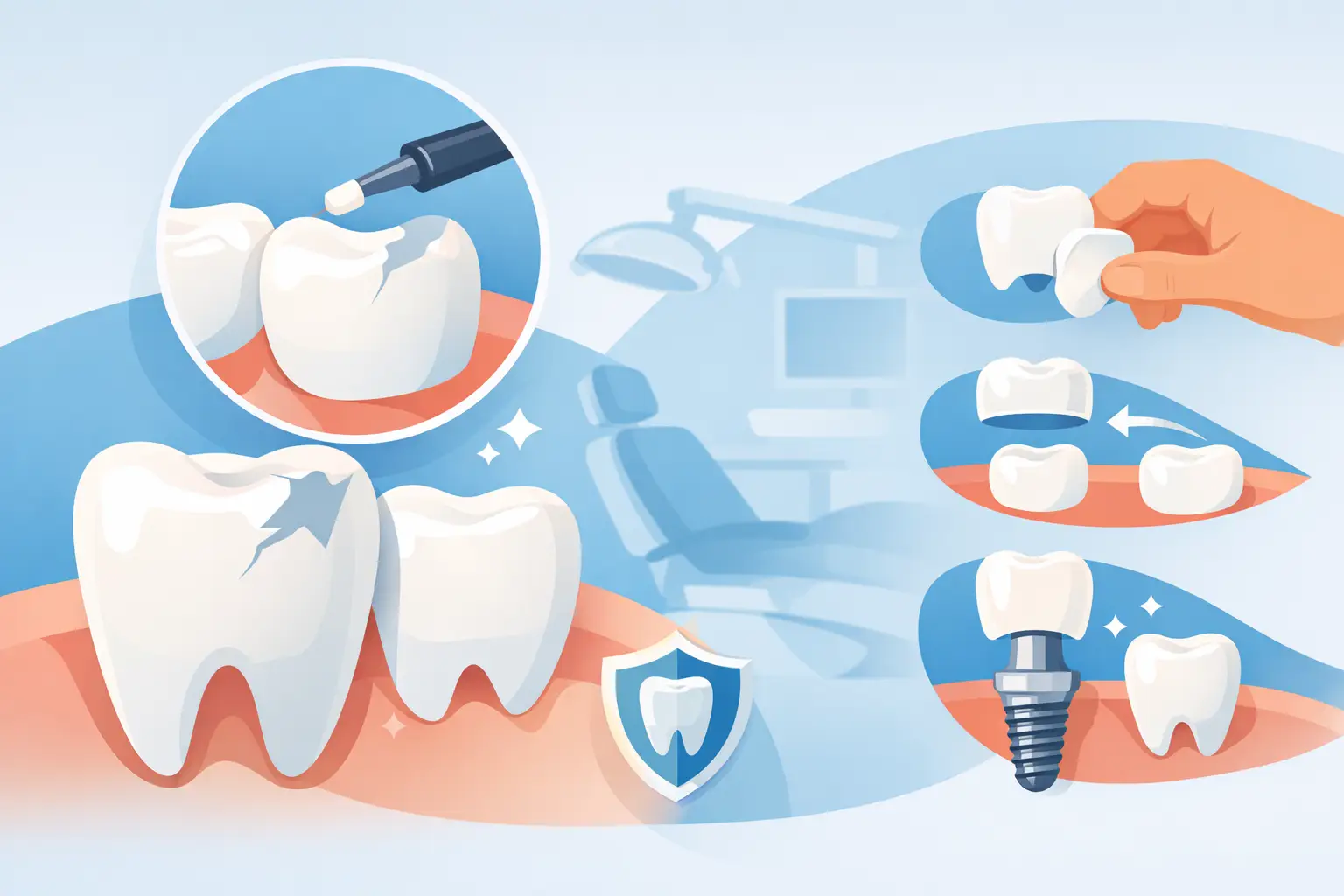
Best Options for Chipped Teeth Explained
A chipped front tooth can make you hesitate before smiling in a photo, speaking in a meeting, or even biting into lunch. A chip in a back tooth may be less visible, but it can leave a sharp edge, cause sensitivity, or signal a larger crack. The best options for chipped teeth depend on how much tooth structure is missing, where the tooth is located, and whether the nerve or root has been affected.
A dental exam is the right first step, even when the chip seems minor. What looks like a small cosmetic issue can sometimes expose a vulnerable edge that is more likely to crack further. Early care is often simpler, more comfortable, and more affordable than waiting for a damaged tooth to worsen.
When a chipped tooth needs prompt care
Call a dentist promptly if the chip causes pain, strong temperature sensitivity, bleeding, swelling, or a loose tooth. You should also be seen soon if the break came from a fall, sports injury, car accident, or a hard bite. Trauma can affect the tooth root or surrounding bone even when the visible damage appears small.
Until your appointment, rinse gently with warm water and avoid chewing on that side. If you can find the broken fragment, place it in milk or saliva and bring it with you. In some cases, a dentist may be able to bond the original piece back into place. A sharp edge can be covered temporarily with dental wax from a pharmacy, but avoid trying to file the tooth yourself.
For a small chip without pain, an appointment can usually be scheduled during normal office hours. Still, do not ignore it for months. The uneven edge can irritate your tongue or cheek, and a weakened tooth may be more susceptible to additional damage.
Best options for chipped teeth
The right repair should restore more than appearance. It should help you bite comfortably, protect the remaining tooth, and fit naturally with your smile. During an exam, your dentist may take X-rays and check your bite to determine whether the damage is limited to enamel or extends deeper.
Smoothing and reshaping for very minor chips
When only a tiny amount of enamel has chipped away, smoothing or reshaping the edge may be enough. The dentist gently polishes the rough area and adjusts the tooth’s contour so it no longer catches on your lip, tongue, or opposing teeth.
This is one of the quickest solutions and usually requires little to no anesthesia. It works best when the chip is truly small and the adjustment will not noticeably shorten or alter the tooth. Reshaping does remove a small amount of enamel, so it is not the best choice for every visible chip.
Dental bonding for natural-looking repair
Dental bonding is often an excellent option for a small to moderate chip, especially on a front tooth. A dentist applies a tooth-colored composite resin, shapes it to match the tooth, and hardens it with a special light. The material can restore a missing corner, smooth an uneven edge, or improve the tooth’s symmetry.
Bonding is conservative because it generally requires minimal removal of healthy enamel. It can frequently be completed in one visit, making it appealing for busy adults, teens, and parents arranging care for a child. The shade can be matched closely to surrounding teeth for a natural-looking result.
The trade-off is durability. Bonding can stain, chip, or wear over time, particularly for people who bite their nails, chew ice, or grind their teeth. It can usually be repaired, but it may need touch-ups or replacement in the future. If tooth grinding is part of the problem, a custom night guard may help protect the repair.
Veneers for a lasting cosmetic change
Porcelain veneers are thin, custom shells that cover the front surface of teeth. They can be a strong choice when a chipped front tooth also has discoloration, uneven shape, gaps, or several cosmetic concerns. Rather than repairing only the chipped area, a veneer creates a refined, balanced appearance across the visible surface.
Veneers are stain resistant and can offer excellent long-term aesthetics. They are typically made in a dental lab after the tooth is prepared and impressions or digital scans are taken. Because preparation often involves removing a small amount of enamel, veneers are a more permanent decision than bonding.
For one isolated, minor chip, a veneer may be more treatment than necessary. But for patients considering a broader smile enhancement, it can provide a more comprehensive result. Your dentist can explain whether one veneer will blend well or whether bonding would better preserve your natural tooth structure.
Dental crowns for larger breaks
A dental crown covers the entire visible portion of a tooth and is generally recommended when a large section has broken away, the tooth has a sizable old filling, or the remaining structure is too weak for bonding or a veneer. Crowns can be made from durable, natural-looking ceramic materials and are commonly used on both front and back teeth.
This treatment protects the tooth from fracture while restoring its shape and chewing function. A crown requires more preparation than bonding because the tooth must be shaped to make room for the restoration. That makes it a practical choice when strength is the priority, not simply when a small cosmetic repair is desired.
If the chip occurred on a molar that takes heavy biting forces, a crown may be the most reliable way to prevent a more serious break. Delaying treatment on a weakened back tooth can turn a repairable problem into one that requires more extensive care.
Root canal treatment when the nerve is affected
Deep chips and fractures can expose or inflame the pulp, the soft tissue containing the tooth’s nerve. Signs can include lingering sensitivity to hot or cold, spontaneous pain, pain when biting, or a darkening tooth. In these situations, root canal treatment may be needed before the tooth is restored with a crown or another protective restoration.
A root canal is designed to save the natural tooth by removing damaged or infected tissue and sealing the inside of the tooth. Modern techniques and local anesthesia help make treatment far more comfortable than its reputation suggests. Saving a natural tooth is usually preferable when it can be restored predictably.
Replacing a tooth that cannot be saved
Most chipped teeth can be repaired, but a severe fracture below the gumline or extensive root damage may make saving the tooth impossible. When extraction is necessary, dental implants, bridges, and removable options can restore function and appearance.
A dental implant replaces the missing tooth root and supports a custom crown. It can be an excellent long-term solution, though treatment takes time and requires healthy bone and gums. A bridge may be appropriate when adjacent teeth already need crowns or when an implant is not the right fit. The best recommendation depends on your oral health, timeline, budget, and treatment goals.
Choosing the right repair for your smile
There is no single best treatment for every chipped tooth. A small chip on a front tooth may need simple bonding, while a cracked molar may need a crown to withstand chewing forces. If you have multiple chipped, worn, or uneven teeth, your dentist may also look at your bite, clenching habits, and overall smile goals rather than treating each tooth in isolation.
Cost matters, too. Smoothing and bonding are often less expensive upfront, while veneers and crowns may offer greater longevity or strength in the right situation. A clear treatment plan should explain what is necessary for dental health, what is elective for appearance, and how each option may hold up over time.
For Rancho Cucamonga families, Star Dental Group can evaluate the damage, discuss practical options, and coordinate cosmetic and restorative care in one office. If cost or dental anxiety has delayed care, asking questions during a consultation can make the next step feel much more manageable.
A chipped tooth does not have to become a source of discomfort or self-consciousness. Having it assessed early gives you the best chance to choose a repair that feels comfortable, looks natural, and lets you smile without thinking twice.

