


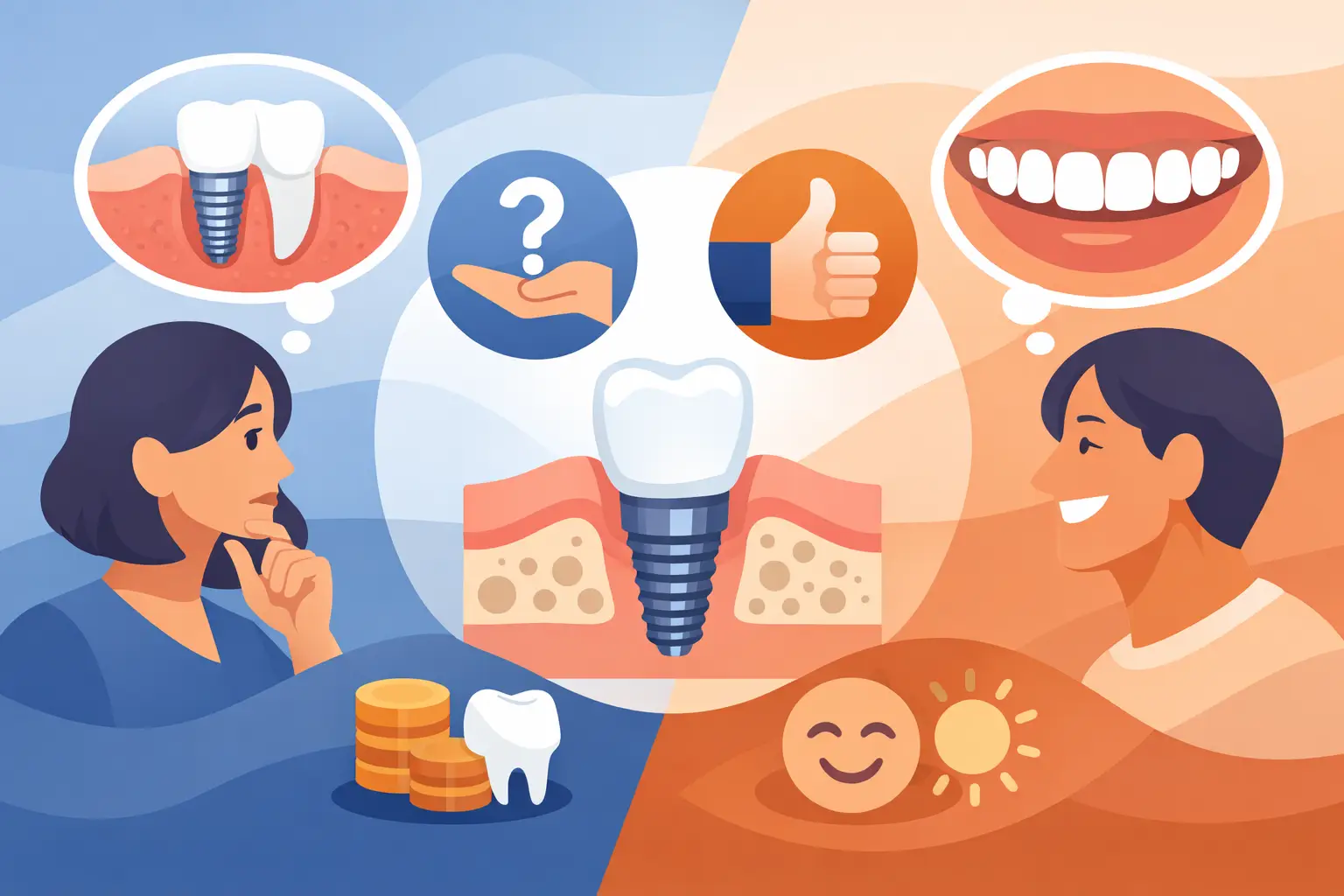
Are Dental Implants Worth It for You?
Missing a tooth changes more than your smile. It can affect how you chew, how clearly you speak, and even how confident you feel in everyday moments. If you have been asking, are dental implants worth it, the honest answer is that they often are – but it depends on your health, your goals, and what kind of long-term solution you want.
For many adults, implants are not just a cosmetic upgrade. They are a functional replacement designed to act more like a natural tooth than other options. That difference matters when you want something stable, comfortable, and built to last.
Are dental implants worth it compared to other options?
Dental implants tend to stand out because they replace the tooth root as well as the visible tooth. A bridge fills the gap, and a denture replaces missing teeth, but implants are anchored in the jawbone. That foundation is what gives them their secure feel.
When people compare options, they are usually weighing three things: cost, comfort, and longevity. Implants usually cost more upfront than a bridge or removable denture. At the same time, they often provide better stability and can last much longer with proper care. For patients who want the closest thing to a natural tooth, that higher initial investment can make sense.
A bridge may be a good solution in some cases, especially if the teeth next to the gap already need crowns. Dentures can also be a practical choice for replacing several teeth at once, particularly when budget is the biggest concern. But if your priority is preserving bone, avoiding movement, and reducing the daily inconvenience of removable appliances, implants are often the stronger long-term option.
What makes dental implants worth the cost for many patients?
The biggest reason many patients choose implants is that they solve several problems at once. They restore appearance, improve function, and help support the health of the jawbone. That combination is hard to match with other treatments.
When a tooth is missing, the jawbone in that area can begin to shrink over time. This happens because the bone is no longer being stimulated by a tooth root. An implant helps maintain that stimulation, which can reduce bone loss. That is not just a cosmetic benefit. It can help preserve the shape of your bite and facial structure over time.
Implants also tend to feel more secure than removable options. Many patients like being able to eat with more confidence and speak without worrying about slipping or clicking. If you have ever dealt with the frustration of a loose denture or avoided certain foods because chewing felt difficult, that added stability can be a major quality-of-life improvement.
Another factor is maintenance. An implant-supported crown is cared for much like a natural tooth. You still need excellent oral hygiene and regular dental visits, but there is no need for adhesives, soaking solutions, or removing it at night. For busy adults and seniors who want less daily hassle, that simplicity matters.
When dental implants may not feel worth it
Implants are an excellent solution for many people, but they are not automatically the right answer for everyone. That is why a good evaluation matters.
If someone has significant bone loss, untreated gum disease, or certain medical conditions that affect healing, the process may be more complex. Bone grafting or other preparatory treatment may be needed before implant placement. For some patients, that added time and cost still feels worthwhile. For others, a bridge or denture may be more realistic.
The timeline is another consideration. Implants are not usually a same-day fix from start to finish. Even in efficient treatment plans, the process may involve healing periods between steps. If you need the fastest possible replacement and do not want a multi-stage treatment process, that can be a drawback.
Budget also matters, and it is reasonable to say so. If paying for implants would create financial stress that outweighs the benefits, another restoration may be the better fit right now. The best treatment is not just the one with the highest technology. It is the one that works for your health, your priorities, and your life.
Who is a good candidate for implants?
A good candidate is usually someone with healthy gums, enough bone to support the implant, and a commitment to maintaining oral health after treatment. Non-smokers often heal more predictably, though smokers are not always excluded. Medical history, medications, and habits such as grinding your teeth can all affect planning.
Age by itself is not the deciding factor. Many older adults are excellent candidates for implants and appreciate the stability they provide. Younger adults who lose a tooth due to injury or decay may also benefit greatly, especially if they want to avoid altering adjacent healthy teeth for a bridge.
This is where a full evaluation becomes valuable. A comprehensive exam, imaging, and a conversation about your goals can reveal whether implants are straightforward in your case or whether another option may serve you better.
Are dental implants worth it for one tooth, several teeth, or full arches?
The answer can change depending on how many teeth are missing.
For one missing tooth, an implant can be especially appealing because it replaces the gap without relying on neighboring teeth for support. That means nearby healthy teeth do not need to be reshaped for crowns, which is often required for a traditional bridge.
For several missing teeth, implant-supported restorations can provide a strong balance of comfort and efficiency. In some cases, a few strategically placed implants can support a bridge, reducing the need to replace every tooth with its own implant.
For full-arch tooth loss, implants can be life-changing. Patients who are frustrated with loose dentures often notice a dramatic difference in security and chewing ability with implant-supported dentures or full-arch solutions. These cases are more involved, but they can restore function and confidence in a way that removable dentures often cannot.
The real trade-offs patients should understand
The strongest treatment decisions happen when expectations are realistic. Implants are durable, but they are not maintenance-free. You still need daily brushing, flossing or other cleaning methods recommended by your dentist, and routine checkups. Gum inflammation around implants can lead to complications if ignored.
There is also a healing period. The implant needs time to integrate with the bone, and that process cannot be rushed beyond what your body can support. In most cases, the wait is worth it, but it helps to know that implants are a process, not just a procedure.
And while implants have a strong success rate, no treatment comes with an absolute guarantee. Factors such as smoking, uncontrolled diabetes, poor oral hygiene, or heavy bite pressure can affect long-term outcomes. That is not meant to discourage you. It simply means a trustworthy dental team should explain both the benefits and the risks clearly.
How to decide if dental implants are worth it for you
Start with the question behind the question. Are you trying to replace a tooth in the most affordable way possible right now, or are you looking for the most stable long-term solution? Are you mainly concerned about appearance, or is chewing comfort your top priority? Do you want to avoid removable appliances, or are you comfortable with a simpler option if it lowers cost?
Once those priorities are clear, the decision gets easier. If you value long-term function, a natural feel, and bone support, implants often justify their cost. If your needs are more immediate, your oral health is more complex, or a different restoration better fits your budget, another treatment may be the right choice.
That is why many patients appreciate care in a setting where cosmetic, restorative, and general dental needs can all be evaluated together. At Star Dental Group, that kind of full-picture planning helps patients understand not just what is possible, but what makes the most sense for them.
The best dental investment is the one that restores your comfort, protects your health, and fits your life well enough that you feel good about it long after the appointment is over.

