


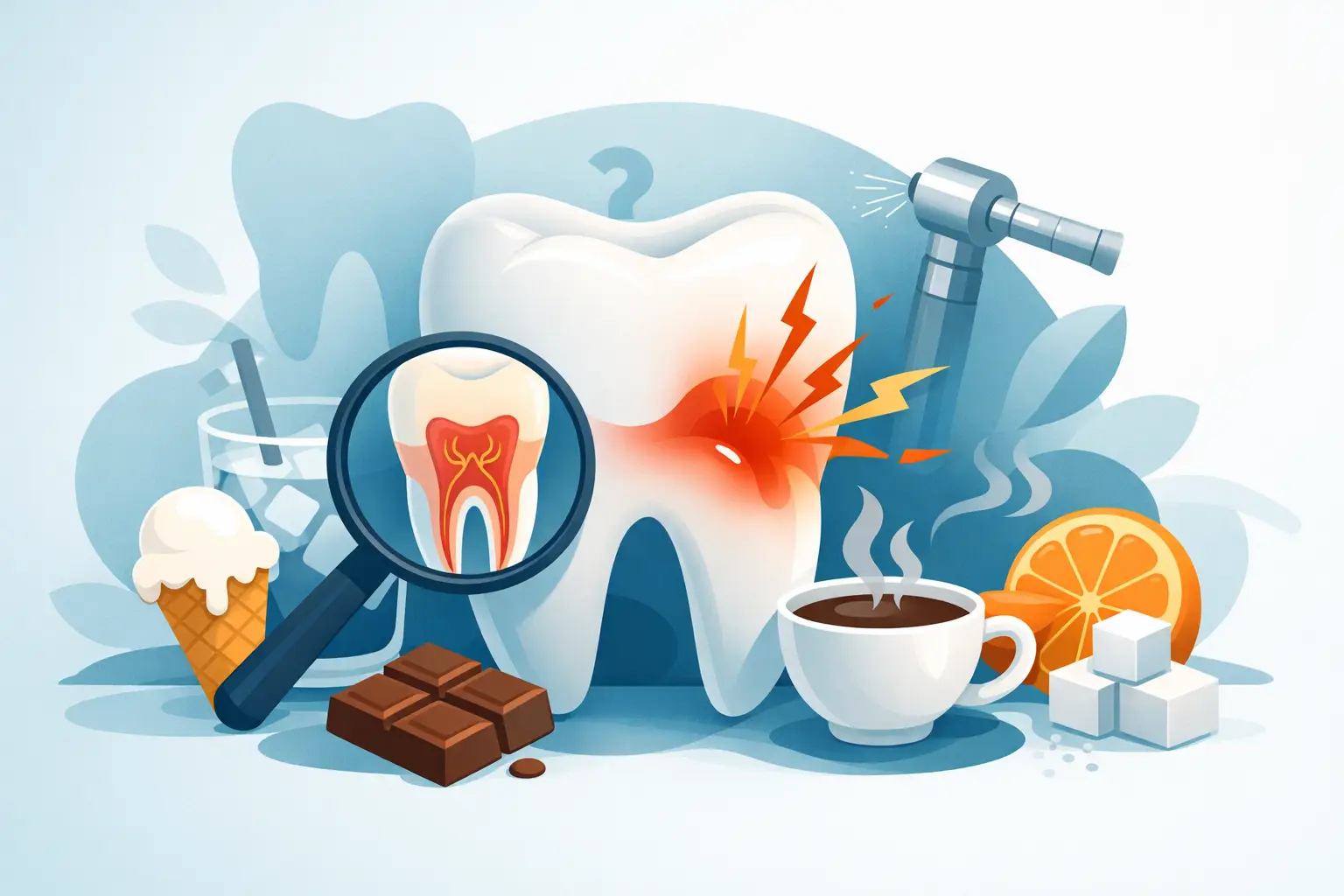
What Causes Sudden Tooth Sensitivity? 8 Reasons
That sharp jolt when you sip iced water or bite into something sweet can make an ordinary meal feel stressful. If you are wondering what causes sudden tooth sensitivity, the answer is not always as simple as having sensitive teeth. A new change in comfort can be a sign that part of the tooth is exposed, irritated, or damaged – and a dental exam can identify the reason before the problem becomes more painful or costly to treat.
What causes sudden tooth sensitivity?
Tooth sensitivity happens when the inner portion of a tooth, called dentin, is exposed or stimulated. Dentin contains tiny pathways that lead toward the tooth’s nerve. Cold, heat, sweetness, pressure, or even a rush of air can travel through those pathways and create a quick, sharp sensation.
Sometimes sensitivity is temporary, such as after a professional cleaning or whitening treatment. Other times, it points to a cavity, a crack, gum recession, or another condition that needs attention. The timing, location, and type of pain all help your dentist narrow down the cause.
1. Worn enamel from acids or brushing habits
Enamel is the hard outer coating that protects each tooth. It can gradually wear down from acidic drinks and foods, frequent snacking, acid reflux, or brushing too aggressively. Once enamel becomes thinner, cold drinks and sugary foods may reach the sensitive dentin underneath more easily.
A firm toothbrush and a heavy hand can also wear the tooth near the gumline over time. This is not a reason to stop brushing. It is a reason to use a soft-bristled brush, gentle pressure, and a technique your dental team can show you. Waiting about 30 minutes to brush after acidic foods or drinks can also help, since enamel is temporarily softer after acid exposure.
2. Gum recession and exposed roots
Healthy gums cover and protect the roots of your teeth. When gums recede, the root surface becomes exposed. Roots do not have the same thick enamel coating as the visible part of a tooth, so they can be particularly sensitive to cold air, drinks, and brushing.
Gum recession may be related to gum disease, aggressive brushing, clenching, tobacco use, or simply the way your gums and teeth are positioned. It can develop gradually but feel sudden when enough root surface is exposed. If your teeth look longer than they once did or you notice notches near the gumline, schedule an evaluation.
3. A cavity that has reached a sensitive area
Early cavities do not always hurt. As decay moves deeper into a tooth, however, it can cause sensitivity to sweets, cold temperatures, or heat. Pain that lingers after the trigger is gone is more concerning than a brief flash of discomfort.
A cavity will not heal on its own, even if the sensitivity comes and goes. Treating a small area of decay with a filling is generally more straightforward than waiting until infection reaches the nerve and a root canal or extraction becomes necessary.
4. A cracked tooth or loose filling
Cracks can be difficult to see because they may be tiny and hidden below the surface. You may notice pain when chewing, sensitivity when you release a bite, or discomfort with hot and cold foods. Biting down on a hard popcorn kernel, ice, or a nut can trigger a crack, but many cracks develop over time from repeated pressure.
An old filling or crown can also wear down, loosen, or allow bacteria to enter around its edges. One tooth that suddenly reacts more strongly than the others deserves a professional check, especially if it hurts when you bite.
5. Teeth grinding or clenching
Many people clench their teeth during stressful moments or grind them while asleep without realizing it. This repeated force can wear enamel, strain the tooth structure, and create small cracks. Morning jaw soreness, headaches, flattened teeth, or a partner hearing grinding at night are common clues.
The right solution depends on what is happening in your mouth. A custom night guard may help protect teeth from nighttime grinding, while damaged teeth may need restorative treatment first. An exam can determine whether the sensitivity is related to bite pressure, tooth damage, or both.
6. Recent dental treatment or teeth whitening
Sensitivity after a filling, crown, deep cleaning, or whitening can be normal for a short period. Dental work can temporarily irritate the tooth or expose areas that were previously covered by plaque or tartar. Whitening products can also pass through enamel and briefly affect the nerve inside the tooth.
The trade-off is that cosmetic treatment can improve the appearance of a smile, but it may not be the right time to whiten if you already have untreated decay, cracks, or gum recession. Let your dental team know if pain is severe, lasts longer than expected, wakes you at night, or becomes worse instead of better.
7. Gum disease and inflammation
Bleeding gums, persistent bad breath, tenderness, and swelling are not just gum concerns. Inflammation and infection around the teeth can lead to recession and root exposure, creating sensitivity. More advanced gum disease can also weaken the support around teeth and make chewing uncomfortable.
Professional periodontal care removes buildup below the gumline and gives your dentist a clearer view of your oral health. At-home brushing and flossing remain essential, but they cannot remove hardened tartar or reverse an active infection by themselves.
8. Sinus pressure or a tooth infection
Upper back teeth sit close to the sinus cavities. A sinus infection or significant congestion can sometimes create pressure that feels like tooth pain, often across several upper teeth rather than one specific tooth. The discomfort may worsen when you bend over and may occur with facial pressure or nasal symptoms.
However, do not assume a sinus problem is the cause without an exam. A tooth infection can create similar pressure and may become serious if untreated. Swelling of the face or gums, fever, a bad taste in the mouth, or a pimple-like bump on the gums can indicate infection and should be assessed promptly.
When sudden sensitivity needs urgent dental care
A brief sting that stops immediately may be manageable while you schedule a routine visit. But dental pain has a way of becoming more disruptive when the underlying problem is ignored. Contact a dentist promptly if sensitivity lasts more than a few days, is focused on one tooth, hurts when you chew, or lingers after hot or cold foods.
Seek urgent care for facial swelling, fever, trouble swallowing, trouble breathing, or rapidly increasing pain. These symptoms can signal an infection that needs immediate treatment. Do not place aspirin directly on a tooth or gums, as it can burn the tissue. Use medication only as directed on the label or by your healthcare provider while arranging care.
What you can do before your appointment
Until you are seen, choose room-temperature foods and drinks if cold or heat is setting off the pain. Brush twice daily with a soft toothbrush and fluoride toothpaste formulated for sensitivity, and floss gently to remove food debris around the affected area. Avoid whitening products, very acidic beverages, and chewing ice or hard candy.
If you have a known history of grinding, try to keep your jaw relaxed during the day: lips together, teeth apart. Over-the-counter pain relief may be appropriate for some adults, but it does not treat decay, infection, or a crack. Relief is useful, but it should not delay an evaluation.
How a dental exam finds the real cause
A dentist will ask what triggers the sensitivity, whether it is one tooth or many, and how long the discomfort lasts. The exam may include checking your gums, testing how teeth respond to temperature or pressure, reviewing your bite, and taking digital X-rays when needed.
Treatment is based on the cause. It may be as conservative as fluoride treatment, desensitizing toothpaste, or a small filling. In other cases, gum therapy, a crown, a night guard, root canal treatment, or another restorative option may be recommended. The goal is not simply to quiet the symptom. It is to protect the tooth and help you return to eating, drinking, and smiling comfortably.
If a cold drink has suddenly become a source of dread, trust that signal and have it checked. At Star Dental Group in Rancho Cucamonga, a caring dental evaluation can give you clear answers and practical options before a small sensitivity becomes a bigger interruption to your life.

