


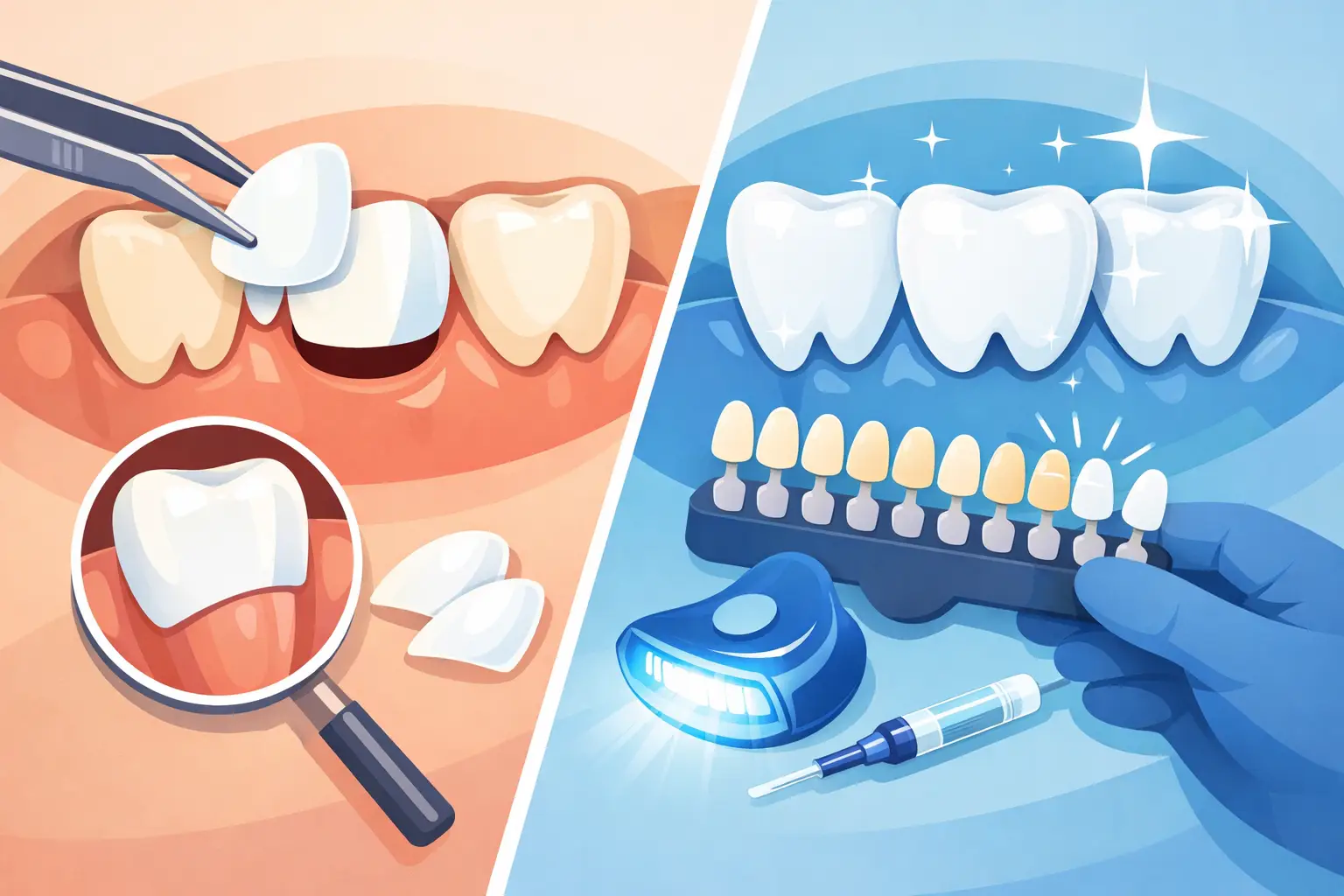
Veneers vs Teeth Whitening: Which Fits You?
A bright smile can change how you feel in photos, meetings, and everyday conversations. But veneers vs teeth whitening is not simply a choice between two ways to make teeth look better. Whitening changes the shade of natural enamel, while veneers change the visible front surface of selected teeth. The right option depends on what you want to improve, the health of your teeth, and how long you want the result to last.
For many patients in Rancho Cucamonga, the best answer is not the most dramatic treatment. It is the treatment that addresses the real reason you feel self-conscious about your smile without adding unnecessary cost or dental work.
Veneers vs Teeth Whitening: The Core Difference
Professional teeth whitening uses carefully selected whitening agents to lift stains from natural tooth enamel. It is designed for teeth that are healthy in structure but have become darker or more yellow over time. Coffee, tea, red wine, tobacco, certain foods, aging, and natural changes in enamel can all affect tooth color.
Veneers are thin, custom-made shells, usually made from porcelain or a high-quality ceramic material, that are bonded to the front of teeth. They can improve color, but color is only one part of what they address. Veneers may also help conceal chips, small gaps, worn edges, uneven tooth shape, or teeth that look slightly crooked.
That distinction matters. If your teeth are healthy and your main concern is yellowing, whitening may provide the improvement you want with a more conservative approach. If the issue is a combination of discoloration and visible shape or alignment concerns, veneers may offer a more complete cosmetic change.
When Teeth Whitening Is the Better Choice
Whitening is often a strong first option for patients who like the overall size, shape, and position of their teeth. It can provide a noticeable refresh without altering tooth structure. Professional treatment is also more predictable and comfortable than relying on over-the-counter products alone, especially for patients who have experienced tooth sensitivity.
In-office whitening can be a good fit when you want results quickly for an upcoming event, professional milestone, or family photos. Custom take-home trays may suit patients who prefer gradual whitening on their own schedule. A dentist can help determine which approach is appropriate based on your enamel, existing dental work, and sensitivity history.
Whitening has limits. It does not change the color of crowns, fillings, bonding, or veneers already in your mouth. It also may not fully improve certain deep internal stains caused by medications, trauma, or developmental conditions. In those situations, a brighter result may require another cosmetic approach.
Results are not permanent because daily habits continue to affect tooth color. Many patients maintain their smile with occasional touch-up treatment and thoughtful choices around stain-producing foods and drinks. That ongoing maintenance is generally straightforward, but it is worth considering before you decide.
When Veneers May Make More Sense
Veneers are usually considered when color is only one part of the concern. A patient may have a front tooth with a stubborn dark stain, small teeth that appear uneven, minor chips from years of wear, or spaces that make the smile feel unfinished. With thoughtful planning, veneers can create a more uniform, balanced appearance.
Porcelain veneers are known for their lifelike appearance and resistance to many surface stains. They are custom designed around your facial features, bite, tooth proportions, and desired smile style. The goal should not be a generic, overly white look. A well-planned cosmetic result should still look natural when you speak and smile.
There are trade-offs. Traditional veneers often require a small amount of enamel preparation so the restoration sits naturally against the gumline and surrounding teeth. Because enamel may be altered, veneers are generally a long-term commitment. They can last for many years with proper care, but they may eventually need replacement.
Veneers also do not replace good oral health habits. Cavities, gum disease, grinding, and bite problems need attention before cosmetic treatment. Patients who clench or grind their teeth may need a nightguard to protect their investment. A comprehensive exam helps prevent a beautiful result from being compromised by an untreated dental issue.
Compare Cost, Longevity, and Maintenance
The cost difference between whitening and veneers is significant because the treatments involve very different levels of planning, materials, and clinical work. Whitening is usually the more budget-friendly choice, particularly if healthy natural teeth only need a color improvement. Veneers cost more per tooth because each one is individually designed and fabricated.
It can be tempting to compare treatments only by the initial price, but value is broader than that. Whitening may need periodic touch-ups. Veneers generally last longer, but replacement should be anticipated as part of long-term planning. The best option is the one that solves your concern without treating more than necessary.
Maintenance differs as well. Whitened teeth still benefit from routine cleanings, brushing twice daily with fluoride toothpaste, flossing, and regular dental exams. Veneers need the same home care, along with avoiding habits that can chip or damage them, such as chewing ice, biting fingernails, or opening packages with your teeth.
If affordability is a concern, ask for a clear treatment plan before moving forward. Understanding the number of teeth involved, any needed health treatment, and the expected maintenance can make the decision feel more manageable.
Should You Whiten Before Getting Veneers?
Often, yes. If you are planning veneers for only one or a few teeth, whitening your natural teeth first can help create a lighter overall shade. Your veneers can then be designed to blend with the color you want to maintain.
This is especially helpful when only the front teeth will receive veneers while neighboring teeth remain natural. Since porcelain will not respond to future whitening treatment, choosing a shade carefully at the beginning matters. Your dentist can discuss whether whitening first will create the most balanced result.
On the other hand, if several front teeth have significant discoloration, wear, or shape concerns, whitening alone may not provide enough improvement to justify delaying veneers. Treatment should be based on your specific smile rather than a one-size-fits-all sequence.
Other Options Worth Considering
Not every cosmetic concern calls for veneers or whitening. Dental bonding can sometimes repair small chips, reshape a tooth, or close a minor gap with less preparation than a veneer. Orthodontic treatment may be the better route when crowding, spacing, or bite alignment is the primary issue.
Crowns are different from veneers and are generally recommended when a tooth needs more structural coverage because of extensive damage, a large filling, or root canal treatment. A healthy tooth should not receive a crown solely because it needs to look whiter.
A full-mouth view is valuable because your smile is connected to your bite, gum health, and overall dental condition. Addressing those foundations first supports a cosmetic result that feels comfortable as well as attractive.
Questions Patients Ask About Veneers and Whitening
Will whitening damage my teeth?
When performed under professional guidance and used as directed, whitening is considered a safe cosmetic treatment for appropriate candidates. Temporary sensitivity or gum irritation can occur, especially with stronger products or frequent use. A dental evaluation can identify concerns such as decay, worn enamel, or exposed roots before treatment begins.
Can veneers be whitened later?
No. Veneers do not respond to whitening gel the way natural enamel does. They are selected in a specific shade at the time of treatment, which is why planning around your natural tooth color is so useful.
How many veneers do I need?
Some patients need one veneer to improve a single damaged or discolored tooth. Others choose several veneers across the most visible upper teeth to create symmetry. The number depends on how wide your smile is, which teeth show when you speak, and what you want to change.
Can I try whitening before committing to veneers?
In many cases, that is a practical approach. Whitening can reveal how much of your concern is related to color alone. If you still notice uneven edges, gaps, chips, or shape differences afterward, you can discuss whether veneers or bonding would add the improvement you are looking for.
A cosmetic consultation should leave you with clear choices, not pressure. At Star Dental Group, a personalized evaluation can help you understand what your teeth need now, what can wait, and which path supports a smile you will feel comfortable sharing.

