


Same Day Dental Crown: Is It Right for You?
You crack a tooth on lunch, feel the edge with your tongue all afternoon, and suddenly a two-week dental fix sounds like a long time. That is exactly why a same day dental crown appeals to so many patients. If you want to protect a damaged tooth and get back to work, family life, or normal eating without multiple visits, this option can make a lot of sense.
A dental crown is a custom cap that covers a tooth that has been weakened, broken, worn down, or treated with a root canal. The traditional process usually takes two appointments, with a temporary crown in between. A same day dental crown changes that timeline by allowing your dentist to design, create, and place the final crown in a single visit using in-office digital technology.
What is a same day dental crown?
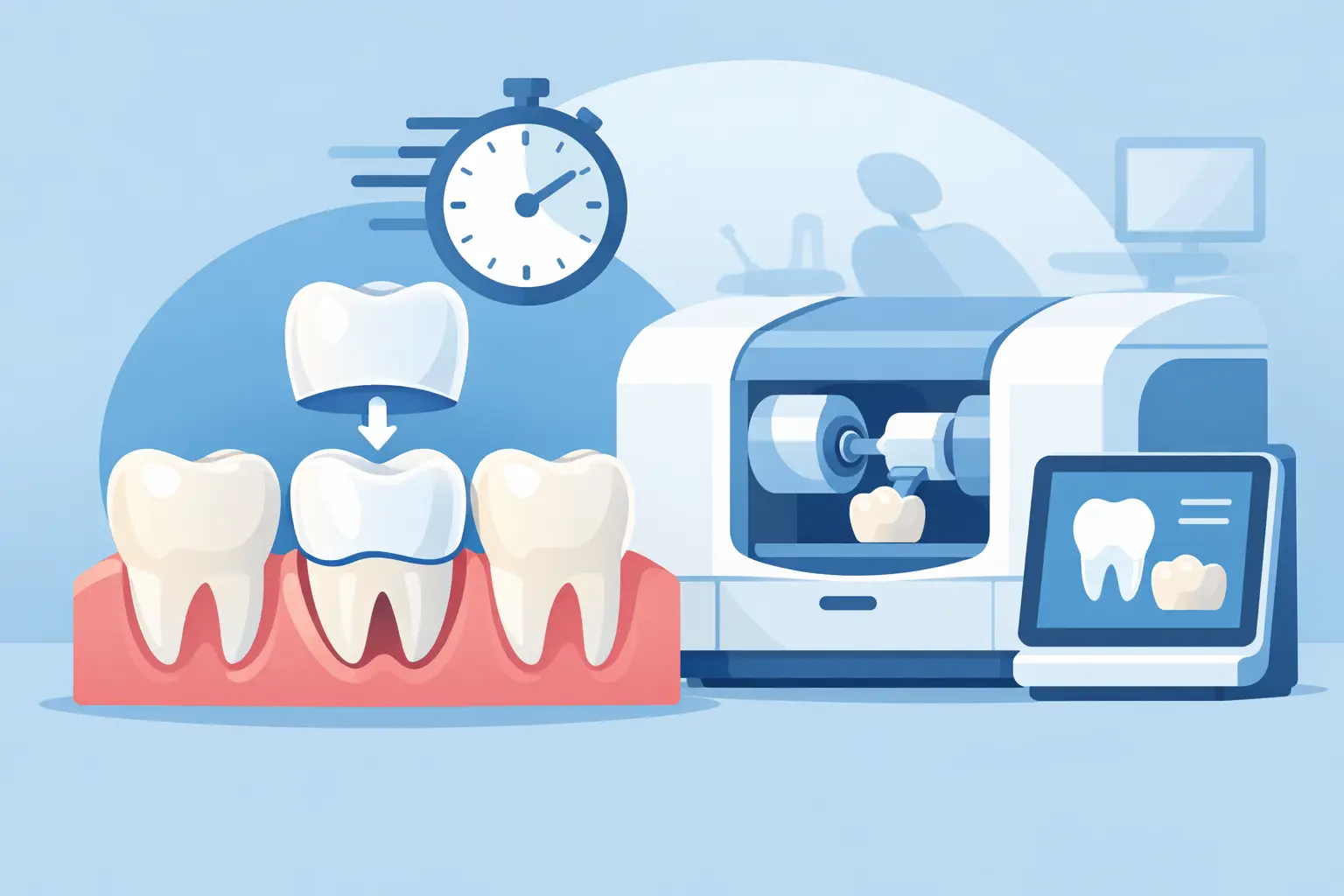
A same day dental crown is a permanent crown made in the dental office during your appointment. Instead of taking physical impressions and sending them to an outside lab, your dentist uses digital scanning to capture the shape of your tooth. That scan is used to design the crown, and an in-office milling unit creates it from a strong ceramic block.
Once the crown is ready, your dentist checks the fit, adjusts the bite, and bonds it into place. The result is a restoration that is designed to look natural and function like your own tooth, without the waiting period that comes with a lab-made crown.
For many patients, the biggest benefit is simple: fewer disruptions. You do not have to come back for another visit, wear a temporary crown, or worry as much about that temporary coming loose while you eat or brush.
How the same day dental crown process works
The appointment starts with an exam and, if needed, X-rays to evaluate the tooth and the surrounding structures. Your dentist will make sure the tooth can support a crown and that there is no untreated infection or issue below the surface that changes the plan.
Next, the tooth is shaped so the crown can fit securely. After that, a digital scanner captures highly detailed images of the prepared tooth and the neighboring teeth. This replaces the older putty impression method that many patients find messy and uncomfortable.
Digital design and in-office milling
Using the scan, the crown is designed on a computer to match your bite and the shape of your smile. Then the in-office machine mills the restoration from ceramic. This stage can often be completed while you remain in the office.
Once the crown is made, your dentist tries it in, checks the contact points and bite, and makes any needed refinements. When everything looks and feels right, the crown is polished and bonded in place.
This process is efficient, but it is not rushed. A good fit matters. A crown that is slightly off can affect comfort, chewing, and even nearby teeth, so careful adjustment is part of quality treatment.
Why patients choose a same day dental crown
Convenience is the obvious reason, but it is not the only one. Many people choose this treatment because they want to solve a problem now instead of stretching it across two appointments.
If you have a demanding work schedule, children at home, or limited flexibility for follow-up visits, one appointment is a major advantage. It can also be helpful for patients who feel anxious about dental treatment and would rather complete the restoration in one visit than repeat the process.
There is also the comfort factor. Digital scanning is easier for many patients than traditional impressions. And because the final crown is placed the same day, you avoid the common frustrations of a temporary crown, including sensitivity, movement, and dietary restrictions.
When a same day dental crown is a good fit
A same day dental crown can be an excellent option for many teeth that need protection and full coverage. That includes teeth with large fillings, cracked teeth, worn teeth, and some teeth after root canal treatment.
It can also be a strong choice when appearance matters. Ceramic crowns can be designed to blend well with your surrounding teeth, which makes them especially appealing in visible areas of the smile.
That said, the right treatment depends on the tooth, your bite, and your long-term goals. Some cases are straightforward. Others need more planning.
Cases where it may not be the best option
Not every crown should be done in one day. If the tooth has complex structural issues, requires extensive buildup, has challenging bite forces, or needs a material better suited to a lab process, your dentist may recommend a traditional crown instead.
Patients who grind or clench heavily may still be candidates, but the material choice and treatment plan need extra attention. In some situations, a lab-fabricated restoration may offer advantages depending on the location of the tooth and the demands placed on it.
This is where a full-mouth view matters. The best crown is not just the one that fixes one tooth today. It is the one that supports your overall oral health and bite over time.
Same day dental crown vs traditional crown
Both options are designed to restore and protect a tooth. The difference is mainly in how they are made and how long the process takes.
A traditional crown usually involves two visits. At the first visit, the tooth is prepared, impressions are taken, and a temporary crown is placed. The final crown is made in a dental lab and placed at the second visit. This route still works very well and remains a strong option for many patients.
A same day dental crown condenses the process into one appointment through digital scanning and in-office fabrication. For the right patient, that means less waiting, no temporary crown, and faster treatment completion.
The trade-off is not really about one option being universally better than the other. It is about what fits the clinical situation. A trustworthy dental team should explain why one approach makes more sense for your specific case rather than pushing a one-size-fits-all answer.
What to expect after treatment
Most patients adjust to a new crown quickly. Your tooth may feel slightly sensitive for a short time, especially to pressure or temperature, but that usually settles down. Your bite should feel balanced. If it feels too high or uneven, it is important to let your dentist know so it can be adjusted.
You can care for a crown much like a natural tooth. Brush thoroughly, floss carefully around the gumline, and keep up with regular checkups. A crown protects the visible part of the tooth, but the tooth structure underneath and the surrounding gums still need healthy daily care.
It also helps to be realistic. A crown is durable, but it is not indestructible. Chewing ice, opening packages with your teeth, or ignoring nighttime grinding can shorten its lifespan.
Cost, value, and the bigger picture
One of the first questions many patients ask is whether a same day dental crown costs more. The answer depends on the office, the materials used, your insurance, and the complexity of the case. In many situations, the cost is comparable to a traditional crown, though fees can vary.
What matters just as much as price is value. If one visit saves you time away from work, extra childcare arrangements, and a return trip to the office, that convenience has real value. For many families and working adults, that matters.
At the same time, the least expensive option is not always the best one if it does not suit the tooth. Good dentistry should be both efficient and thoughtful. Patients deserve clear recommendations, transparent costs, and treatment options that make sense for their health and budget.
Choosing the right provider for a same day dental crown
Technology matters, but experience matters just as much. A same day system is only as good as the planning, preparation, and bite design behind it. You want a dental team that looks beyond speed and focuses on fit, function, comfort, and appearance.
That is especially important if your tooth is part of a larger issue, such as multiple failing restorations, missing teeth, cosmetic concerns, or bite imbalance. In those situations, care is better when your provider can see the whole picture and coordinate treatment under one roof. For patients in the Inland Empire, that comprehensive approach is one reason many families turn to a practice like Star Dental Group.
If you are dealing with a damaged tooth, waiting is rarely the best strategy. A helpful next step is simply finding out whether a same day solution fits your situation. The right crown should not just save time – it should help you feel comfortable, chew confidently, and move forward without adding more stress to your week.

