


What Is the Same Day Dental Crown Process?
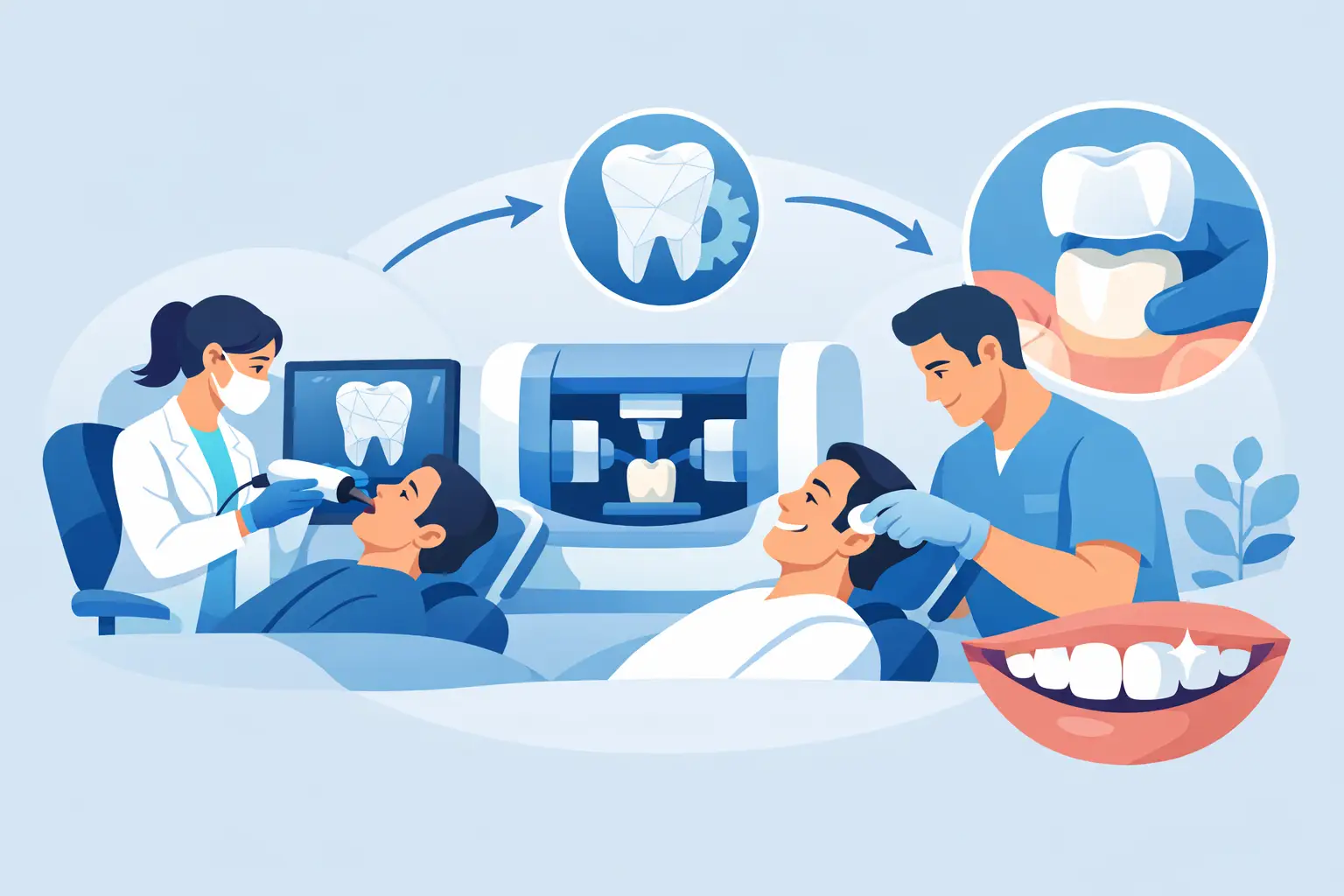
A cracked tooth does not always have to mean weeks with a temporary crown, a second appointment, and extra time away from work or family. The same day dental crown process can often restore a qualifying tooth in one visit, using digital imaging and in-office milling technology to create a custom ceramic crown while you are at the office.
For patients in Rancho Cucamonga and the Inland Empire, that convenience can make a real difference. You can address discomfort, protect a weakened tooth, and leave with a finished restoration designed for your smile – all without coordinating treatment between multiple offices.
When a Same-Day Crown May Be Recommended
A dental crown is a custom cover that protects and strengthens a tooth when a filling alone is no longer enough. Your dentist may recommend a crown after a large cavity, a fractured cusp, significant wear, or root canal treatment. Crowns are also used to replace older restorations that have failed or to improve the appearance of a misshapen or severely discolored tooth.
Same-day crowns are an excellent option for many patients, but they are not automatically the best choice for every tooth. The location of the tooth, the amount of healthy tooth structure remaining, your bite, gum health, and the complexity of the restoration all matter. Some cases require a different crown material, additional treatment, or a traditional laboratory-made crown for the most predictable result.
The right question is not simply, “Can this be done today?” It is, “What restoration will protect this tooth and support my long-term oral health?” A careful exam helps answer both.
The Same Day Dental Crown Process, Step by Step
The appointment is planned to be efficient, but it should never feel rushed. Your dental team will first focus on diagnosis, comfort, and making sure a same-day restoration is appropriate for your specific needs.
1. Exam, X-rays, and treatment planning
Your visit begins with an examination of the tooth and surrounding gums. Digital X-rays may be used to check for decay beneath an old filling, infection near the root, cracks, or bone concerns that are not visible from the surface.
Your dentist will discuss what is happening with the tooth, whether a crown is needed, and whether there are alternatives. If you have several dental concerns, this is also a useful time to discuss a complete treatment plan. Addressing urgent restorative needs while planning cosmetic or preventive care can help avoid repeated visits and unexpected problems later.
2. Numbing and tooth preparation
Once you are comfortable, the dentist gently numbs the area. The damaged or weakened portion of the tooth is removed, along with any old restoration or decay that needs to be treated. The tooth is then shaped so the crown can fit securely around it.
How much preparation is needed depends on the condition of the tooth. A small fractured area may require less adjustment than a tooth with a large old filling or extensive damage. If decay has reached the nerve, root canal treatment may be recommended before the crown is placed. In that situation, the overall timeline can vary.
3. Digital scan instead of traditional impressions
Rather than having you bite into impression material, many same-day crown systems use a small intraoral scanner to capture detailed digital images of the prepared tooth and nearby teeth. The scan creates a precise 3D model of your bite.
This is more comfortable for many patients and gives the dental team a clear view of how the new crown should fit. Accurate bite alignment matters. A crown that sits too high can make chewing uncomfortable and may place unnecessary pressure on the tooth, jaw, or opposing teeth.
4. Custom crown design
Using specialized software, the dentist designs the crown to match the shape, contours, and contact points of your natural teeth. The shade is selected to blend with your smile as naturally as possible.
For front teeth, color matching and cosmetic detail are especially important. For back teeth, strength and bite function often take priority. Your dentist balances both appearance and durability, because a crown should look natural while standing up to normal daily use.
5. In-office milling and finishing
The digital design is sent to an in-office milling unit, which shapes the crown from a high-quality ceramic block. While the crown is being created, you may have a short waiting period at the office. The team then checks the restoration, adds finishing details if needed, and prepares it for placement.
The ceramic material used for a same-day crown is selected for strength and aesthetics, but material options differ. In certain cases, a lab-made crown may provide more appropriate material choices for heavy bite forces, complex cosmetic work, bridges, or specific implant restorations.
6. Try-in, bite check, and bonding
Before the crown is permanently secured, your dentist checks the fit around the edges, the contact with neighboring teeth, the color, and your bite. Minor adjustments can be made before bonding the crown in place.
Once everything feels right, the crown is bonded to the tooth with dental cement. Your dentist will make final bite adjustments as needed. You should be able to close comfortably and chew without the crown feeling noticeably different from the rest of your teeth.
How Long Does a Same-Day Crown Appointment Take?
Most same-day crown visits take a few hours from start to finish. The exact time depends on the tooth, the amount of preparation required, whether old decay or a failing filling must be removed, and how much customization is needed.
Although the crown is completed in one appointment, the visit is still a detailed restorative procedure. If you have dental anxiety, tell the team before treatment begins. A patient-focused office can explain each step, discuss comfort options, and help you feel more in control throughout the appointment.
What to Expect After Your Crown Is Placed
It is common to have mild tenderness around the gum tissue or temporary sensitivity after the anesthetic wears off, particularly if the tooth had deep decay or extensive preparation. Most patients can return to normal activities the same day, though it is smart to wait until numbness is gone before eating so you do not bite your cheek or tongue.
For the first day, choose foods that are comfortable to chew and avoid testing the new crown with ice, hard candy, or sticky foods. A crown is strong, but like a natural tooth, it can chip or loosen under excessive force. If you grind or clench your teeth, a night guard may help protect both your crown and your natural teeth.
Call your dental office if your bite feels uneven, you have persistent pain, the crown feels loose, or floss catches between the crown and a neighboring tooth. A small bite adjustment can often resolve discomfort quickly, and it is better to have it checked than to wait.
Caring for a Same-Day Crown
A crown does not get cavities, but the natural tooth underneath and the gumline around it still need daily care. Brush twice a day with fluoride toothpaste, clean between your teeth daily, and keep up with professional cleanings and exams. Floss carefully around the crown rather than snapping floss down forcefully between teeth.
With good care, a quality crown can serve you for many years. Its lifespan depends on bite forces, home care, diet, regular dental visits, and the health of the tooth supporting it. Avoid using teeth to open packages or chew non-food objects, since those habits can damage natural teeth and restorations alike.
Is a Same-Day Crown Right for You?
The biggest benefit is clear: one visit can save time while giving you a permanent-looking, functional restoration without a temporary crown. For busy parents, professionals, seniors, and patients who have delayed care because of scheduling concerns, that can remove a major barrier to treatment.
Still, convenience should support quality, not replace it. A thorough exam and honest recommendation are essential. At Star Dental Group, the goal is to help patients choose care that is comfortable, affordable, and appropriate for their long-term dental health.
If a tooth is cracked, painful, or repeatedly losing a filling, do not wait for it to become an emergency. A timely evaluation can show whether a same-day crown is a practical solution and help you protect the smile you rely on every day.

