


How to Compare Implant Options for Your Smile
A missing tooth can affect much more than a photograph or a favorite meal. It can change how you chew, speak, and feel when you smile. Knowing how to compare implant options starts with looking beyond a single price or advertisement. The right solution should fit your oral health, the number and location of missing teeth, your timeline, and the kind of daily care you can comfortably maintain.
Dental implants are designed to replace tooth roots with small posts placed in the jawbone. After healing, they can support a crown, bridge, or a full arch of replacement teeth. They can be an excellent long-term option, but not every implant treatment is the same. A thoughtful consultation helps turn a complicated decision into a clear treatment plan.
Start With the Problem You Need to Solve
Before comparing brands, materials, or treatment prices, define what you are replacing. One missing tooth calls for a different approach than several missing teeth in a row or an entire upper or lower arch. The location matters, too. A back tooth must withstand strong chewing forces, while a front tooth requires especially careful attention to shade, shape, and gum appearance.
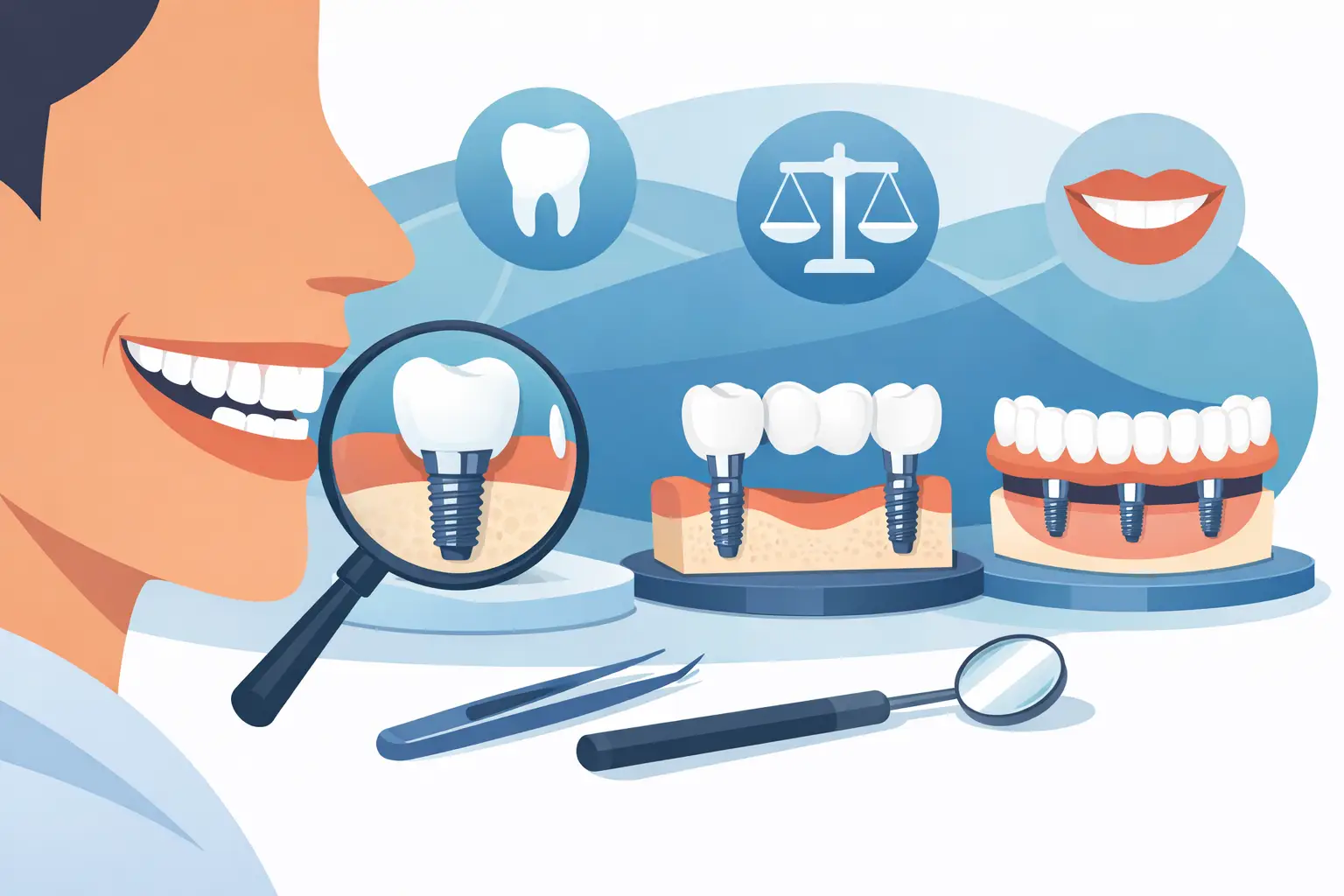
If you are missing one tooth, a single implant with a custom crown may be a strong option because it does not require reshaping the healthy teeth beside the gap. If several neighboring teeth are missing, an implant-supported bridge may replace them using fewer implants than individual crowns. For patients missing most or all teeth, a fixed full-arch restoration or an implant-supported removable denture may provide more stability than a traditional denture.
There is no universal “best” implant. The best option is the one that restores function and appearance while respecting your health, bone support, budget, and goals.
How to Compare Implant Options by Type
Single-tooth implants
A single implant generally includes the implant post, a connecting piece called an abutment, and a crown. This option is often ideal for one missing tooth because it stands independently. It can preserve the bone in the area and avoids placing a bridge on adjacent teeth.
The trade-off is that treatment may take several months, especially if extraction, bone grafting, or healing time is needed. A single implant can also cost more upfront than a conventional bridge, although its long-term value may be favorable when neighboring teeth are healthy.
Implant-supported bridges
An implant-supported bridge replaces multiple missing teeth without relying on natural teeth for support. Rather than placing one implant for every missing tooth, your dentist may use strategically positioned implants to support several replacement teeth.
This can be a practical choice when there is a larger gap. It may lower the number of implants needed while providing a fixed restoration that feels more secure than a removable option. The design, bite forces, and ability to clean beneath the bridge should all be reviewed before moving forward.
Implant-supported dentures
An implant-supported denture uses implants to hold a removable denture more firmly in place. It can reduce slipping, improve chewing confidence, and help many patients feel more comfortable speaking. Depending on the design, the denture may snap onto implants and be removed at home for cleaning.
This option may be more affordable than a fixed full-arch restoration, but it still requires daily removal and cleaning. It is a good choice for some patients, particularly when they want added stability without the cost of a permanently attached bridge.
Fixed full-arch implants
A fixed full-arch restoration replaces an entire upper or lower row of teeth with a bridge attached to implants. Patients typically do not remove it at home. For someone with failing teeth, extensive tooth loss, or loose dentures, a fixed solution can provide a major improvement in comfort and confidence.
However, full-arch treatment is complex. It requires detailed planning, sufficient bone or grafting when needed, and careful home hygiene around the restoration. Ask whether a temporary fixed bridge is included, what the final material will be, and how future repairs are handled.
Look Closely at Your Bone and Gum Health
Implants rely on healthy bone for support. If a tooth has been missing for a long time, the jawbone may have shrunk in that area. Gum disease, smoking, uncontrolled diabetes, teeth grinding, and certain medical conditions can also affect healing and long-term implant success.
That does not automatically mean implants are off the table. Some patients benefit from bone grafting, sinus lifting in the upper back jaw, gum treatment, or a staged approach that allows the mouth to heal first. Others may be better served by a different restoration. A quality evaluation should include a full exam and 3D imaging when appropriate, not simply a quick look at the missing space.
Be open about your health history and medications. This allows your dental team to recommend treatment safely and avoid surprises later.
Compare Materials and the Final Smile, Not Just the Implant Post
Most modern implant posts are made from titanium, a material with a long record of use in dentistry. Zirconia implants may be considered in select cases, but they are not automatically better for every patient. What matters most is whether the system is appropriate for your anatomy, restoration, bite, and treatment goals.
The visible restoration also deserves attention. Crowns and bridges may be made from ceramic, zirconia, porcelain fused to metal, or other materials. A front-tooth crown may prioritize natural translucency and color matching. A back-tooth restoration may prioritize strength under chewing pressure. For a full arch, the material choice can affect appearance, durability, weight, repairability, and cost.
Ask to see how the proposed tooth color and shape will be planned. Cosmetic details are not an extra when the implant is visible in your smile. They are part of creating a result that looks like it belongs to you.
Understand the Treatment Timeline
Some implant cases can receive a temporary tooth on the same day an implant is placed. This is often called immediate loading or same-day teeth. It can be a wonderful option for the right patient, but it is not a promise that every implant will receive a permanent tooth immediately.
The safety of immediate treatment depends on implant stability, bone quality, bite pressure, infection status, and whether you can follow a softer diet during healing. In other cases, healing for several months before placing the final crown or bridge is the more predictable path.
When comparing plans, ask what happens at each visit: extraction, grafting, implant placement, temporary restoration, final restoration, and follow-up care. A clear timeline makes it easier to plan around work, family responsibilities, and travel.
Compare Total Cost, Not the Starting Price
Implant treatment is an investment in your health and quality of life, so a low advertised number rarely tells the full story. Request a written estimate that explains what is included. An implant quote may involve imaging, extraction, grafting, the implant post, abutment, temporary teeth, final crown or bridge, sedation, follow-up visits, and maintenance.
A lower initial estimate can become less affordable if essential steps are excluded. At the same time, the most expensive plan is not automatically the best plan. The goal is transparent treatment that is clinically appropriate and financially understandable.
If cost has delayed your care, ask about phased treatment, insurance coordination, financing options, and available savings for uninsured patients or seniors. At Star Dental Group, a consultation can help you review choices without pressure and understand the path that makes sense for your needs.
Consider the Experience Behind the Recommendation
Implant care combines surgical planning, restorative dentistry, bite design, gum health, and cosmetic detail. When comparing implant options, ask who will plan each phase and how the final restoration is designed. A multi-specialty practice can be especially convenient when your treatment also involves periodontal care, extractions, orthodontic considerations, or cosmetic work.
You should also ask how the office handles complications, repairs, and routine maintenance. Implants cannot get cavities, but the gums and bone around them still need professional care. Home brushing, flossing or specialized cleaning tools, regular visits, and a night guard for grinding can help protect your result.
A good treatment conversation should leave you feeling informed, not rushed. Bring questions, discuss your budget honestly, and ask to compare more than one reasonable path when available. The right implant option is not simply the fastest or least expensive one – it is the one you can trust to support your smile for years to come.

