


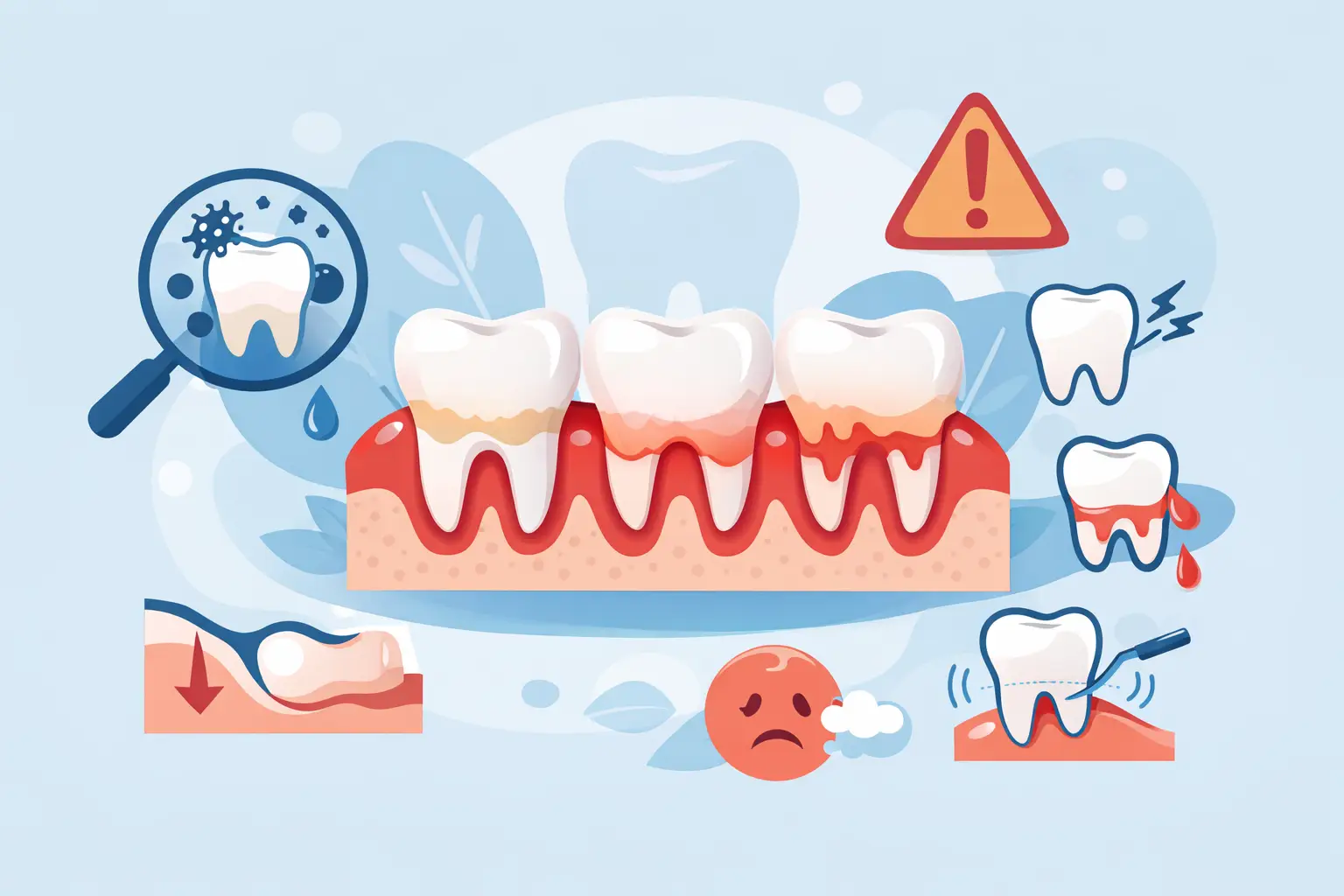
7 Gum Disease Warning Signs You Should Not Ignore
A pink toothbrush after you brush, a metallic taste that keeps returning, or breath that does not improve after flossing can be easy to dismiss. Yet these can be gum disease warning signs, and waiting for discomfort to become severe can allow a treatable problem to progress.
Gum disease often develops quietly. In its early stage, called gingivitis, the gums are inflamed but the damage can often be reversed with professional care and stronger home habits. When it advances to periodontitis, the infection can affect the tissues and bone that hold teeth in place. That is why paying attention to small changes in your mouth matters.
7 gum disease warning signs to watch for
1. Gums that bleed when you brush or floss
Healthy gums should not routinely bleed during normal brushing or flossing. A little bleeding may happen if you have just started flossing after a long break, but it should improve rather than continue. Persistent bleeding is commonly linked to plaque buildup along and below the gumline.
Do not stop flossing because your gums bleed. Gentle, consistent flossing helps remove plaque between teeth, where a toothbrush cannot reach. If bleeding continues for more than a week or two, schedule a dental examination so the cause can be identified.
2. Red, swollen, or tender gums
Gums are usually firm and light pink, although natural gum color varies from person to person. Inflamed gums may look darker, feel puffy, or become sore when you brush, eat, or touch them. They can also appear shiny rather than firm.
Irritation from aggressive brushing can cause temporary tenderness, but ongoing swelling deserves a closer look. A dental team can determine whether the issue is plaque-related gum inflammation, a poorly fitting restoration, medication-related changes, or another concern that needs treatment.
3. Bad breath or a bad taste that keeps coming back
Morning breath is normal. Breath odor or an unpleasant taste that returns soon after brushing is different. Bacteria collecting around the gumline and in periodontal pockets can produce odors that mouthwash may only cover temporarily.
Dry mouth, cavities, tonsil issues, and certain foods can also contribute to bad breath, so this sign alone does not confirm gum disease. Still, when it appears with bleeding or swollen gums, it is a good reason to book an appointment instead of relying on gum or mouthwash.
4. Gums that pull away from your teeth
If your teeth suddenly look longer, your gums may be receding. Recession can expose more of the tooth root, which may lead to sensitivity when you drink something cold, eat sweets, or brush near the gumline.
Gum recession has more than one cause. Periodontal disease is one possibility, while hard brushing, clenching, tooth position, and genetics can play a role as well. The right treatment depends on why recession is happening, which makes an exam especially valuable.
5. New spaces, pockets, or changes around teeth
As gum disease progresses, the gums may begin separating from the teeth and form pockets where bacteria can collect. You may notice a small gap near the gumline, food getting trapped more often, or a change in how floss moves between certain teeth.
These changes are not always visible at home. During a dental visit, the team can measure the space between teeth and gums and use X-rays when needed to check the supporting bone. Finding deeper pockets early can help protect more of your natural smile.
6. Teeth that feel loose or your bite feels different
A tooth that feels loose, shifts position, or contacts the opposing tooth differently should never be ignored. Advanced gum disease can damage the bone and ligaments that support teeth. Movement may also be related to grinding, trauma, or bite pressure, but each cause needs professional evaluation.
Adults sometimes assume tooth shifting is simply part of getting older. It is not something to accept without an exam. Prompt care may help stabilize your oral health and prevent a smaller issue from turning into a more complex restorative treatment.
7. Pus, sores, or pain near the gums
Pus between a tooth and gum, a bump that drains, or sudden throbbing pain can signal an infection or abscess. This requires timely dental attention. Call a dental office promptly, particularly if symptoms are accompanied by facial swelling, fever, or trouble swallowing.
For significant swelling that affects breathing or swallowing, seek emergency medical care immediately. Do not try to pop a bump on your gums or wait for the pain to fade. Infections can worsen even when symptoms temporarily ease.
Why gum disease can be easy to miss
Plaque is a sticky film of bacteria that forms every day. When it is not fully removed, it can harden into tartar, which cannot be brushed away at home. Tartar irritates the gums and gives more plaque a surface to cling to. Professional cleanings remove tartar and provide an opportunity to spot changes before they become more serious.
Some people are more likely to develop gum problems even with reasonable home care. Smoking and vaping, diabetes, hormonal changes, dry mouth, certain medications, stress, and a family history of periodontal disease can raise the risk. Crowded teeth, old dental work with rough edges, and limited hand mobility can make plaque harder to remove, too.
This is not about blame. It is about creating a care plan that fits your needs. Someone with healthy gums may only need routine preventive visits, while someone with active periodontal disease may benefit from more frequent cleanings and targeted treatment.
What to do if you notice warning signs
Start with a gentle but thorough routine: brush twice a day using a soft-bristled toothbrush and fluoride toothpaste, clean between your teeth daily, and clean your tongue. Replace a frayed toothbrush or brush head, and avoid scrubbing your gums with excessive pressure. An electric toothbrush can be helpful for many patients, but good technique matters more than the tool itself.
Then schedule a dental evaluation. A dentist and hygienist can look for inflammation, measure gum pockets, check for recession and mobility, and review X-rays when appropriate. Treatment may range from a professional cleaning and improved home care to scaling and root planing, periodontal maintenance, or restorative treatment for teeth affected by infection or bone loss.
If dental anxiety, cost concerns, or a long gap in care has kept you from making an appointment, say so when you call. A supportive office can explain what to expect, discuss priorities, and help you understand available options without judgment. At Star Dental Group in Rancho Cucamonga, comprehensive care can make it easier to address gum health alongside any restorative, cosmetic, or family dental needs.
Your gums support every smile, meal, and conversation. If something feels different, a timely exam offers clarity and a practical next step – often before the problem becomes painful or expensive.

