


Dental Bridge Versus Implant: Which Fits You?
A missing tooth can change more than your smile. You may begin chewing on one side, avoid certain foods, feel self-conscious in photos, or notice nearby teeth shifting over time. When considering a dental bridge versus implant, the right choice is not simply the newest option or the lowest upfront price. It is the treatment that best supports your health, comfort, timeline, and budget.
For patients in Rancho Cucamonga and the Inland Empire, both bridges and implants can provide natural-looking, reliable tooth replacement. The best path starts with a thorough exam and a conversation about what matters most to you.
Dental Bridge Versus Implant: The Main Difference
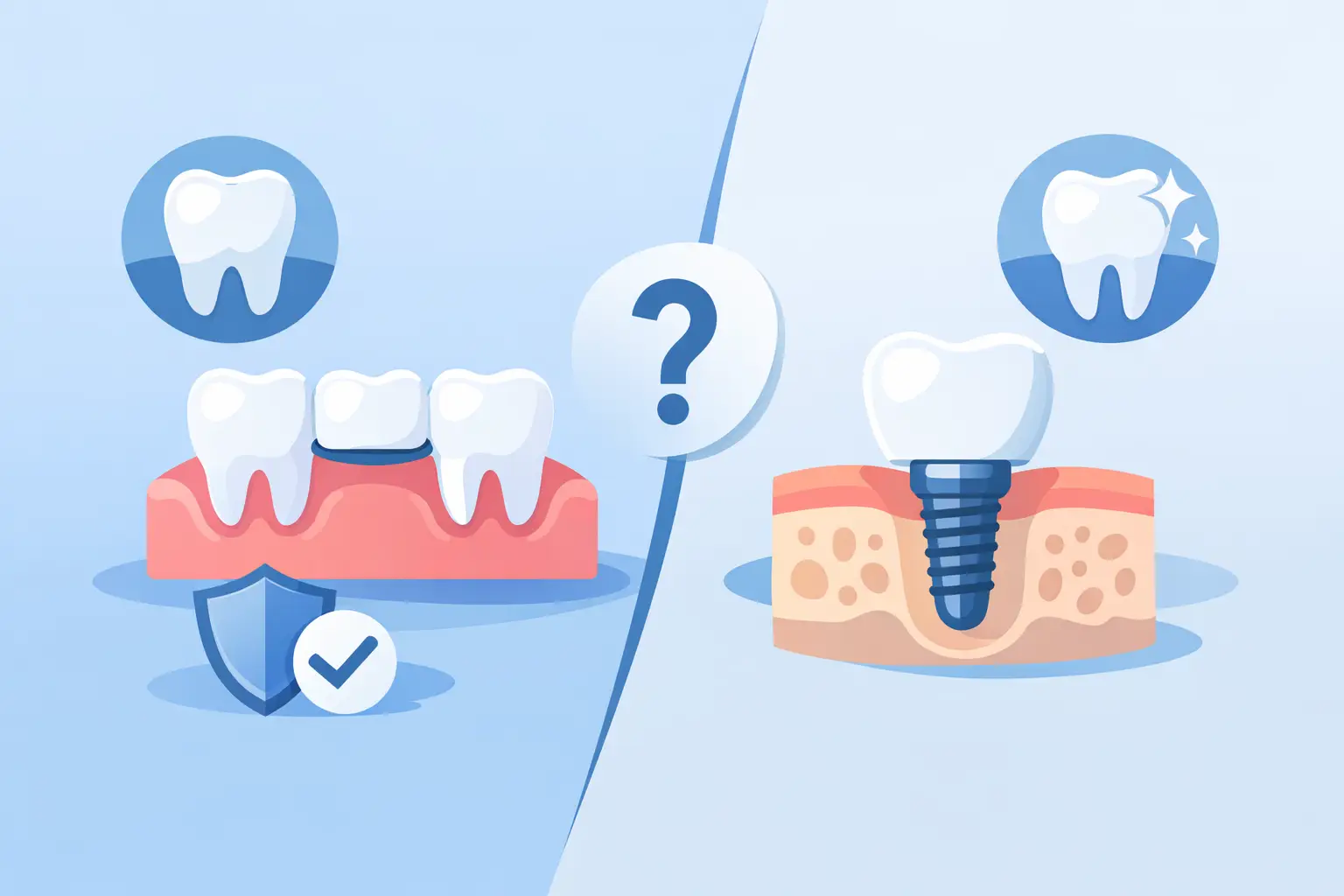
A dental bridge replaces a missing tooth by connecting an artificial tooth, called a pontic, to crowns placed on the teeth beside the gap. In a traditional bridge, those neighboring teeth are reshaped so the crowns can fit securely. The bridge is fixed in place, meaning you do not remove it at home.
A dental implant replaces the tooth root as well as the visible tooth. A small titanium implant post is placed in the jawbone, where it gradually integrates with the bone. Once healing is complete, a custom crown is attached to the implant. The result is a replacement tooth that stands independently rather than relying on adjacent teeth for support.
Both options can restore your ability to chew, speak clearly, and smile with more confidence. Their differences become clearer when you look at the condition of your nearby teeth, the health of your gums and bone, and how quickly you need treatment completed.
When a Dental Bridge May Be the Better Choice
A bridge is often a practical solution when the teeth on either side of the missing tooth already need crowns because of large fillings, cracks, wear, or previous dental work. Since those teeth may benefit from coverage anyway, a bridge can address several concerns in one restoration.
Treatment is usually completed faster than an implant. After the supporting teeth are prepared, your dentist takes impressions or digital scans to create a custom bridge. Many patients can receive their final restoration within a few weeks, although timing varies by the treatment plan and dental lab.
A bridge can also have a lower initial cost than an implant. For someone who needs to replace a tooth soon and wants a fixed option without surgery, that can be meaningful. Dental insurance may provide coverage for part of a bridge, though every plan has different limitations, waiting periods, and annual maximums.
The trade-off is that a traditional bridge requires altering neighboring teeth, even if they are otherwise healthy. It also does not replace the missing root. Over the years, the bone beneath the empty area can gradually shrink because it is no longer receiving stimulation from a tooth root.
Cleaning is another consideration. You will brush a bridge normally, but you also need to clean beneath the artificial tooth with a floss threader, specialized bridge floss, or a water flosser. Consistent home care and routine dental visits help protect the supporting teeth from decay and gum disease.
When an Implant May Be the Better Choice
An implant is often preferred when the teeth next to the gap are healthy and you want to leave them untouched. Because the implant supports its own crown, it does not require crowns on neighboring teeth. This can be a major advantage for patients focused on preserving as much natural tooth structure as possible.
Implants also help stimulate the jawbone in the area of the missing tooth. While no restoration can turn back every effect of tooth loss, that stimulation can help limit bone loss and support the natural contours of your smile and face.
Many patients appreciate how an implant feels during everyday life. Once restored, it functions much like an individual tooth. You can brush and floss around it in a familiar way, and there is no bridge section to clean underneath. A well-planned implant crown can also be closely matched to the shape and color of surrounding teeth for a natural appearance.
However, implant treatment takes time. After placement, the implant generally needs time to integrate with the jawbone before the final crown is placed. Some patients need bone grafting or gum treatment first, which can extend the overall timeline. The process is carefully planned, but it is not always the fastest route to a finished tooth.
The upfront investment is usually higher as well. Still, an implant may offer long-term value because it is designed as an independent restoration. The crown attached to an implant can eventually need repair or replacement due to normal wear, but the implant itself can last many years with healthy gums, good oral hygiene, and regular care.
Cost Is Important, but Look Beyond the First Number
It is understandable to compare a dental bridge versus implant by price first. Dental treatment should feel financially manageable, especially for families, seniors, and patients without insurance. Yet the lowest initial cost is not always the least expensive choice over time.
A bridge may need replacement after years of wear, or if one of its supporting teeth develops decay, fracture, or gum problems. When that happens, the entire bridge may be affected. An implant has different maintenance needs and is not immune to complications, but it does not place the same dependency on adjacent teeth.
Your personalized estimate should account for the full picture: diagnostic imaging, any needed extractions, bone grafting, temporary restorations, the final bridge or crown, and future maintenance. Ask which portions may be covered by insurance and what payment options are available. A clear financial conversation helps you make a decision without surprises.
Your Oral Health Can Change the Recommendation
Not everyone is an immediate implant candidate, but many people can become one with the right preparation. Healthy gums and adequate bone are essential for implant support. Patients with active gum disease, uncontrolled diabetes, heavy tobacco use, or certain medical conditions may need additional care and coordination with their physician before moving ahead.
A bridge may be recommended if surgery is not appropriate or if you prefer to avoid a surgical procedure. An implant may be especially appealing if you have a single missing tooth with healthy teeth on each side. For multiple missing teeth, treatment could include an implant-supported bridge, which may avoid placing an implant for every missing tooth.
The location of the missing tooth matters, too. A front tooth may require extra attention to gum shape and esthetics. A back tooth carries more chewing force and needs a strong, carefully designed restoration. This is why a one-size-fits-all answer rarely serves patients well.
Questions Worth Asking at Your Consultation
A good consultation should leave you with more than a recommendation. You should understand why that recommendation fits your mouth and what the process will involve. Ask whether your neighboring teeth are healthy, whether you have enough bone for an implant, and how each option may affect your bite.
It is also reasonable to ask about healing time, the expected life of the restoration, care at home, and what happens if a bridge or implant needs repair in the future. If dental anxiety has delayed treatment, share that too. A caring dental team can explain each step clearly and help make the experience feel more comfortable.
At Star Dental Group, a comprehensive evaluation can look beyond the single gap in your smile. Your bite, gum health, existing dental work, cosmetic goals, and long-term needs all matter when planning a restoration that feels right for you.
Choose the Option You Can Maintain With Confidence
The best replacement tooth is one that supports your daily life and that you can care for consistently. A bridge may be an excellent, efficient choice when adjacent teeth need crowns or when treatment needs to move quickly. An implant may be the stronger long-term fit when preserving nearby healthy teeth and supporting jawbone health are top priorities.
You do not have to decide from an online comparison alone. A professional exam, digital imaging, and an honest discussion of cost and timing can turn a difficult choice into a clear plan. Replacing a missing tooth sooner rather than later can help protect your bite, your smile, and the comfort of everyday meals.

