


Root Canal Versus Extraction: Which Saves More?
A cracked molar that wakes you up at night can make one question feel urgent: should you save the tooth or have it removed? In a root canal versus extraction decision, the best answer is not always the fastest or least expensive option today. It is the option that protects your comfort, bite, appearance, and long-term oral health whenever possible.
At Star Dental Group, treatment planning starts with a careful exam, X-rays, and a conversation about your goals. A severely damaged tooth may still be worth saving, while another may be too compromised to predictably restore. Knowing the difference can make the decision feel far less overwhelming.
Root Canal Versus Extraction: The Main Difference
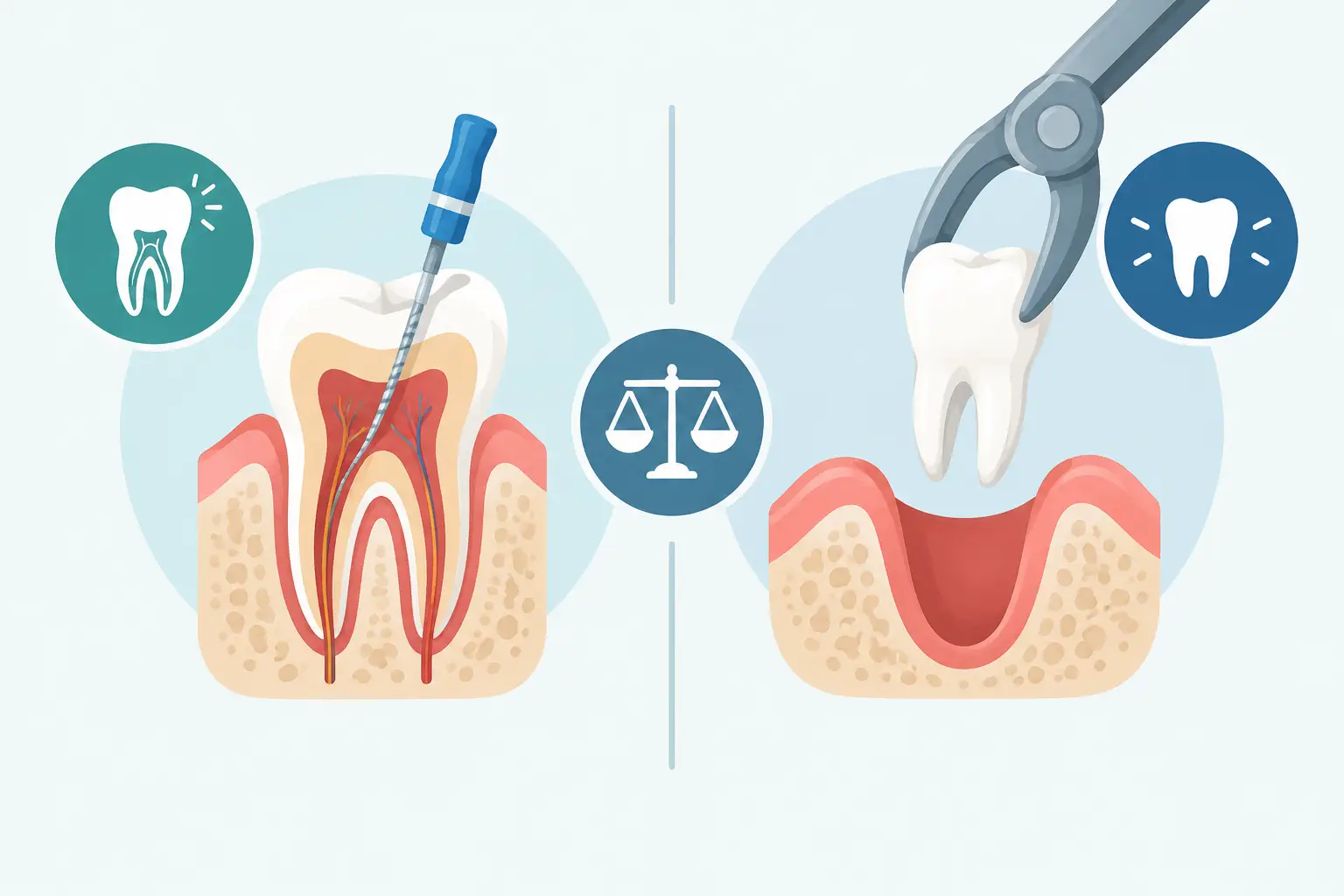
A root canal treats infection or inflammation inside a tooth. During treatment, the dentist removes damaged pulp tissue, disinfects the canals inside the root, and seals the tooth. Most back teeth then need a crown to restore strength and help prevent future fracture. The goal is to keep your natural tooth in place.
An extraction removes the entire tooth, including its roots. It may be a simple extraction when the tooth is visible and accessible, or a surgical procedure when a tooth is broken below the gumline, impacted, or difficult to remove. Once the tooth is gone, the decision does not necessarily end there. You and your dentist must also consider whether and how to replace it.
Both treatments can stop dental pain and address infection. The key difference is whether the tooth can be retained with a favorable long-term outlook.
When Saving the Tooth Is Usually Preferred
Your natural teeth are designed to work together. Keeping a healthy, functional tooth helps preserve normal chewing, maintain spacing, and support the jawbone around its root. For these reasons, a root canal is often recommended when the tooth has enough healthy structure remaining and the infection can be effectively treated.
A root canal can be a strong option when decay has reached the nerve, a deep filling has irritated the pulp, or trauma has damaged the tooth. It may also be appropriate for an abscessed tooth if the root structure remains sound. With proper restoration and consistent care, a treated tooth can serve you for many years.
Patients sometimes worry that root canal treatment will be painful. In reality, modern local anesthetic and gentle techniques are designed to make the procedure feel similar to having a filling. The pain that brings many people to the office often comes from the infection or inflammation itself, not from treatment. Tenderness afterward is common, but it is usually manageable and temporary.
When Extraction May Be the Better Choice
Saving every tooth is not always the right goal. Extraction may be the more predictable choice when a tooth has a vertical root fracture, severe bone loss from advanced gum disease, extensive decay below the gumline, or too little remaining tooth structure to support a crown. A tooth with a failed root canal can sometimes be retreated or treated with endodontic surgery, but in some cases removal offers the most reliable path forward.
Extraction can also be appropriate when a wisdom tooth repeatedly causes pain, infection, crowding, or damage to neighboring teeth. For a tooth that is already loose from periodontal disease, root canal treatment would not solve the underlying support problem.
The decision should be based on what the dentist can see clinically and on X-rays, not simply on whether the tooth hurts today. A tooth can become quiet after an infection drains, while the problem continues to damage bone and nearby tissues.
Cost: Look Beyond the First Appointment
It is understandable to compare the immediate cost of a root canal with the cost of an extraction. An extraction often costs less at the first visit. But if the missing tooth needs replacement, the full cost can be considerably higher over time.
After a root canal, many teeth need a crown. That adds to the initial investment, but it restores the tooth you already have. After an extraction, replacement choices may include a dental implant with a crown, a bridge, or a removable partial denture. Each option has different fees, treatment timelines, maintenance needs, and benefits.
A dental implant is often the closest replacement to a natural tooth because it replaces the missing root as well as the visible tooth. It can help preserve jawbone and does not require altering adjacent teeth. A bridge may be a practical choice in some situations, especially if the neighboring teeth already need crowns. A partial denture can be a more affordable removable option for some patients.
Insurance benefits, the location of the tooth, and the complexity of treatment all affect out-of-pocket costs. Asking for a complete treatment plan can help you compare the real financial picture rather than choosing based on one procedure fee alone.
Healing and Long-Term Changes After Extraction
A tooth socket typically needs several weeks to heal after an extraction, although complete bone remodeling continues for months. During that time, the bone that once supported the tooth can gradually shrink. This is especially relevant for visible front teeth and for patients considering an implant later.
Your dentist may recommend bone grafting at the time of extraction to help preserve the socket for future implant placement. It is not necessary in every case, but it can make later restoration more predictable. Replacing a missing tooth promptly can also help reduce the chance that nearby teeth shift or that the opposing tooth drifts out of position.
Not every missing tooth must be replaced immediately. For example, some patients can function well without a back tooth, depending on their bite and the condition of the surrounding teeth. Still, it is worth discussing the likely changes before deciding to leave the space open.
Which Option Is Faster?
An extraction can often be completed in one appointment, making it seem like the quickest solution. However, if you plan to replace the tooth with an implant, the overall process may take several months to allow healing and integration with the bone. Immediate implant placement is possible in select cases, but it depends on the location of the tooth, infection level, bone quality, and gum health.
Root canal treatment may take one or more visits, followed by a permanent restoration. If the tooth is restorable, this route can allow you to keep using your natural tooth without waiting for a replacement plan. The right timeline depends on the diagnosis, not just the calendar.
Questions That Help You Decide
A clear conversation with your dentist can turn a difficult choice into an informed one. Ask whether the tooth is predictably restorable, how much healthy tooth structure remains, and what its long-term prognosis looks like with a root canal and crown. Ask what could happen if you extract it but delay replacement, and request an estimate that includes all anticipated stages of treatment.
It is also reasonable to discuss your priorities. If you have dental anxiety, a busy work schedule, a limited budget, or plans for cosmetic treatment, those factors matter. A good treatment plan accounts for your health needs and your real life.
Do Not Wait on Warning Signs
Severe tooth pain, facial swelling, a pimple-like bump on the gum, sensitivity that lingers after hot or cold foods, or pain when biting can signal a problem that needs prompt care. Fever, difficulty swallowing, trouble breathing, or rapidly spreading swelling requires urgent medical attention.
Early treatment can sometimes mean a simpler restoration and a better chance of saving the tooth. Waiting until pain becomes unbearable may limit your choices and increase the complexity of care.
The goal is not to choose a root canal or extraction based on fear. It is to choose the treatment that gives your smile the healthiest, most dependable future. A thoughtful exam and a clear treatment discussion can help you move forward with confidence, comfort, and a plan that fits your needs.

