


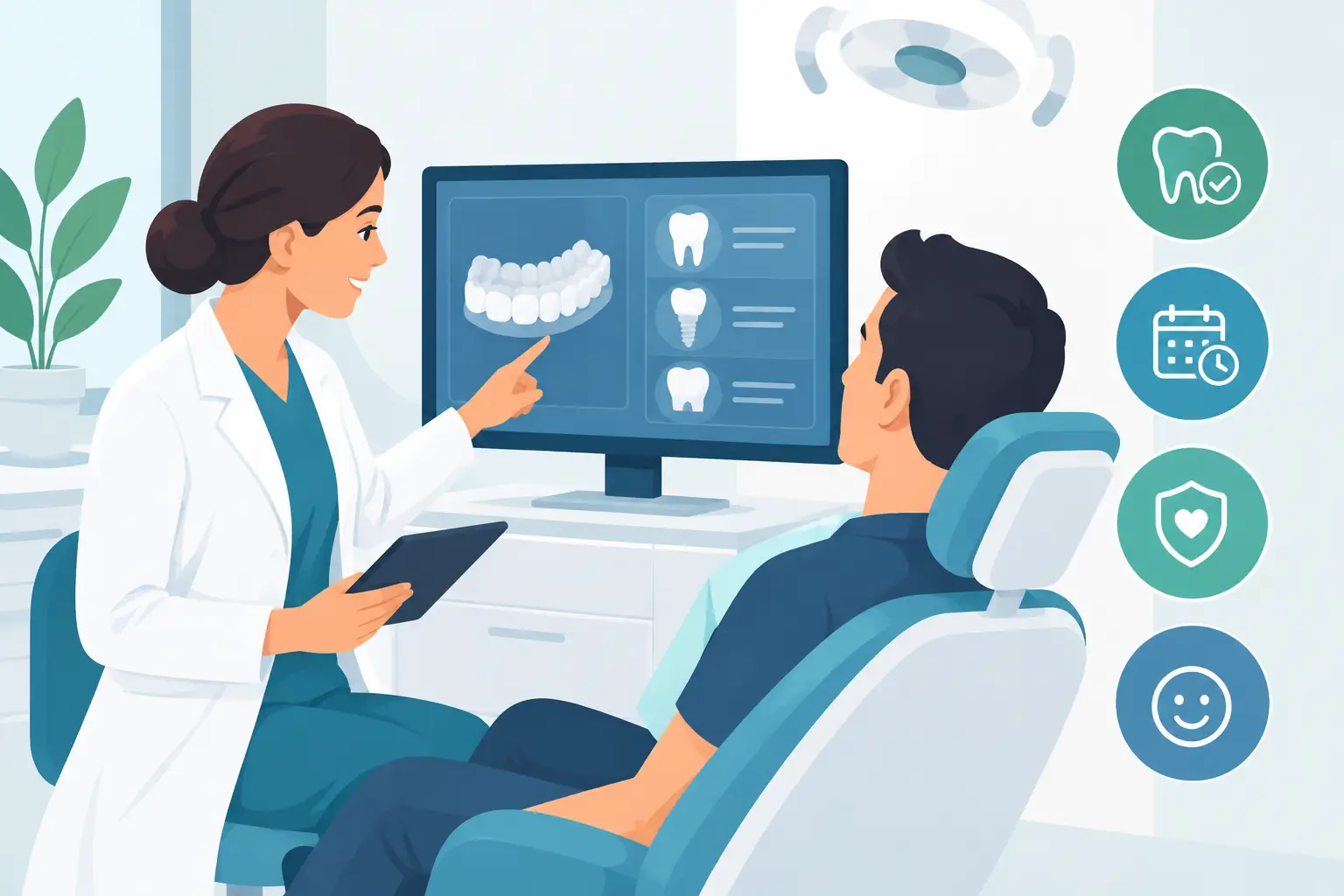
Single Office Dental Treatment Planning Benefits
A cracked tooth, missing teeth, gum concerns, and a smile you no longer feel good about rarely arrive one at a time. Yet many patients are asked to manage them through separate appointments, separate offices, and separate treatment recommendations. Single office dental treatment planning offers a more coordinated path: one team looks at your oral health as a whole and helps you prioritize care in a way that makes sense for your comfort, time, and budget.
For families and adults in Rancho Cucamonga, that can mean less running between providers and more confidence about what comes next. Whether you need a routine exam, a dental implant, orthodontic care, restorative treatment, or cosmetic improvements, the goal is not to sell you a long list of procedures. It is to create a clear plan around the health, function, and appearance of your smile.
What Single Office Dental Treatment Planning Means
Treatment planning is the process of evaluating your teeth, gums, bite, jaw function, and smile goals before recommending care. A comprehensive plan may include diagnostic images, an oral cancer screening, periodontal evaluation, photographs, and a discussion of your medical history and concerns. The details depend on your needs, but the purpose stays the same: understand the full picture before treating only the most obvious problem.
In a single-office setting, general dentistry, restorative dentistry, cosmetic dentistry, implant care, and orthodontic treatment can be considered together. This matters because dental conditions often affect one another. Replacing a missing tooth, for example, may involve checking gum health, available bone, bite alignment, neighboring teeth, and the appearance of the final restoration. Planning each piece in isolation can lead to compromises later.
A multi-specialty office can coordinate these decisions under one roof. Rather than being passed from provider to provider without a shared strategy, you have a team working from the same records and treatment goals.
Why a Whole-Mouth View Can Save Time and Stress
It is easy to focus on the tooth that hurts or the chip you see in the mirror. Immediate concerns should be addressed, especially pain, swelling, infection, or a damaged restoration. But stopping there may leave the reason for the problem untreated.
For instance, repeated chips on front teeth can be related to grinding or an uneven bite. Crowding may make brushing difficult and contribute to gum inflammation. A missing molar can shift nearby teeth and place extra pressure on the opposite side of the mouth. Treating the symptom without reviewing the cause can sometimes mean more repairs in the future.
A complete plan gives patients a practical order of operations. Urgent treatment comes first. Then the team can stabilize gum disease or decay, restore function, and move forward with elective improvements such as whitening, veneers, or smile alignment when appropriate. That order is not only clinically sensible. It can make a larger treatment plan feel far more manageable.
The Value of One Coordinated Dental Team
Seeing multiple providers is sometimes necessary, particularly for highly complex medical circumstances. A single office should never promise that every situation can be handled without outside collaboration. However, when a practice has the appropriate in-house capabilities, coordinated care offers meaningful advantages.
Your providers can communicate directly about timing, materials, and the expected outcome. If orthodontic movement should happen before an implant is placed, that conversation can happen early. If a crown needs to complement planned cosmetic work on nearby teeth, the shade and shape can be planned rather than guessed later. Patients spend less time repeating their history and fewer hours trying to connect recommendations from different offices.
There is also a comfort benefit. Dental anxiety is real, particularly for patients who have delayed treatment or had difficult experiences in the past. Building familiarity with one caring team and one location can make return visits feel less overwhelming. For parents, seniors, and busy professionals, keeping care organized in one place can also reduce scheduling strain.
How a Comprehensive Plan Is Built
A strong treatment plan should feel personal, not prepackaged. Your dentist should begin by listening. Are you dealing with discomfort? Are you worried about the cost of neglected care? Do you want to improve your smile for a wedding, a new job, or simply your own confidence? Those priorities affect the recommended timeline.
The clinical evaluation follows. Your dental team reviews the condition of your teeth and restorations, checks the health of your gums, evaluates bite relationships, and uses appropriate imaging to see concerns that cannot be identified during a visual exam alone. For patients considering implants or full-mouth rehabilitation, more detailed imaging may be recommended to support precise planning.
From there, the discussion should be clear and straightforward. You should understand which treatments are urgent, which are preventive, and which are elective. You should also understand what may happen if a condition is monitored rather than treated now. Good dentistry includes choices. In many cases, there is more than one reasonable approach, with different costs, timelines, longevity expectations, and cosmetic results.
Balancing Dental Goals With Your Budget
Comprehensive care does not have to mean doing everything at once. For many patients, phased treatment is the right answer. The first phase may focus on relieving pain, treating infection, managing gum disease, or repairing teeth that are at risk of breaking. The next phase may restore missing teeth or improve bite function. Cosmetic finishing can follow when the foundation of the smile is healthy and stable.
This approach is particularly helpful when cost has caused a patient to postpone care. Instead of feeling pressured to choose between total treatment and no treatment, you can discuss priorities and a realistic sequence. Ask for an estimate that explains each phase, available payment options, and any discounts that may apply for uninsured patients or seniors.
Affordability should never mean rushing into a treatment that does not fit your needs. At the same time, delaying a small issue indefinitely can make it more extensive and expensive. A caring office helps you understand that balance without judgment.
Questions Worth Asking at Your Consultation
A consultation is your opportunity to learn, not just to accept a recommendation. Ask what problem each treatment is intended to solve and what the expected result will be. If several options are available, ask how they differ in durability, appearance, maintenance, and cost.
It is also helpful to ask about timing. Can treatment be phased? Which steps need to be completed before others? How many appointments are likely? If you are considering cosmetic treatment, ask whether restorative or orthodontic work should come first to protect the final result.
Finally, ask what you can do at home to support treatment. Daily brushing and flossing, professional cleanings, a night guard when recommended, and regular follow-up visits protect the investment you make in your smile.
Single-Office Planning for Your Family’s Smile
A family may have very different needs under one roof: a child needing preventive care, a teenager considering orthodontics, a parent with a broken crown, and a grandparent exploring dentures or implants. A practice with broad treatment capabilities can make ongoing care easier to coordinate while still tailoring recommendations to each person.
At Star Dental Group, patients can discuss functional dental needs and smile goals with a team focused on high-quality, state-of-the-art care at accessible rates. A free consultation can be a comfortable first step for patients who are unsure where to begin, whether they are seeking dental implants, orthodontics, cosmetic improvements, or help catching up on routine care.
The best treatment plan is one you understand and can follow. Start with a conversation, ask the questions that matter to you, and choose a pace that supports a healthier, more confident smile for the years ahead.

