


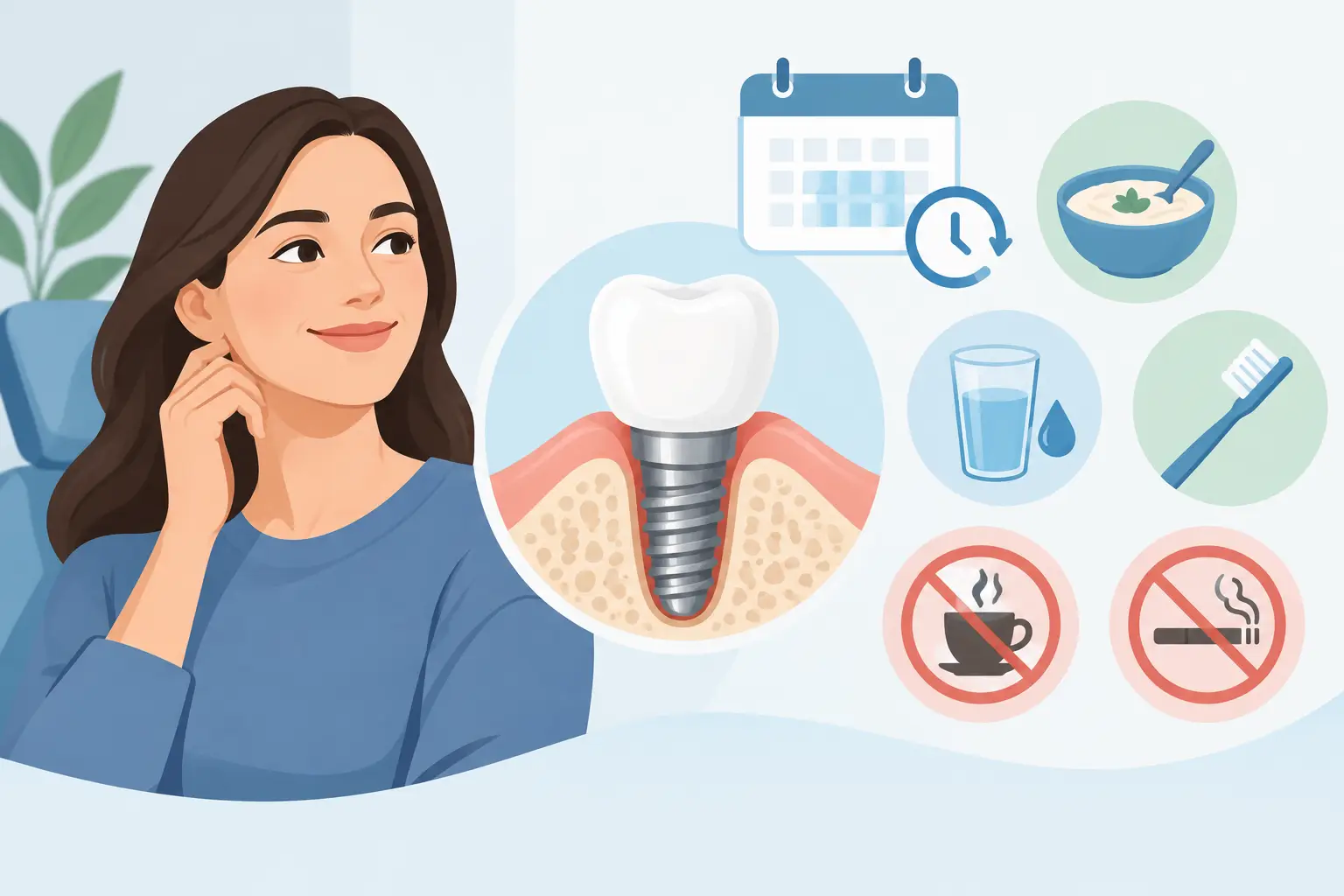
Dental Implant Aftercare for the First 14 Days
The procedure may be over, but the healing process has only begun. Thoughtful dental implant aftercare protects the surgical site, keeps you more comfortable, and gives the implant the best possible environment to bond with your jawbone. Most patients heal well with a few practical adjustments and clear instructions from their dentist.
Every implant case is different. A single implant may have a shorter, simpler recovery than a full-arch restoration, an extraction-and-implant appointment, or treatment involving bone grafting. Your personal post-operative instructions should always take priority, especially if your dentist has prescribed medication or given specific directions about a temporary tooth.
The First 24 Hours Matter Most
For the first day after implant surgery, your focus should be protecting the blood clot and limiting swelling. Rest at home, keep your head elevated with pillows when you lie down, and avoid strenuous exercise, lifting, or bending over. Increased activity can make bleeding and throbbing worse.
A little oozing is common during the first several hours. If your dentist provided gauze, bite with steady, gentle pressure as directed. Do not repeatedly check the area or spit forcefully, since that can disturb the clot. If bleeding is heavy, bright red, or does not slow after following your office’s instructions, call the dental team.
Cold compresses can help reduce swelling. Hold an ice pack or cold pack against the outside of your cheek for short intervals, with a cloth barrier between the pack and your skin. Swelling often reaches its peak around the second or third day, so some puffiness or mild bruising is not necessarily a cause for concern.
Take prescribed medications exactly as directed. If you have been advised to use an over-the-counter pain reliever, follow the label and confirm that it is appropriate for your health history. Do not add medications, skip an antibiotic course, or use someone else’s prescription without speaking with a healthcare professional.
What to Eat After Dental Implant Surgery
Soft, nourishing foods are the practical choice during early recovery. Think yogurt, scrambled eggs, oatmeal that has cooled, mashed vegetables, soup that is warm rather than hot, smoothies eaten with a spoon, cottage cheese, and soft fish. Hydration also matters, so drink plenty of water throughout the day.
Avoid chewing near the surgical site until your dentist says it is safe. Hard, sharp, sticky, or crunchy foods can irritate the gum tissue or put unnecessary pressure on a healing implant. Nuts, chips, popcorn, crusty bread, tough meat, and chewy candy are best saved for later.
Temperature matters during the first day as well. Very hot drinks and foods may increase bleeding or discomfort. Alcohol should be avoided, particularly while taking prescription pain medication or antibiotics. If you wear a temporary denture, bridge, or provisional tooth, ask exactly what and how you should eat. These restorations can be helpful for appearance and function, but they may need special care while the implant heals underneath.
Do Not Use a Straw or Smoke
Suction is the issue with straws. During the first several days, it can disturb the clot and interfere with comfortable healing. Sip directly from a cup instead.
Smoking and vaping are even more concerning. Nicotine reduces blood flow to healing tissues and can raise the risk of infection and implant failure. For the strongest chance of a successful result, avoid tobacco and nicotine products before and after surgery for the period your dentist recommends. If stopping feels difficult, tell your dental team. Honest conversations help them support your treatment, not judge you.
Keeping Your Mouth Clean Without Disturbing the Site
Good oral hygiene is essential, but the surgical area needs a gentle touch. On the day of surgery, avoid aggressive rinsing, swishing, or brushing directly over the implant site. You can usually brush and floss the teeth away from the area carefully.
Beginning the day after surgery, many patients are instructed to rinse gently with warm salt water after meals. A typical rinse is made by dissolving a small amount of salt in warm water, then letting it move around the mouth without vigorous swishing before allowing it to fall out. Your dentist may instead prescribe an antimicrobial rinse. Use only the rinse and schedule you have been given.
As tenderness improves, carefully clean around the area with an extra-soft toothbrush if your dentist has cleared you to do so. Do not poke at stitches, the implant site, or any healing cap with a fingernail, toothpick, or water flosser. A clean mouth supports healing, but forceful cleaning can do more harm than good in the early stage.
Dental Implant Aftercare: What Healing Can Feel Like
Mild to moderate soreness, gum tenderness, swelling, and minor bruising are common after implant placement. Discomfort should generally become more manageable over several days rather than steadily getting worse. If you had a bone graft or sinus lift, recovery may take longer and feel different from a straightforward implant procedure.
The implant itself is placed below the gum line, so you may not see much at the site. If a healing cap is visible, it can feel unfamiliar at first. Avoid testing it with your tongue or fingers. In some treatment plans, the implant remains covered by gum tissue while it integrates with the bone. Both approaches can be appropriate depending on your treatment plan.
Osseointegration, the process in which bone bonds with the implant, takes time. You may feel better within days or weeks, but that does not mean the implant is ready for heavy chewing. Keep every follow-up appointment so your dentist can monitor healing and decide when it is appropriate to move forward with the final crown, bridge, or denture.
When to Call Your Dentist
You know your normal better than anyone. If something feels significantly off, contacting the office is the right decision. Call promptly if you experience:
- Pain, swelling, or bleeding that worsens instead of improving
- Fever, chills, pus, or a persistent bad taste or odor
- Numbness that continues longer than your dentist said to expect
- A loose implant, loose healing cap, or a temporary restoration that feels unstable
- Difficulty swallowing or breathing, which requires urgent medical attention
Do not wait for a scheduled checkup if you are worried. Early evaluation can often prevent a small concern from becoming a larger problem.
Returning to Your Routine
Many patients return to desk work or light daily activities within a day or two, but the right timeline depends on the complexity of surgery and how you feel. Jobs involving physical labor, intense workouts, and contact sports may require additional time away. Ask before resuming demanding activity, especially during the first week.
Continue to avoid chewing hard foods on the implant side until your dentist confirms that healing is on track. Once the final restoration is placed, implants are designed to function much like natural teeth, but they still need daily brushing, cleaning between teeth, and professional exams. Implants cannot get cavities, yet the gums and bone around them can still develop infection if plaque is allowed to build up.
Long-term success also depends on factors beyond home care. Teeth grinding, uncontrolled diabetes, tobacco use, gum disease, and missed maintenance visits can affect implant health. Your dentist may recommend a night guard, more frequent cleanings, or coordination with your physician when needed. That individualized approach is part of protecting your investment in your smile.
For patients in Rancho Cucamonga and the Inland Empire, Star Dental Group can help you understand each step of recovery before treatment begins. Clear aftercare instructions, responsive follow-up, and regular maintenance make it easier to move through implant treatment with confidence. Give your healing the patience it deserves now, and you are building toward a comfortable, natural-looking smile for years to come.

