


A Guide to Affordable Tooth Replacement Options
A missing tooth can change more than a smile. It can make chewing uncomfortable, affect speech, allow nearby teeth to shift, and make you less likely to laugh freely in photos. This guide to affordable tooth replacement can help you understand the available options, what drives the cost, and how to choose a treatment plan that fits both your health needs and your budget.
For many Rancho Cucamonga and Inland Empire patients, the right answer is not simply the least expensive treatment today. It is the option that restores function, protects the rest of the mouth, and feels manageable financially. A thoughtful dental evaluation can make that decision much clearer.
Why Replacing Missing Teeth Is Worth Considering
A tooth may be lost because of decay, gum disease, injury, or a failed older restoration. Whatever the cause, leaving a gap can create problems over time. The teeth beside the space may drift inward, changing your bite. The opposing tooth can move out of position because it no longer has a tooth to meet.
When several teeth are missing, eating a balanced diet can become harder. People may avoid crunchy vegetables, protein-rich foods, or favorite meals that require more chewing. Replacing missing teeth is not only a cosmetic decision. It can support comfort, nutrition, speech, and long-term oral health.
That said, every smile is different. A back tooth, a front tooth, and a full arch of missing teeth each call for a different conversation. Your gums, jawbone, bite, overall health, and goals all matter when selecting a solution.
Guide to Affordable Tooth Replacement Choices
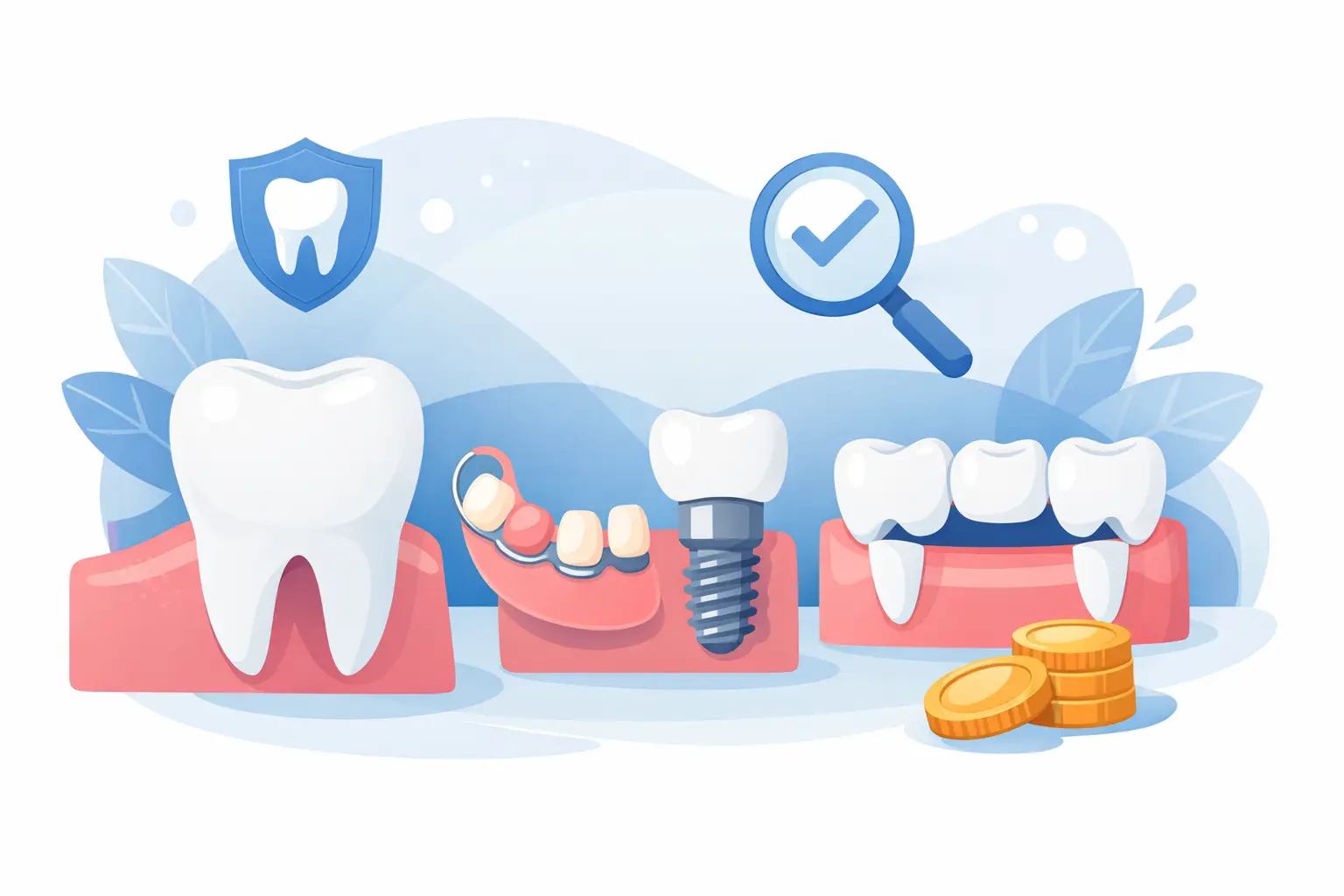
There is no single “best” replacement for every patient. Dentures, bridges, and dental implants can all be excellent options when they are planned properly. The most affordable choice depends on your immediate budget, the condition of your mouth, and how long you want the solution to last.
Removable Partial Dentures
A partial denture replaces one or more missing teeth and is designed to be removed for cleaning. It usually rests on the gums and may attach to nearby teeth with clasps or more discreet attachments. Partial dentures are often among the lower-cost ways to fill several spaces, especially when implants are not appropriate or are not part of the current budget.
The trade-off is that removable appliances can take time to get used to. They may require adjustments as the mouth changes, and some patients find they do not feel as natural as a fixed option. Still, a well-made partial denture can restore a noticeable amount of function and confidence.
Complete Dentures
Complete dentures replace all teeth in the upper arch, lower arch, or both. They can be a practical, cost-conscious choice for patients with extensive tooth loss. Modern dentures can look natural and help restore facial support, but fit is essential. Loose dentures can make eating and speaking frustrating.
For patients who want more stability without moving immediately to a full implant-supported restoration, implant-retained dentures may be worth discussing. A small number of implants can help secure a denture more firmly. This costs more than a traditional denture, but it may improve comfort and reduce the need for adhesive.
Dental Bridges
A dental bridge fills a gap by connecting a replacement tooth to crowns placed on the teeth next to it. Because it is fixed in place, a bridge does not come out for daily cleaning. It can be a strong option when the neighboring teeth already need crowns or have large existing restorations.
A bridge is commonly less expensive upfront than an implant, but it does involve preparing the adjacent teeth. It also does not prevent bone loss in the area beneath the missing tooth. With good home care and regular dental visits, bridges can serve patients well for many years, but they may eventually need replacement.
Single-Tooth Dental Implants
A dental implant replaces the root of a missing tooth with a small post placed in the jawbone. After healing, a custom crown is attached to complete the restoration. Because an implant stands independently, it does not require altering healthy neighboring teeth.
Implants are often the highest initial investment, but they can offer important long-term value. They are fixed, stable, and designed to function much like a natural tooth. They can also help preserve bone in the area of the missing tooth. Not every patient is ready for an implant immediately, particularly if bone grafting, gum treatment, or other care is needed first. A dentist can explain whether staging treatment is a reasonable approach.
What Actually Affects the Cost?
Online price ranges can be useful for general research, but they rarely reflect the full picture. Tooth replacement costs vary based on the number of teeth involved, the materials used, the complexity of your bite, and the health of the gums and bone.
An implant treatment plan, for example, may include imaging, extraction of a damaged tooth, bone grafting if needed, implant placement, healing time, and the final crown. A denture plan may include extractions, temporary dentures, relines after healing, and the final appliance. Understanding what is included helps prevent surprises and makes it easier to compare treatment plans fairly.
The goal should not be to choose a treatment based on a single advertised number. Ask for a clear written estimate and have the dental team explain the sequence of care. Sometimes treating infection, decay, or gum disease first protects the investment you make in a bridge, denture, or implant later.
Ways to Make Tooth Replacement More Manageable
Affordable care does not mean cutting corners on diagnosis or materials. It means making a realistic plan with a team that can look at the whole mouth and discuss priorities openly.
If you have dental insurance, review your benefits before beginning treatment. Coverage differs widely. Some plans contribute toward dentures or bridges but provide limited implant coverage, while others have waiting periods, annual maximums, or restrictions on replacement. Your dental office can help verify benefits, but it is wise to understand your out-of-pocket responsibility before treatment starts.
For patients without insurance, ask whether the practice offers uninsured patient savings, senior discounts, or payment options. Phasing treatment can also help. For example, a patient may first remove a painful or infected tooth and wear a temporary replacement while saving for a final bridge or implant. This approach is not right for every situation, but it can make care more attainable without ignoring an urgent need.
It is also worth asking whether a comprehensive treatment plan can reduce unnecessary repeat visits. A multi-specialty dental practice may be able to coordinate general dentistry, restorative treatment, cosmetic planning, and implant care in one location. That can save time and reduce the stress of managing referrals between several offices.
Questions to Ask at Your Consultation
A good consultation should leave you feeling informed, not pressured. Ask which options are clinically appropriate for your smile and why. Find out what each option is expected to feel like, how long it may last, what maintenance it requires, and what future costs could arise.
You may also ask whether delaying treatment could change your options. In some cases, waiting can lead to more tooth movement or bone loss, which may make future replacement more complex. In other situations, a temporary solution can safely give you time to plan. The right answer depends on your dental condition, not a one-size-fits-all sales pitch.
At Star Dental Group, patients can discuss missing-tooth concerns in a supportive, full-mouth consultation, with attention to both function and appearance. This is especially helpful when you have more than one dental concern and want a clear plan rather than separate opinions from multiple offices.
Caring for Your New Smile
Every tooth replacement needs maintenance. Bridges and implants require careful brushing and cleaning around the gumline. Bridges may need special flossing tools to clean beneath the replacement tooth. Dentures should be removed and cleaned as instructed, and they should not be adjusted at home.
Regular checkups remain essential, even if you no longer have all of your natural teeth. Your dentist can monitor the fit of restorations, check the health of your gums and bone, screen for oral cancer, and address small concerns before they become costly repairs.
A missing tooth does not have to force you into a decision you cannot afford. Start with an honest evaluation, ask about every suitable option, and choose a plan that supports your health now while giving you a realistic path toward the smile you want.

