


Full Arch Implant Case Study: A New Start
A failing smile rarely affects just one part of life. It can change what someone orders at a restaurant, how clearly they speak, and whether they feel comfortable smiling in photos. This full arch implant case study follows a realistic composite patient journey to show what treatment can involve, why careful planning matters, and what patients should expect before deciding whether full arch dental implants are right for them.
The details have been adapted to protect patient privacy, and every treatment plan is different. Still, the concerns in this case are common among adults throughout Rancho Cucamonga and the Inland Empire: loose teeth, missing teeth, painful chewing, and the worry that dental care may be too complicated or expensive to manage.
The Patient’s Starting Point
Our composite patient was a woman in her early 60s who had spent years managing ongoing dental problems one tooth at a time. Several upper teeth had large, aging fillings and crowns. Two teeth were missing, and others had become loose because of advanced gum disease and bone loss. She relied on softer foods and avoided smiling broadly because she was embarrassed by the appearance of her teeth.
She had delayed care for understandable reasons. Previous treatment experiences had made her anxious, and she assumed replacing an entire upper arch would require several offices, many appointments, and a price beyond reach. By the time she scheduled a consultation, she wanted a solution that would feel stable, look natural, and allow her to eat without worry.
Her goals were simple: regain comfort, stop the cycle of emergency repairs, and feel like herself again.
Full Arch Implant Case Study: Why Individual Repairs Were Not Enough
During the exam, the dental team reviewed the health of her gums, remaining teeth, bite, and jawbone. Digital imaging helped identify the amount and location of available bone and showed where implants could be placed safely. Her upper teeth were not all in the same condition, but they shared the same long-term concern: saving a few weakened teeth would likely lead to repeated treatment without creating a dependable foundation for her smile.
This is one of the most important decisions in a full arch implant case study. Full arch treatment is not automatically the best answer just because several teeth are missing. Some patients can benefit from preserving healthy natural teeth, receiving individual implants, or using a partial denture. But when the remaining teeth have poor long-term prognosis, a full arch solution can be more predictable and cost-conscious over time than continuing a series of temporary fixes.
The patient and team discussed the trade-offs openly. Implant treatment requires surgery, healing, daily hygiene, and regular professional maintenance. It also involves a greater upfront investment than a conventional denture. In return, implants can support a fixed full-arch restoration that does not shift during meals and does not need to be removed at night.
Building a Plan Around Health, Comfort, and Budget
A full mouth approach begins with more than replacing teeth. Before moving forward, the team evaluated the patient’s medical history, medications, gum condition, and bite forces. Any active infection and inflammation needed to be addressed as part of creating a healthy environment for implants.
Using advanced imaging and treatment planning, the dentist mapped implant positions and designed the future smile around facial proportions, lip support, speech, and bite function. This planning stage matters because a beautiful result should also be comfortable and functional. Teeth that look good but feel too bulky, affect speech, or create an uneven bite are not a successful outcome.
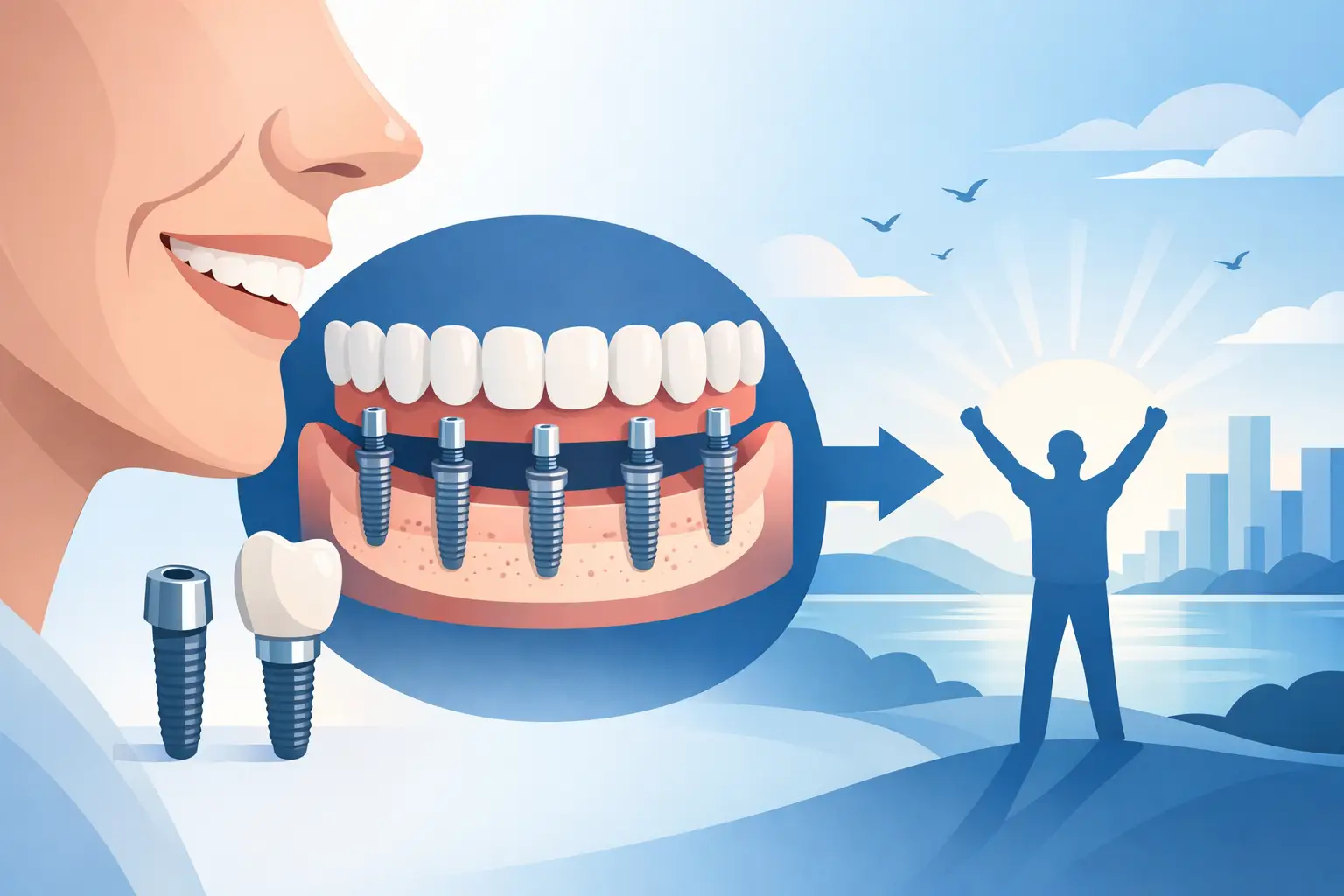
The patient chose an implant-supported full upper arch. Her treatment plan included removing the teeth that could not be predictably maintained, placing implants, and providing a temporary fixed restoration while healing progressed. After the implants integrated with the jawbone, she would receive her final full-arch prosthesis.
The financial conversation was equally direct. The team reviewed the estimated phases of care, what could affect the total cost, and available options for making treatment more manageable. A consultation is the right time to ask about insurance, payment arrangements, and discount opportunities for uninsured patients or seniors. Clear answers can make a major treatment decision feel much less overwhelming.
Surgery Day and the Temporary Smile
For patients with dental anxiety, surgery day can be the hardest part to imagine. Our composite patient was reassured by knowing each step in advance. The dental team reviewed instructions, answered final questions, and focused on keeping her comfortable throughout the procedure.
The remaining failing upper teeth were removed, and implants were placed according to the surgical plan. In many cases, a temporary full-arch restoration can be secured the same day or shortly after surgery, depending on implant stability, bone quality, and the patient’s specific clinical needs. Immediate temporary teeth are not guaranteed for every patient, but they can be an important option for qualified candidates.
Her temporary restoration gave her a complete smile while the surgical sites healed. It was designed for appearance and gentle function, not for chewing hard foods immediately. During the early healing period, she followed a soft-food diet and avoided putting excessive pressure on the implants.
This phase requires patience. Patients often feel emotionally relieved when they see a complete smile again, but the body still needs time to heal. Following home-care instructions, attending checkups, and keeping the temporary restoration clean all support a better long-term result.
Healing, Final Teeth, and Everyday Changes
Over the following months, the implants were monitored as they integrated with the bone. At follow-up visits, the team checked healing, gum health, bite balance, and the fit of the temporary teeth. Minor adjustments can be normal as swelling resolves and the mouth adapts.
Once healing was complete, the final prosthesis was created with greater strength, detail, and long-term function in mind. The patient had input on the shade, tooth shape, and overall appearance. The goal was not an artificial, overly bright smile. It was a natural-looking result that suited her face and gave her confidence.
The difference in daily life was significant. She could enjoy a wider range of foods, speak without worrying about loose teeth, and smile more freely. Just as meaningful, she no longer felt trapped in a cycle of temporary repairs.
That said, full arch implants are not maintenance-free. The patient received detailed guidance on brushing, cleaning around the restoration, using any recommended tools, and returning for routine exams and professional cleanings. Implant-supported teeth can last for many years with appropriate care, but gum inflammation, excessive bite forces, tobacco use, and missed appointments can put the investment at risk.
What This Case Can Teach Patients Considering Full Arch Implants
The strongest outcomes begin with realistic expectations. Full arch implant treatment can be life-changing, but it is a clinical process rather than a quick cosmetic fix. Success depends on accurate diagnosis, careful planning, quality materials, skilled placement, healing capacity, and the patient’s commitment to long-term care.
It also helps to choose a practice that can coordinate the full process. At Star Dental Group, patients can discuss restorative needs, implant options, cosmetic goals, and ongoing dental care in one location. That continuity can reduce the stress of managing referrals while helping every part of the treatment plan work together.
If you are living with failing, missing, or uncomfortable teeth, you do not need to wait until pain or embarrassment forces the issue. A consultation can clarify what is possible, what alternatives may fit your needs, and what a healthier, more confident smile could look like for you.

