


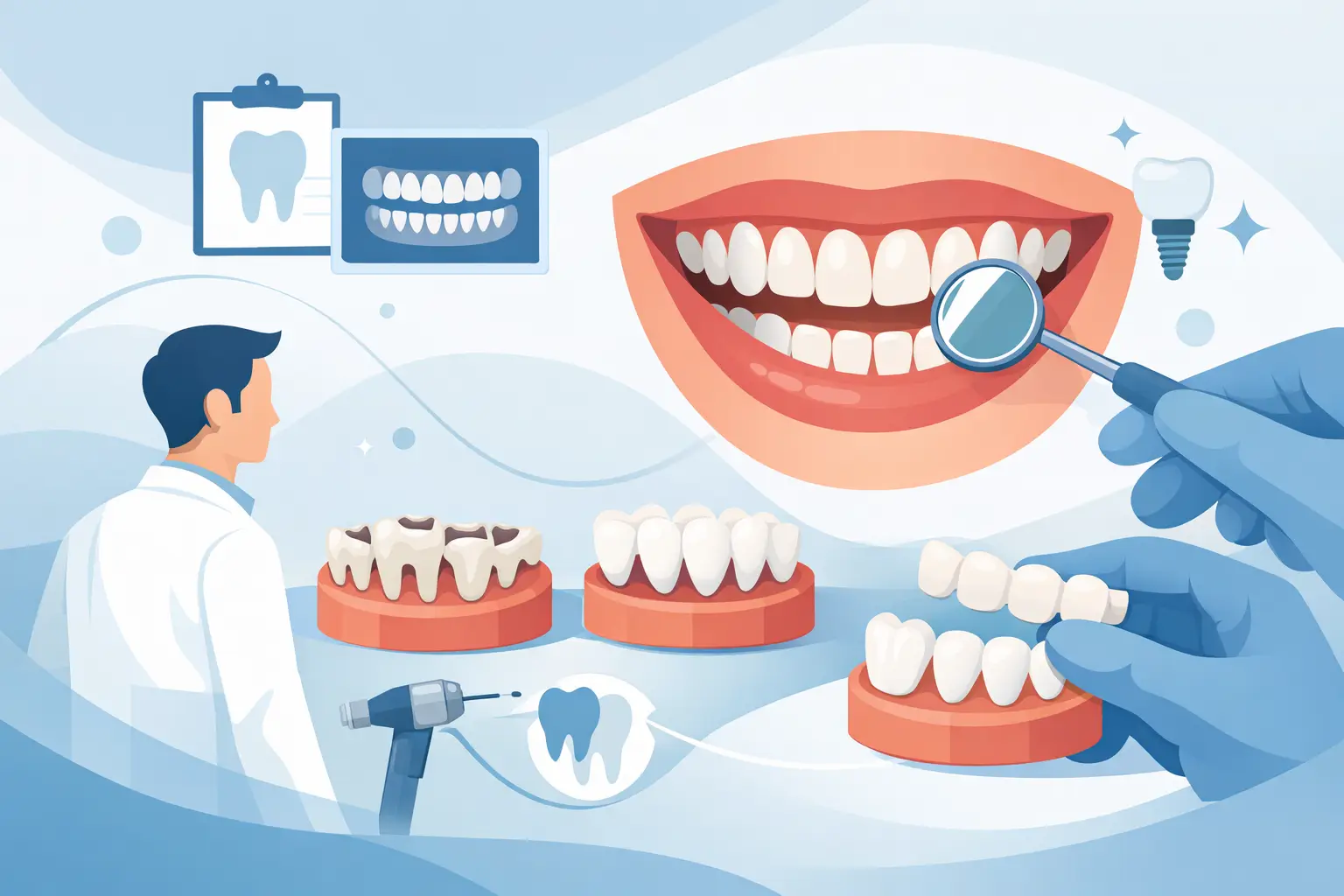
How Full Mouth Rehabilitation Works
If you are dealing with several dental problems at once – worn teeth, missing teeth, jaw discomfort, old dental work, or trouble chewing – you may be wondering how full mouth rehabilitation works and whether it is really meant for someone like you. In most cases, it is not a single procedure. It is a carefully planned combination of treatments designed to rebuild the health, function, comfort, and appearance of your smile.
That distinction matters. Full mouth rehabilitation is different from getting one crown, one implant, or a quick cosmetic touch-up. It looks at the entire mouth as a system. Your teeth, bite, gums, jaw joints, bone support, and existing restorations all affect one another. When several issues have built up over time, treating only one area can leave the bigger problem unresolved.
What full mouth rehabilitation actually means
Full mouth rehabilitation is a customized treatment plan for patients who need more than routine dental care. It is often recommended when the teeth have significant damage, when multiple teeth are missing, when the bite is unstable, or when chronic wear has changed the way the upper and lower teeth come together.
The goal is not only to improve how your smile looks, although appearance is often part of the result. The main purpose is to restore function and long-term oral health. That may mean helping you chew comfortably again, protecting teeth from further breakdown, replacing failing dental work, or correcting a bite that is placing too much force on certain teeth.
Some patients need a fairly straightforward plan. Others need phased treatment over several months. It depends on how many concerns are present, how healthy the gums and bone are, and what outcomes matter most to the patient.
How full mouth rehabilitation works from diagnosis to treatment
The process starts with a comprehensive evaluation. This is where a dentist looks beyond the obvious problem and studies the full picture. You may come in thinking the issue is one broken tooth, but the exam may show that tooth broke because of grinding, uneven bite pressure, gum disease, or missing teeth nearby.
A full evaluation often includes digital X-rays, photos, a review of your medical and dental history, and a close examination of the teeth, gums, bite, and jaw function. If implants are being considered, 3D imaging may also be part of the planning process. This stage is important because good results depend on accurate diagnosis, not guesswork.
After the exam, the dentist develops a treatment plan based on priorities. Usually, active disease comes first. If there is infection, tooth decay, or gum disease, those issues need to be controlled before final restorations are placed. If pain is present, relief and stabilization may also come early in the process.
Once the mouth is healthy enough to move forward, the rebuilding phase begins. This is where the plan becomes highly personalized. One patient may need crowns, implants, and periodontal treatment. Another may need orthodontics first to create better spacing and bite alignment before restorative work starts. Someone else may benefit from dentures or implant-supported options rather than individual restorations on every tooth.
Treatments that may be included
Because full mouth rehabilitation is tailored to the patient, there is no fixed checklist. The treatment mix depends on your needs, goals, budget, and timeline. Common options include dental crowns, bridges, implants, implant-supported dentures, fillings, root canal therapy, periodontal treatment, tooth extractions, veneers, and orthodontic treatment.
In many cases, crowns are used to strengthen teeth that are worn, cracked, or heavily restored. Implants may replace missing teeth and help preserve function in areas where gaps have affected chewing or caused shifting. Gum treatment may be necessary if inflammation or bone loss is undermining the stability of the teeth. When teeth are crowded, drifting, or unevenly positioned, orthodontics can improve the foundation before cosmetic or restorative work is completed.
Cosmetic improvements are often part of the process, but they are usually built on a functional plan. Whiter, more even teeth look better, but they also need to work properly when you bite and chew. That is why full mouth rehabilitation tends to be more comprehensive than a smile makeover alone.
Why bite alignment matters so much
One of the most overlooked parts of this process is the bite. If your bite is off, even high-quality dental work can fail sooner than expected. Teeth can chip, crowns can wear prematurely, and jaw muscles can stay tense or sore.
That is why careful treatment planning focuses on how the teeth meet, how forces are distributed, and whether there are signs of clenching or grinding. Sometimes small bite changes are enough. In other cases, larger corrections are needed to prevent repeat damage.
This is also where experience matters. Rebuilding a single tooth is one thing. Rebuilding a full smile in a way that feels natural, functions comfortably, and lasts over time requires coordination across multiple areas of dentistry.
How long full mouth rehabilitation takes
Patients often ask for a timeline, and the honest answer is that it varies. A simpler case may take a few months. A more involved case can take longer, especially if healing time is needed after extractions, periodontal therapy, bone grafting, or implant placement.
Some treatment plans are done in phases so patients can spread out care in a more manageable way. This can help with scheduling, finances, and comfort. It also allows the dental team to monitor healing and make adjustments when needed.
There is usually a balance between efficiency and doing things correctly. Faster is not always better if the mouth has underlying problems that need to be stabilized first. A well-sequenced plan tends to save patients frustration later.
Who is a good candidate
Many adults who have postponed dental care for years assume their case is too far gone or too complicated. In reality, they are often exactly the patients who benefit most from a coordinated full-mouth plan.
You may be a candidate if you have several damaged or missing teeth, chronic jaw soreness, advanced wear from grinding, recurring dental infections, failing crowns or bridges, or difficulty eating comfortably. Patients who want to improve both health and appearance at the same time may also be good candidates.
That said, not every patient needs full mouth rehabilitation. Sometimes a more conservative treatment plan is the right answer. A thorough exam helps determine whether full rehabilitation is necessary or whether a smaller, more focused approach can solve the problem.
The cost question patients really care about
Cost is a real concern, and it should be part of the conversation from the beginning. Full mouth rehabilitation can be a significant investment because it may involve several procedures across different phases of care. The final cost depends on the number of teeth involved, the type of restorations used, whether implants are included, and whether supporting treatments such as gum therapy or orthodontics are needed.
What matters most is having a clear plan and understanding your options. In many cases, treatment can be prioritized so the most urgent needs are handled first. Some patients choose a long-term phased approach rather than completing everything at once.
For families, seniors, and uninsured patients, affordability can make the difference between moving forward and continuing to wait. That is why practices that offer comprehensive care under one roof, along with consultations and transparent financial discussions, can make this kind of treatment feel more realistic and less overwhelming.
Choosing the right dental team
Because full mouth rehabilitation brings together different types of treatment, patients benefit from a practice that can look at the whole case rather than only one piece of it. A multi-specialty setting can make planning more efficient and more consistent, especially when restorative, implant, cosmetic, and general dental needs overlap.
At Star Dental Group, this kind of coordinated care is designed to make treatment simpler for patients who want answers, options, and a practical path forward. Instead of bouncing between offices, patients can get a full evaluation and a treatment plan built around their needs, comfort, and budget.
If your mouth does not feel healthy, comfortable, or dependable anymore, that does not mean you have missed your chance. The right treatment plan can rebuild more than teeth – it can restore confidence in everyday things like eating, smiling, and speaking without hesitation.

